How to Build Creative Confidence for Writers
A blank document can make even a meaningful book idea feel unworthy. You may know the story you want to tell, the lesson you want to share, or the character who keeps showing up in your mind. But when it is time to write, doubt gets loud: Is this good enough? Do I know what I am doing? What if I cannot finish? Building creative confidence for writers is not about silencing every question before you begin. It is about creating enough structure and evidence that you can keep writing while the questions are still there.
Confidence is often treated as something you either have or do not have. For aspiring authors, it is more useful to see it as a skill built through repeated, manageable action. Each time you make a choice about your book, complete a writing session, or solve a small story problem, you give yourself proof: I can move this forward.
What Creative Confidence for Writers Really Means
Creative confidence is not the belief that every sentence you write will be brilliant. (Thank goodness) It is the belief that you can return to the page, make decisions, learn what is not working, and revise your way toward a stronger draft.
That distinction matters because perfectionism often disguises itself as high standards. High standards can help you revise thoughtfully. Perfectionism asks you to produce a polished book before you have given yourself permission to write a messy first chapter. One supports progress; the other delays it.
A confident writer does not wait for total certainty about the plot, the message, or the market. They give themselves a workable next step. For a novelist, that may mean deciding what the main character wants in one scene. For a nonfiction writer, it may mean outlining one chapter around a reader's most urgent question. The goal is not to know everything. The goal is to know what comes next.
Start With a Smaller Promise
Many writers lose momentum because their first promise is too big: “I will write my book.” It sounds inspiring, but it does not tell you what to do on Tuesday at 7:30 p.m. after a long day.
Try replacing that promise with one you can keep this week. You might draft 300 words, identify five possible chapter topics, write the opening moment of a scene, or spend 20 minutes answering questions about your ideal reader. A smaller commitment is not a lesser commitment. It is a realistic entry point into a larger creative practice.
This is where structure becomes encouraging rather than restrictive. A simple writing plan removes decisions that drain your energy before you ever reach the page. When you know your session has one clear purpose, you are less likely to spend it reorganizing folders, researching unrelated details, or judging your unfinished work.
Use the next-step rule
At the end of every writing session, leave yourself a note with the exact next action. Write something as specific as, “Describe Maya's reaction when she sees the letter,” or “List three examples for Chapter 2.”
The next time you sit down, you will not have to rebuild your momentum from scratch. You will have a doorway back into the work. This small habit is especially helpful when your available writing time is limited.

Separate Drafting From Judging
Your inner editor has a valuable job, but it is not to supervise every first draft sentence. Editing while drafting can make writing feel like taking a driving test every time you start the car. You become so focused on avoiding mistakes that you stop moving.
Give drafting and editing different jobs. During a drafting session, aim to capture the idea, scene, argument, or memory in language that is clear enough to revisit. During an editing session, ask how to improve it. These are both essential parts of writing, but they require different energy.
If you catch yourself rewriting the same opening paragraph for the fourth time, use a placeholder instead. Type a quick note such as, “[Add a stronger sensory detail here]” or “[Find a better transition.]” Then continue. You are not ignoring the problem. You are choosing to solve it at the right stage.
This approach may feel uncomfortable at first, particularly if you have been taught that good writers get it right immediately. In reality, good writers create material they can shape. A rough page is not proof that you lack talent. It is the raw material revision needs.
Build Evidence, Not Just Motivation
Motivation is helpful, but it changes from day to day. Creative confidence grows more reliably from evidence. Keep a simple record of what you complete: writing sessions finished, scenes drafted, chapter decisions made, or questions answered about your book. (This habit workbook contains a handy writing habit tracker)
This record does not need to be fancy. A notebook, calendar, or document titled “Book Progress” works well. The purpose is to make progress visible when your feelings are less reliable than your effort.
After each session, write down three short responses: what you worked on, what moved forward, and what you will do next. For example: “Drafted the conflict in Chapter 1. I now know why the sisters stopped speaking. Next, write the phone call that changes everything.”
Notice that none of those answers asks whether the work was perfect. They focus on movement and discovery. Over time, you begin to trust your ability to find your way through uncertainty because you have proof that you have done it before.
Give Your Book a Supportive Container
Writing confidence is personal, but it is not meant to be built in isolation. A supportive container can include a weekly writing appointment, a course with daily prompts, a trusted writing partner or community, or coaching that helps you turn a vague idea into a plan.
The right support depends on where you are stuck. If you have an idea but no direction, planning worksheets and chapter templates can create clarity. If you know your outline but struggle to follow through, a consistent schedule and accountability may be more useful. If you have drafted pages but cannot tell what needs revision, personalized feedback can save you from guessing.
Support should make you feel more capable, not more dependent. Look for guidance that teaches you how to make decisions about your own book. At Idea to Ink, that means treating the writing process as something you can learn step by step, rather than a mystery reserved for naturally gifted authors.

Practice Making Imperfect Decisions
Writers often wait too long to make choices because they worry about choosing the wrong title, premise, point of view, opening, or chapter order. Some decisions do need research and reflection. Many do not need weeks of hesitation.
Set a reasonable limit for smaller decisions. Give yourself 15 minutes to choose between two scene openings, 30 minutes to sketch a chapter order, or one writing session to test a point of view. Then move forward with the best choice you have.
You can revise later. In fact, your pages will give you better information than your anxiety can. Once you see a chapter taking shape, you may recognize that the opening needs to change or that a secondary character deserves more space. That is not failure. That is the writing process doing its job.
The trade-off is that faster decisions can produce work you later revise. But delayed decisions produce no pages at all. For an early draft, forward motion is usually the better investment.
Create a Confidence-Building Writing Routine
A writing routine does not have to mean waking up before sunrise or producing thousands of words every day. It means making the process predictable enough that writing becomes easier to begin.
Choose a frequency you can honestly sustain. Three 25-minute sessions each week may build more confidence than a two-hour daily goal that collapses after four days. Attach your writing time to a cue you already have, such as after dinner on Mondays, Wednesdays, and Saturdays, or during your lunch break twice a week.
Before each session, remove one obstacle. Open the document, place your phone in another room, pull up your outline, and decide your next small task. The fewer decisions you need to make at the start, the more energy you can give to the words themselves.
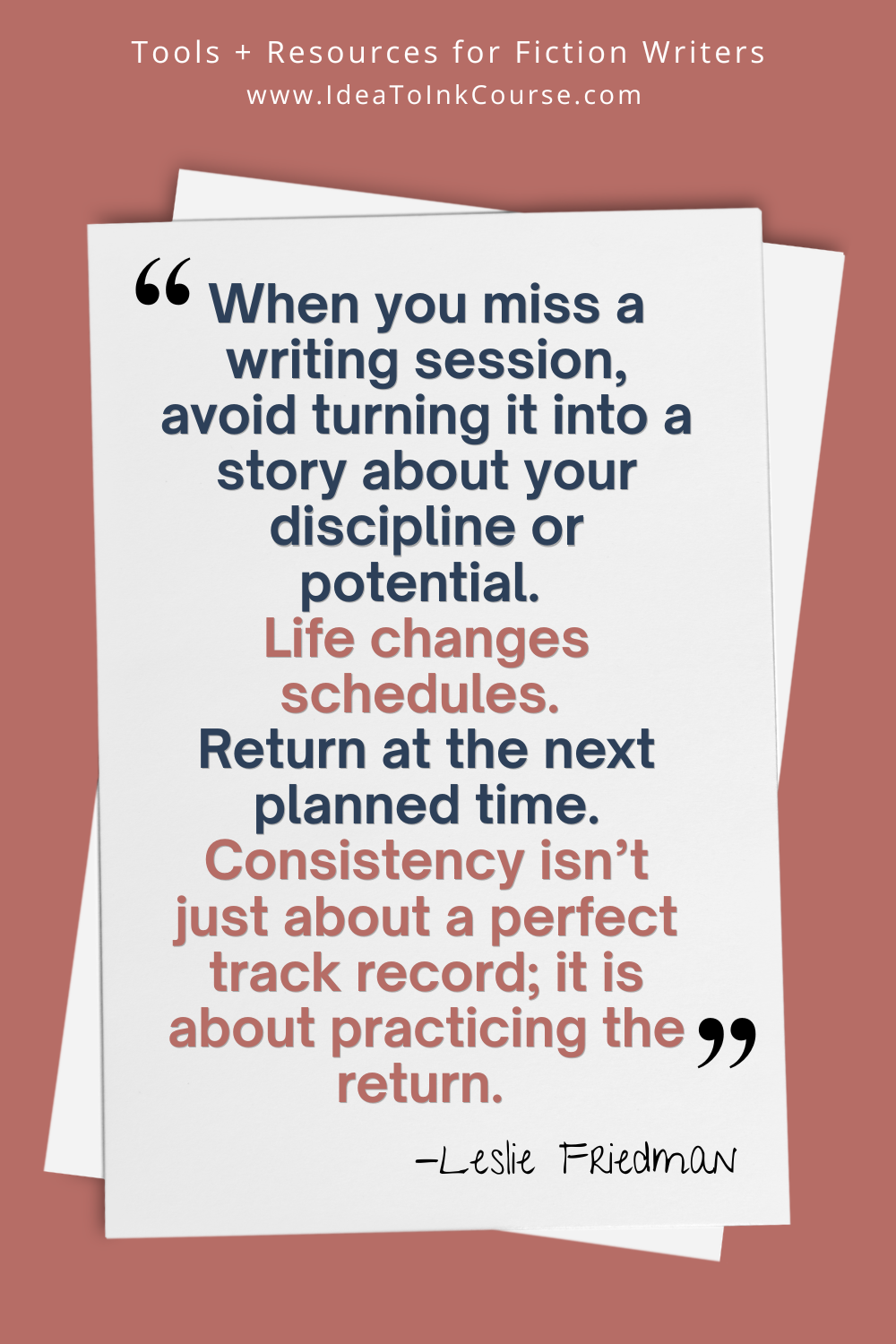
When you miss a session, avoid turning it into a story about your discipline or potential. Life changes schedules. Return at the next planned time. Consistency isn't just about a perfect track record; it is about practicing the return.
Let Your Voice Grow on the Page
Many aspiring authors worry that they have not found their voice. The good news is that voice is rarely discovered through waiting. It develops through use.
Your voice is shaped by what you notice, the questions you ask, the stories you choose, and the way you explain what matters to you. It becomes clearer as you write more pages and stop trying to sound like a writer you admire. Reading widely can strengthen your craft, but copying another writer's rhythm can keep you distant from your own perspective.
Try this: write one page about a subject you care about without imagining an audience, market, or final product. Explain it as you would to someone who genuinely wants to understand. Then read it back and underline the phrases that sound most natural to you. Those moments are clues, not accidents.
Your book does not need a flawless beginning to deserve your commitment. It needs your next honest page, a plan you can follow, and the willingness to return when confidence feels quiet. Start there, and let your evidence grow.
If you're curious about how confidence and your writer identity affects your writing habits, check out this article.

Ready to write your book?
Download the Essential Book Writing Templates for FREE and start strong.
We hate SPAM. We will never sell your information, for any reason.