The Brutally Honest, No Fluff Guide to Editing Your Book (Everything You Need to Know Before You Hit Publish)
Editing is the part of writing that most first‑time authors dread. Honestly, I’ve published double‑digit books and I still hate it. It’s not glamorous. It’s not fast. And it’s definitely not as fun as those early days when you’re high on inspiration and coffee, typing like you’re possessed by the spirit of a Victorian novelist.
But here’s the truth...
Editing is where your book becomes an actual book.
It’s the difference between a messy brain dump and a polished, powerful, “holy crap I wrote this” manuscript.
This guide breaks down everything you need to know about editing your book (even if you’ve never written anything longer than a college essay). We’ll walk through the stages, the tools, the mindset, the mistakes, and the exact order to tackle it all.
Let’s get into it.
Why Editing Matters More Than You Think
Most new authors think editing is just “fixing typos.”
Nope. I wish. That would make things so much easier.
Alas, editing is:
- Clarifying your message
- Strengthening your voice
- Eliminating confusion
- Fixing pacing
- Making your story (or content) actually make sense
- Ensuring readers don’t throw your book across the room
A well‑edited book feels effortless to read. A poorly edited one feels like homework.
And readers can tell the difference instantly. Have you ever started a book and ended up not finishing it because the narrative or pacing or something else just felt... off? Yup, editing could have fixed that. And sure, maybe you weren’t the target market and the author was writing for someone who loves reading sludgingly slow stories (yes, I know sludgingly is not a real word, but the alliteration was too good to pass up), but still.
The Four Stages of Editing (And Why You Should Never Skip Any of Them)
There are four major stages of editing. Each one has a different purpose, and skipping even one can tank your book.
Honestly, when I first started, I thought editing was a one‑and‑done situation. Imagine my shock when I went to hire an editor and discovered there were multiple types of editors who each specialized in their own stage of editing... stages I did not know existed until that moment. So let me save you that same shock and break it down for you.
Here’s the big picture:
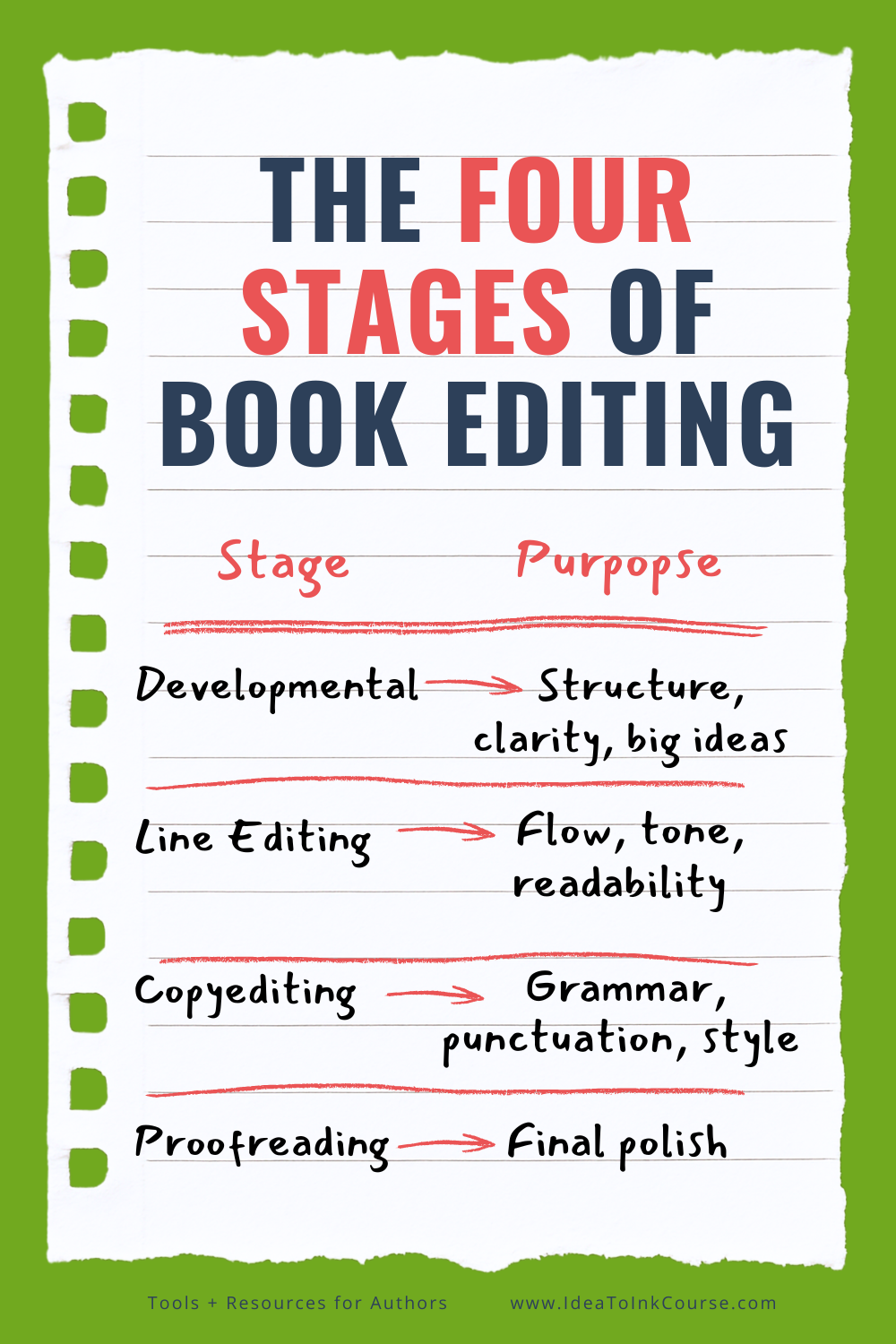
Let’s break them down one by one.
-
Developmental Editing (The “Fix the Big Stuff” Stage)
This is the stage where you zoom out and look at the entire book as a whole. Think of it like rearranging furniture before you start dusting.
Developmental editing focuses on:
- Structure
- Plot or logical flow
- Missing pieces
- Repetition
- Confusing sections
- Character arcs (for memoir or fiction)
- Consistency (why did Uncle Jimmy become Uncle Cletus halfway through?)
This is the stage where you ask:
- Does this book make sense?
- Does it flow?
- Does it deliver the message I intended?
- Does anything feel boring, confusing, or unnecessary?
Pro tip:
If you’re going to cry during editing, this is the stage. It’s normal. Your editor will suggest removing a scene you are deeply attached to... so deeply attached that you cannot see how it drags down the entire book.
In theory, developmental editing seems easy. You’ve planned, written, and reread your manuscript a million and a half times. There are no plot holes. Everything is perfect. Except... remember that whole “can’t see the forest for the trees” thing? Yeah. That’s what’s happening here. You are so close to your own work that you need fresh eyes to tell you your forest is on fire (and no, it’s not just summer).
-
Line Editing (The “Make It Sound Good” Stage)
Once the big stuff is fixed, you zoom in.
Line editing focuses on:
- Sentence flow
- Tone
- Voice
- Word choice
- Clarity
- Rhythm
This is where you ask:
- Does this sentence say what I want it to say?
- Does it sound like me?
- Is it readable?
- Can I make this tighter or clearer?
Line editing is where your writing starts to feel polished and intentional. In my opinion, it’s very obvious when authors skip this step (or do it themselves without having anyone else look it over). Tenses shift unexpectedly. Your main character develops a weirdly predictable habit every three pages (she raised her eyebrows and sighed... again). Or the rhythm doesn’t match the tone at all.
Line editing is the difference between “fine” writing and writing that actually feels good to read.
-
Copyediting (The “Fix the Technical Stuff” Stage)
This is the grammar and punctuation stage. The weeds. The commas. The stuff that makes most authors want to fake their own death. No? Just me?
Copyediting focuses on:
- Grammar
- Spelling
- Punctuation
- Capitalization
- Style consistency
- Formatting consistency
If you’re not a detail‑oriented person, hire someone for this. Truly. Besides line editing, this is the best use of your resources. It is absolutely worth crying over an editor “ruining” your masterpiece so you don’t have to deal with this part yourself.
-
Proofreading (The “Final Polish” Stage)
This is the last step before publishing.
Proofreading catches:
- Typos
- Formatting errors
- Missing words
- Weird spacing
- Final inconsistencies
By this point, you’ve read your manuscript so many times you could recite it in your sleep. You’re tired. You’re over it. You’re ready to set it on fire.
That’s exactly why you need a proofreader.
Have you ever read a book and spotted a glaring error and thought, “How in the world did they miss that weird space?” That is what proofreading fixes. And honestly, I’ve had multiple editors go over my work and I’ve still found errors (usually when I’m reading my own book out loud, which is a great way to catch mistakes but also mildly awkward and takes forever). That doesn’t mean the editors were bad... it just means this happens to everyone.
It may be tempting to skip this step because so many people have already seen your manuscript, but don’t.
How Long Does Editing Take? (A Realistic Timeline)
Here’s a simple chart to help you estimate:
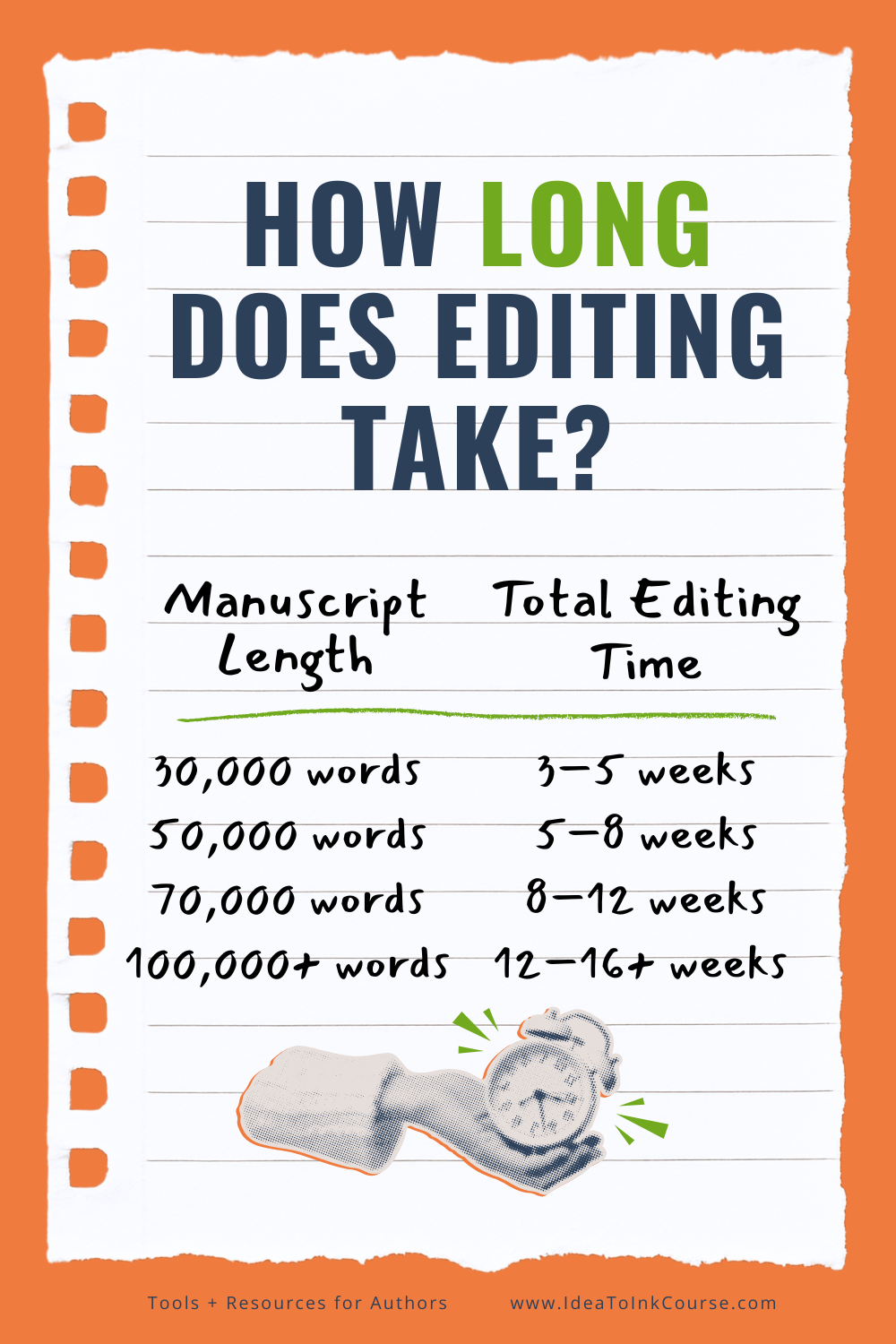
This assumes you’re doing some editing yourself and outsourcing some.
If you’re doing everything alone, double the timeline. You will want time in between readings to step away and come back with fresh eyes (or as fresh as they can be after writing, reading, and sleeping this book for however long).
Should You Edit Your Own Book? (Yes... and No)
Here’s the honest breakdown:
You SHOULD edit your own book because:
- You know your message best
- You’ll save money
- You’ll become a better writer
You SHOULD NOT edit your own book exclusively because:
- You’re too close to the work
- You’ll miss obvious mistakes
- You’ll read what you meant to write, not what’s actually there
The sweet spot is a combination:
You edit → someone else edits → you edit again → final proofreader.
How to Edit Your Own Book Without Losing Your Mind
Here’s a simple, repeatable process:
- Take a break first
Seriously. Step away for at least a week. Your brain needs distance. On average, it takes me about four times longer to edit my own books (and that’s just self‑editing before it goes to a paid editor) than it does to write them.
- Print it out
Your eyes catch different mistakes on paper. Plus, it’s kind of fun to grab a red felt‑tip pen and play teacher while marking up your manuscript (fun and a little less depressing).
- Read it out loud
If you feel like an idiot reading it, it probably needs fixing. I can’t tell you how many flow issues I’ve found just by reading my work out loud. I don’t enjoy doing it, but it’s one of the most effective ways to check pacing, rhythm, and general readability
- Use editing tools (but don’t rely on them)
Tools like Grammarly or ProWritingAid are helpful, but they are not editors. I self‑edit (with no tools), then run my work through Grammarly, and then send it to a series of editors and beta readers.
And I’m going to say it again for the kids in the back who think Grammarly can fix everything: Grammarly is not an editor. Neither is an AI tool like ChatGPT or Copilot. They can help in certain ways, but they are not the same as a trained human editor.
- Edit in layers
Don’t try to fix everything at once.
Do one pass for structure, one for flow, one for grammar, etc. Layered editing keeps you from spiraling into perfectionism and makes the process much more manageable.
Common Editing Mistakes First Time Authors Make
Let’s save you some pain.
Mistake 1: Editing while writing
This kills momentum. First drafts should be messy. What I commonly see is authors who get stuck on chapter three and never get any further because each chapter “needs to be perfect” before they move on. False. That is how you never make it past three chapters.
Mistake 2: Skipping developmental editing
You cannot polish a broken structure. There is nothing more torturous than having a six‑figure word count book that you have paid several thousand dollars to edit, only to realize there are major plot holes.
Mistake 3: Thinking spellcheck is enough
It’s not. Neither is AI. I know I already said it, but it bears repeating.
Mistake 4: Not hiring at least one editor
Even the best writers need outside eyes. Most new authors cannot afford to hire multiple editors, but trying to save money by skipping editing altogether is the biggest mistake you can make.
Mistake 5: Rushing to publish
Editing takes time. Do not sabotage your own book. Refer to the chart above and build in enough time for your editors to comfortably complete their work and send it back to you before your publishing date.
How Much Does Editing Cost? (A Quick Breakdown)
Prices vary, but here’s a general guide:
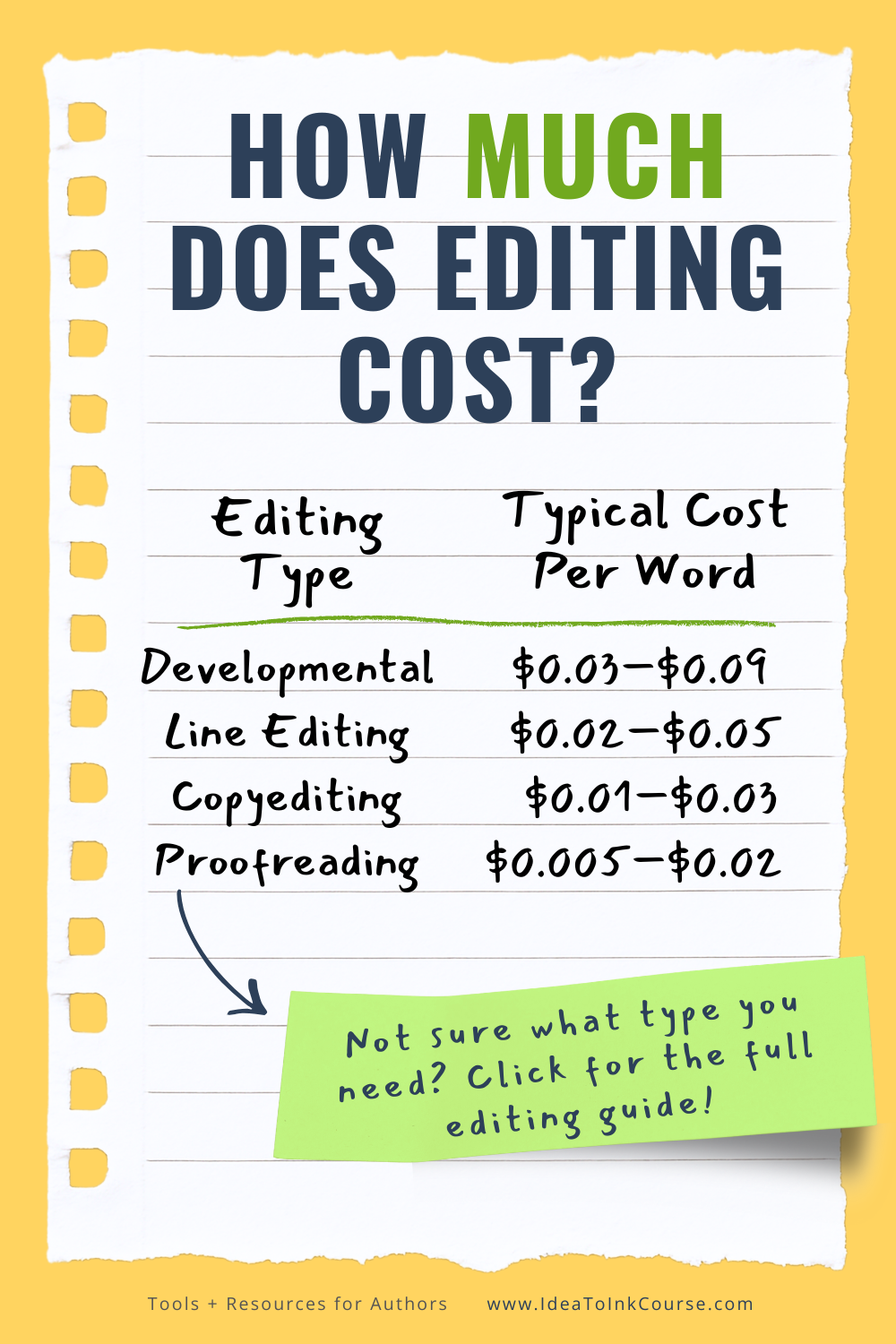
If you are on a budget, prioritize:
- Developmental editing
- Proofreading
Those two alone can save a book.
How to Find a Good Editor (And Avoid the Bad Ones)
Look for editors who:
- Have experience in your genre (so important)
- Offer sample edits
- Communicate clearly
- Respect your voice (a good editor will not erase your voice, they will protect it and flag anything that might be an issue without flattening your character or style)
- Do not try to rewrite your entire book
Red flags:
- They guarantee bestseller status
- They rewrite your voice
- They are vague about pricing
- They cannot explain their process
Remember, it is okay to try out editors on a probationary basis. When I am testing an editor I have never used before, I usually send over the first chapter of my book. You could also send just a few pages. It needs to be enough for them to get a feel for your voice, but not so much that it wastes time and money.
I usually pay a set fee for the “test run” and then negotiate a price based on the quality of the work. This is just the method that has worked for me. I encourage you to talk with other authors and see what their hiring methods are.
Where to Find Editors (Without Getting Scammed or Overwhelmed)
Finding a good editor can feel like online dating. There are a lot of options, a lot of red flags, and a few absolute gems. The good news is that there are several reputable places to look.
Reedsy is one of the most popular platforms for authors because every editor is vetted and you can browse by genre, experience, and price. Upwork and Fiverr can also be great if you are on a tighter budget, but you will need to vet people more carefully (ask for sample edits and check their portfolio). You can also find editors through writing Facebook groups, author communities, local writing centers, or by asking other authors who they have worked with.
And don’t forget: some editors specialize in certain stages of editing, so make sure you are hiring the right person for the right job. The goal is to find someone who respects your voice, understands your genre, and communicates clearly.
What to Expect When Working With an Editor
A good editor will:
- Ask questions
- Challenge you
- Push you
- Support your vision
- Make your book better
A great editor will make you say, “Oof... okay, that hurts, but you’re right.”
Final Thoughts: Editing Is Where You Become an Author
Writing is emotional. Editing is strategic.
Writing is expressive. Editing is intentional.
Writing is the spark. Editing is the craft.
Your book deserves both.
Take your time. Trust the process. And remember:
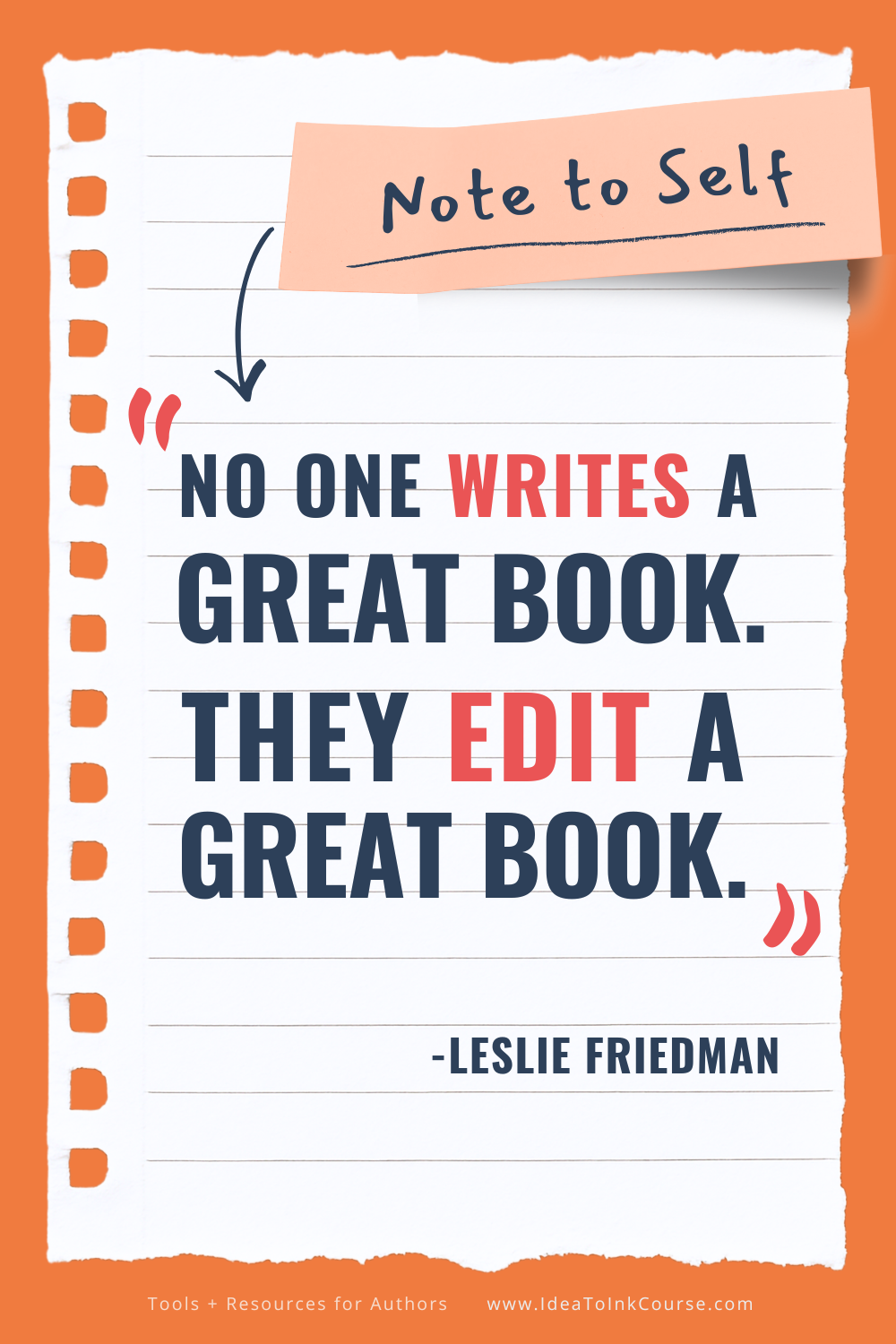
No one writes a great book. They edit a great book.
Ready to write your book?
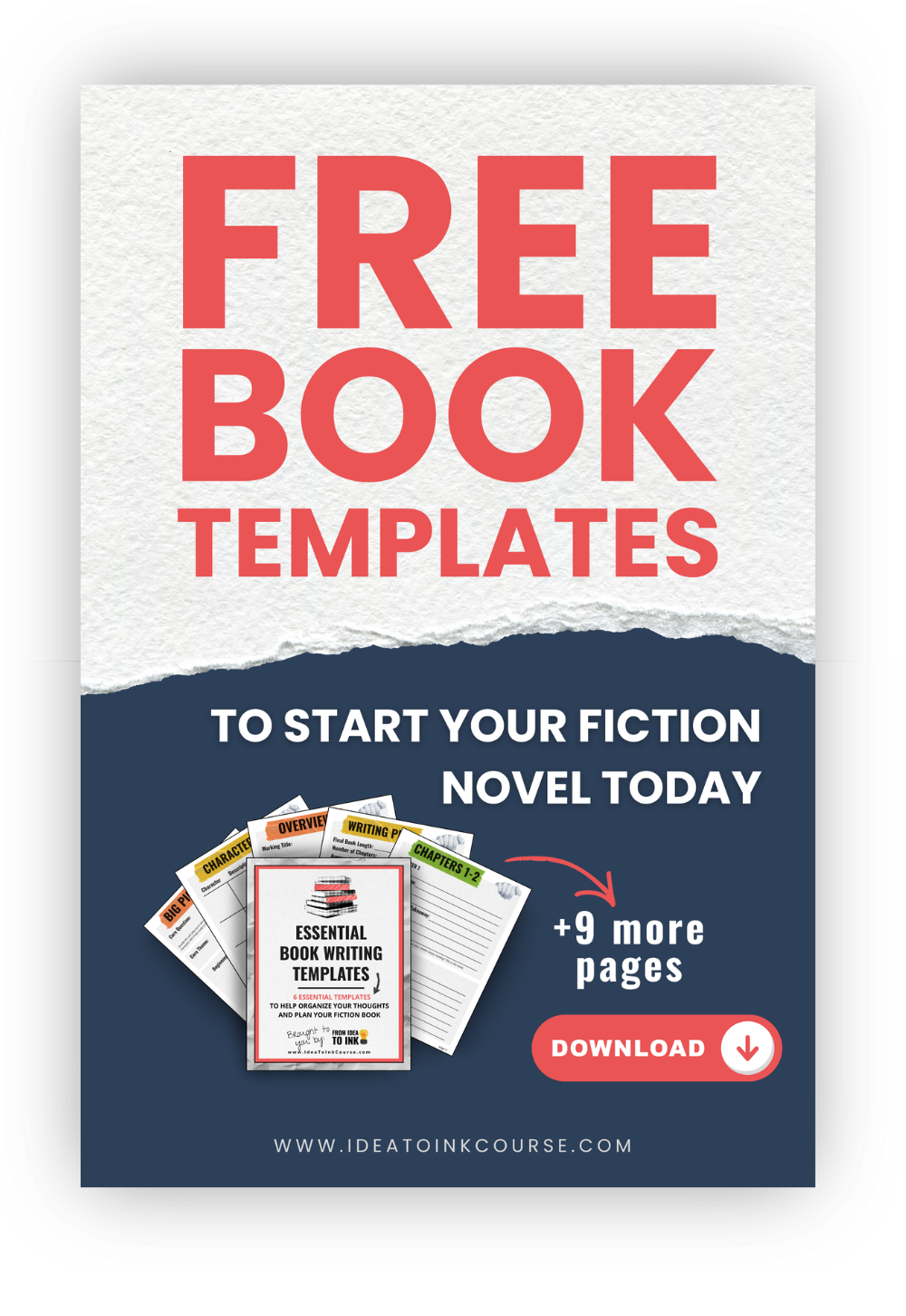
Download the Essential Book Writing Templates for FREE and start strong.
We think SPAM is icky. We will never sell your information, and you can unsubscribe at any time.