How to Plan a Fiction Book (Without Losing the Magic or Your Mind)
Planning a fiction book is a bit like planning a road trip: you want enough structure to know where you’re going, but not so much that you can’t take the scenic route when inspiration hits. Most writers get stuck because they think planning means locking themselves into a rigid outline. It doesn’t. Planning is simply making decisions early so your creativity has room to breathe later.
If you’ve ever sat down to write and felt overwhelmed, scattered, or unsure where to begin, this guide is your new compass. I’m going to walk through a planning process that’s flexible, intuitive, and designed for real humans with real lives (not mythical writers who have eight uninterrupted hours and a cabin in the woods).
And if you want a little extra support as you go, I’ll point you toward a few resources (including my free novel‑planning templates, my Idea to Ink E‑Course, and my 1:1 nonfiction book coaching) that can help you build momentum without burning out.
Planning isn’t about limiting your story; it’s about liberating your brain.
Let’s dive in.
Why Planning Your Fiction Book Matters (Even If You’re Not a Natural Planner)
Some writers resist planning because they fear it will kill the magic. But here’s the truth: planning protects your magic. It keeps you from wandering into plot quicksand, burning out halfway through, or rewriting the same chapter twelve times.
Planning gives you:
- Clarity (so you know what you’re building)
- Momentum (so you don’t stall at chapter three)
- Confidence (so you stop second‑guessing every creative choice)
- A map (so you can explore without getting lost)
Think of planning as scaffolding. It holds your story up while you build it, but it doesn’t dictate the final shape.
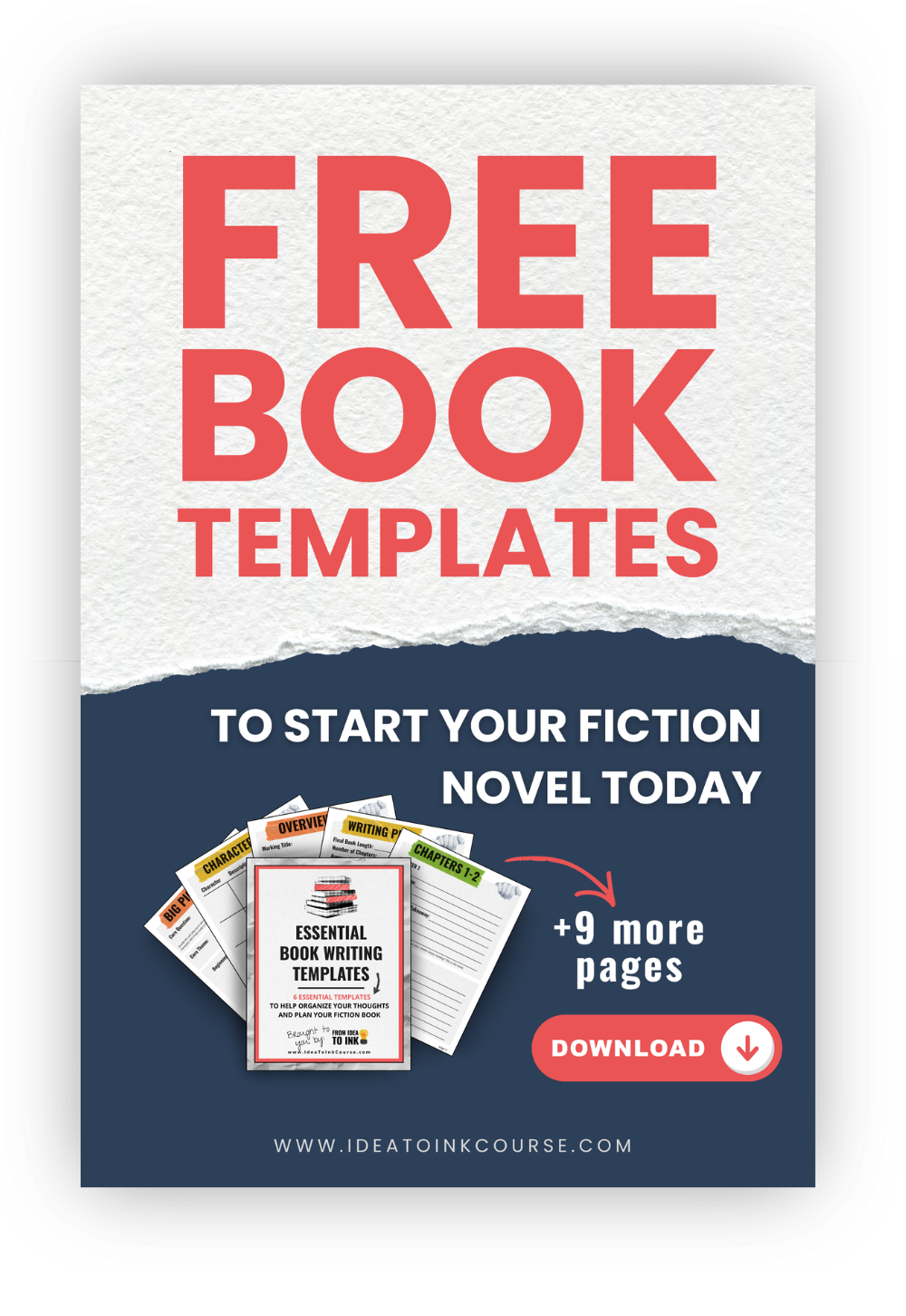
If you want a simple, printable way to get started, my free novel‑planning templates walk you through the core decisions step‑by‑step. They’re perfect if you want structure without overwhelm.
Think of your plan as a promise to your future writing self: I won’t leave you guessing.
Step 1: Start With the Heart of Your Story
Before you think about plot, structure, or worldbuilding, you need to know the emotional core of your book. This is the heartbeat; the thing that makes your story worth writing.
Ask yourself:
- What is this story really about?
- What question am I exploring?
- What emotional journey do I want the reader to experience?
- What emotional journey does my protagonist need to experience?
This is your story’s North Star. Everything else (plot twists, character arcs, worldbuilding) orbits around it.
If you’re someone who thrives with guided prompts and examples, the Idea to Ink E‑Course goes deep into this foundational work. It’s designed to help you build a story that feels cohesive from the inside out.
If you know the heart of your story, you’ll never lose your way.
Step 2: Clarify Your Main Character’s Transformation
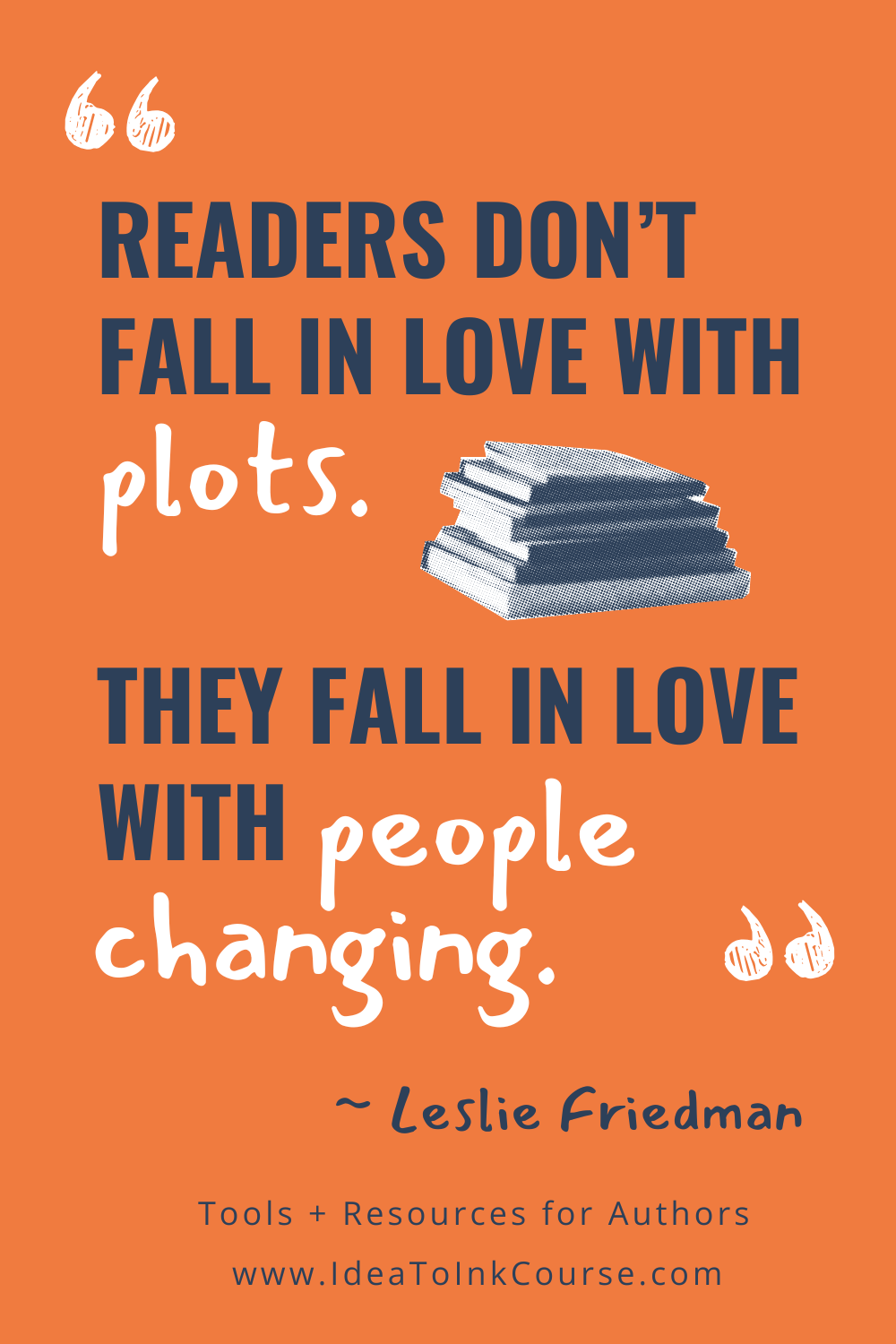
Readers don’t fall in love with plots. They fall in love with people changing.
Your protagonist’s transformation is the spine of your story. It’s the before‑and‑after picture that gives your book shape.
Define three things:
- The Want
What does your character think they want?
- The Need
What do they actually need to grow?
- The Wound
What past experience shaped their worldview?
Once you know these, your plot becomes a series of events that challenge your character’s worldview and force them to evolve.
If you’re writing nonfiction or memoir and want help shaping your own transformation arc, that’s exactly the kind of work I do in 1:1 nonfiction book coaching…helping you turn lived experience into a compelling narrative arc.
Step 3: Build Your Story World (Just Enough to Start)
Worldbuilding is both delicious and dangerous. It’s easy to spend months creating maps, magic systems, and political histories without writing a single chapter.
For planning purposes, you only need to define:
- The rules (magic, technology, society)
- The limits (what can’t happen)
- The vibe (tone, atmosphere, aesthetic)
- The key locations (where major scenes unfold)
Your goal as an author is to create a world that feels relatable and lived‑in, not encyclopedic.
Step 4: Choose a Plot Structure That Supports You (Not the Other Way Around)
There is no single “right” way to structure a novel. But choosing a framework gives you a starting point.
Here are three beginner‑friendly options:
- The Three‑Act Structure
Simple, intuitive, and widely used.
- The Hero’s Journey
Great for fantasy, sci‑fi, and adventure.
- The 7‑Point Plot Structure
Perfect for writers who want clarity without rigidity.
Choose the one that feels like a helpful guide, not a cage.
In our Idea to Ink E-Course, we use a combination of the Hero’s Journey and the Three-Act Structure, which is great for beginners while still allowing for complexity in the plot.
When it comes to writing a book, structure is a container, not a constraint. Plot structure exists to provide you a path, not to dictate how you experience the journey.
Step 5: Create a Chapter‑Level Roadmap
This is where planning becomes practical.
A chapter roadmap is not a detailed outline. It’s a list of narrative beats that help you see the shape of your story.
For each chapter, jot down:
- What happens
- Who is involved
- What changes
- What the reader learns
- How it moves the character arc forward
Aim for 12–20 chapters, depending on genre and pacing.
If you want a plug‑and‑play version of this, the free novel‑planning templates include a chapter‑by‑chapter roadmap you can print or use digitally.
Step 6: Identify Your Story’s Tension Threads
Tension is what keeps readers turning pages. Without it, even the most beautiful prose falls flat.
Your story needs three types of tension:
- External Tension
The plot‑level conflict.
- Internal Tension
The emotional struggle.
- Relational Tension
The dynamics between characters.
Mapping these threads early helps you avoid saggy middles and flat scenes.
Too much tension and you stress the reader out. Not enough, and you bore them to death. Tension is the quiet engine that drives your story forward, and balancing that tension is a craft that authors hone with practice.
Step 7: Plan Your Key Turning Points
Every strong story has a few pivotal moments. These are the scenes readers remember long after they close the book.
Identify:
- The inciting incident
- The point of no return
- The midpoint shift
- The dark night of the soul
- The climax
These moments anchor your story and give your writing sessions direction.
In the Idea to Ink E‑Course we call this the Moment of Truth, or MOT. What new nugget of wisdom does your character learn that changes them forever? And, what do they do with that nugget?
Step 8: Build a Flexible Writing Workflow
Planning your book is only half the journey. You also need a writing rhythm that supports your life.
Try this simple workflow:
- Weekly planning session (10 minutes)
- 3–5 writing sessions (25–45 minutes each)
- One “anchor session” for revising or expanding
- A running idea list for spontaneous inspiration
This keeps you moving without burning out.
If you want a guided, step‑by‑step writing workflow that takes you from idea to finished draft, the Idea to Ink E‑Course is built exactly for that (especially if you’re juggling writing with a full‑time job or family life).
Step 9: Protect the Magic
Planning should never suffocate your creativity. It should amplify it.
Protect the magic by:
- Leaving space for discovery
- Allowing characters to surprise you
- Letting scenes evolve naturally
- Revisiting your plan as you learn more
Your plan is a living document. Update it. Break it. Bend it. Let it grow with your story.
Final Thoughts: Planning Is the First Act of Courage
Planning a fiction book isn’t about being organized. It’s about being brave enough to say:
“This story matters, and I’m going to build it with intention.”
You don’t need a perfect outline. You don’t need a 40‑page world bible. You don’t need to know every twist before you begin.
You just need a compass, a character who wants something, and the willingness to take the first step.
If you want support as you go:
- Grab the free novel‑planning templates to get started today
- Join the Idea to Ink E‑Course if you want a guided, beginner‑friendly path
- Explore 1:1 nonfiction book coaching if you’re writing memoir or nonfiction and want personalized support
Your story is waiting.
Your readers are waiting.
And now...you have a plan.

Ready to write your book?
Download the Essential Book Writing Templates for FREE and start strong.
We hate SPAM. We will never sell your information, for any reason.