10 Best Tools for First Time Authors to Start
A blank document can make a meaningful book idea feel much bigger than it is. You may know the story you want to tell, the lesson you want to share, or the readers you want to help. But without a place to capture ideas, a plan for the pages ahead, and a routine that fits real life, it is easy to keep postponing the first chapter.
The best tools for first time authors do not write the book for you. They reduce the friction between your idea and your next writing session. Choose tools that give you clarity, protect your focus, and help you see progress before motivation has a chance to disappear.
Start with a tool for your book's big picture
Before you need a sophisticated writing app, you need a direction. A book-planning template (we have free ones here!), workbook, or set of guided prompts can help you turn a broad idea into a project you can actually begin.
For fiction, look for planning pages that help you identify your main character, their goal, the obstacle in their way, and the change they will experience. For nonfiction, choose a framework that clarifies your reader, your core promise, and the key chapters that will deliver that promise.
This is not about forcing every sentence into an outline. It is about making enough decisions that you no longer sit down wondering what your book is about. A simple chapter map can be more useful than a beautiful notebook filled with disconnected ideas.
1. A capture system for ideas
Your best ideas rarely arrive only at your desk. They show up while you are driving, folding laundry, waiting for an appointment, or trying to fall asleep (or at 3am). Use a notes app, a small paper notebook, or voice memos to collect those moments before they vanish. I keep my phone by my bed (I know, I know, it's bad sleep hygiene, but that's how I write down all of my genius 3am ideas) and a notes app handy.
The specific tool matters less than the habit. My husband records all of his ideas on his commute to work. He starts a voice memo before leaving the parking garage and then just talks out his ideas the whole way to work and then turns off the app after he parks at work. (Note- This is only a good idea if you aren't operating your phone WHILE you are driving. Please be smart and wait until you are parked to use your phone.) Create a few repeatable categories, such as scene ideas, character details, research, chapter questions, and lines you want to remember. When you return to your draft, you will have a small library of material instead of relying on memory.
If digital notes tend to become a cluttered catch-all, keep it simple. One note for your current book and one inbox for everything else is enough to start. I personally use a paper notebook (because who doesn't love buying new notebooks) to keep all my book info in.
2. A book outline or chapter map
An outline is not a contract. It is a working map that helps you recognize the next turn in the road.
First-time authors often avoid outlining because they fear it will make the writing feel rigid. In practice, a flexible plan usually creates more freedom. When you know the purpose of the next chapter, you can spend your energy writing instead of repeatedly deciding what comes next.
A fiction writer might list the major turning points and one or two scenes that belong in each chapter. A nonfiction writer might name the question each chapter answers and the example, story, or exercise that makes it useful. Keep your map visible while you draft, then revise it whenever the book shows you a better path.
In our Idea to Ink E-Course (where we write a first draft in 21 days!), I give you a full outline template and help you decide what should be happening each chapter along the way. You can find more about this course here.
3. A distraction-light drafting space
You do not need expensive software to write a first draft. A basic word processor can work beautifully. I know people who write whole books in Google Docs (I personally use Microsoft Word). What matters is choosing a drafting space you understand well enough to use without stopping every few minutes to format, rearrange, or troubleshoot.
Google Docs is useful if you want easy access across devices and automatic saving. Microsoft Word is familiar for many writers and offers strong formatting options later in the process. Scrivener can be helpful for writers managing many scenes, research files, or character notes, though its learning curve may be more than you need in week one.
Pick one primary home for your manuscript. Moving chapters among several apps can feel productive while creating unnecessary confusion. Your first goal is pages, not the perfect platform.
4. A writing calendar that respects your life
A writing goal without a place on your calendar is often just a hope. A simple calendar, planner, or recurring phone reminder helps you turn your intention into a protected appointment.
Start smaller than your ambition. Two 30-minute sessions each week can build more confidence than a promise to write every day followed by guilt when life gets busy. Decide when and where you will write, and give each session a clear job: draft 300 words, sketch a scene, revise one chapter plan, or answer a guided prompt.
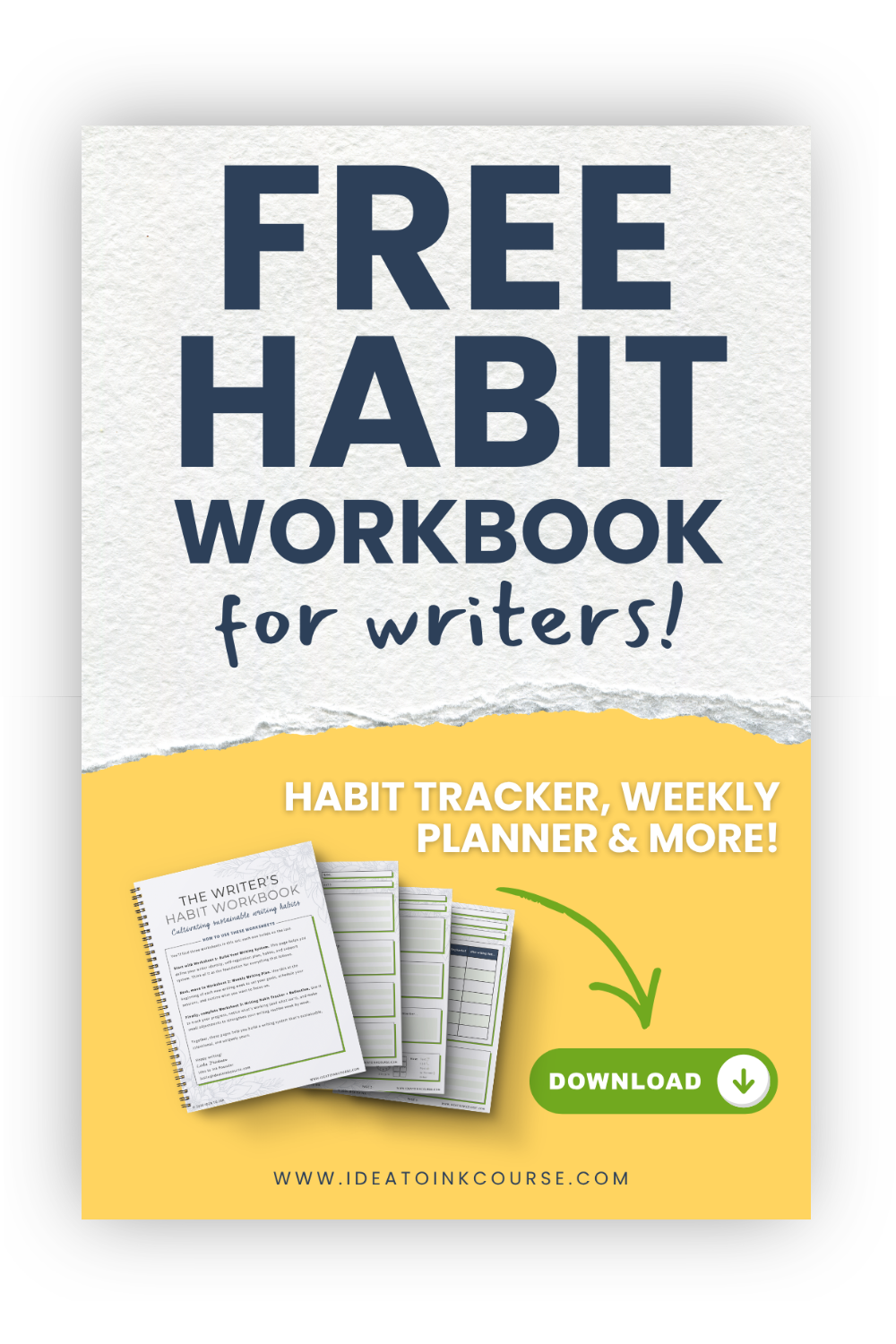
Consistency is not about being perfect. It is about returning to the work often enough that your book stays familiar to you. If you're interested in building better writing habits, you may like this article: Cultivating Sustainable Writing Habits. Also check out the free resource (click the image below) below!

5. A progress tracker you can see
Writing a book takes time, and progress can be hard to feel when you are focused only on what remains. A visible tracker gives your brain evidence that the work is moving.
You might track writing sessions, chapters drafted, scenes completed, or weekly word count in a spreadsheet, a paper chart, or a habit-tracking app. Choose one measure. Tracking five different numbers can become another way to avoid writing.
For some writers, a word-count goal is motivating. For others, especially during planning or revision, session-based tracking is more realistic. The right metric is the one that encourages you to show up rather than making you feel behind.
6. A research organizer
Research can strengthen a book, but it can also become a very convincing form of procrastination. Give your research a clear home and a clear boundary.
A folder system, document, or digital workspace can hold articles, interview notes, source details, images, and questions to investigate. Label information by chapter or topic so you can find it when you need it. If you are writing memoir or fiction, research may include timelines, family details, settings, or sensory references.
Set research tasks that serve the draft. Instead of deciding to “research the 1920s” or “learn about publishing,” write a focused question: What would this character wear to work? What statistic supports this chapter's point? Then return to the manuscript when you have your answer.
7. A grammar and style checker
Grammar tools can catch typos, repeated words, and easy-to-miss errors. They are especially helpful when you are polishing a section after drafting. But they are assistants, not authors.
A checker cannot always understand your voice, your audience, or the deliberate rhythm of a sentence. It may flag a fragment that adds emotional impact or recommend wording that sounds technically correct but unlike you. Review suggestions with judgment, and never accept a change just because software offered it.
Save this tool for later drafts when possible. During early drafting, constant corrections can interrupt your momentum and make a rough first draft feel like a failure. It is not. A draft is allowed to be messy before it becomes clear. I personally use Grammarly but I don't turn it on until AFTER my whole draft is finished. Otherwise, I get bogged down with my complete inability to spell anything.
8. A feedback process with boundaries
Every first-time author needs encouragement, but not every reader should see an early draft. Invite feedback from people who can respond to the stage your manuscript is in.
At the planning stage, ask someone whether your book idea sounds clear and compelling. After a few chapters, ask a trusted reader whether they understand the direction and want to continue. Later, a critique partner, writing group, editor, or coach can help you identify patterns you may not see alone.
Give readers specific questions. “What did you think?” often produces vague answers. Try asking where they felt confused, which section stayed with them, or what they wanted to know next. Specific feedback is easier to use without losing confidence in your own voice.
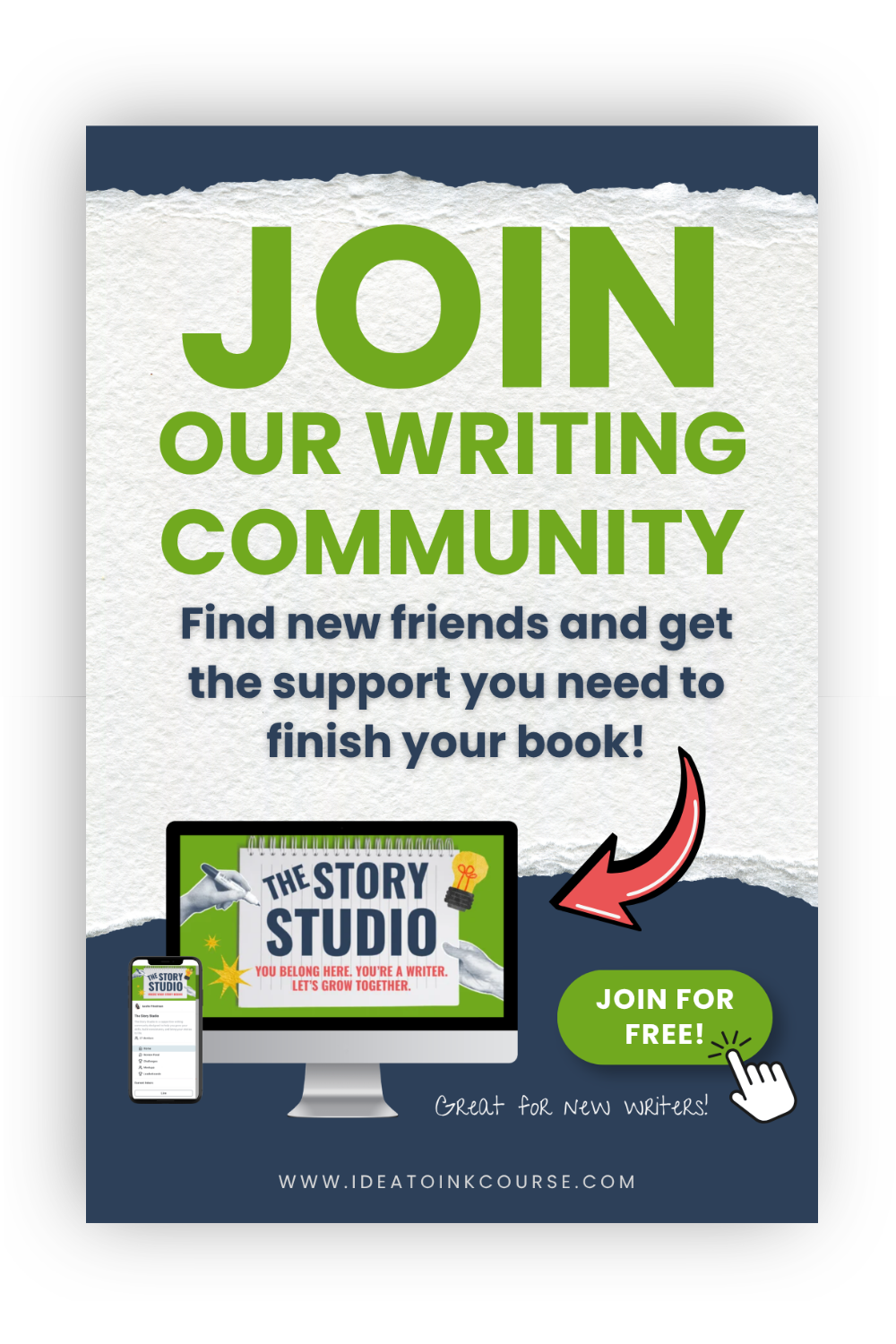
Our online community is a safe space designed to help writers find the support (including trusted reader friends!) that they can rely on. Check it out (and join for free) here or click the image below.

9. A guided learning resource
Writing advice is everywhere, which is exactly why beginning authors can feel overwhelmed. One guided resource with a clear sequence is often more useful than collecting dozens of disconnected tips.
A structured course, writing kit, or set of worksheets can teach you what to do first, what to postpone, and how to keep moving when excitement fades. Look for support that includes practical exercises, realistic milestones, and room for your individual book rather than a one-size-fits-all formula.
Idea to Ink's guided resources are designed for this stage: helping aspiring authors move from a meaningful idea to manageable next steps. The goal is not to make your process identical to someone else's. It is to give you enough structure to trust yourself in the process.
10. An accountability partner or coach
The most effective tool may be another person who knows you are writing a book. Accountability changes a private intention into a commitment you are more likely to honor.
An accountability partner can be a fellow writer, a supportive friend, or a small writing group. Agree on a check-in rhythm and keep it practical. Share what you plan to complete, what got in the way, and what you will do before the next check-in.
Coaching may be a better fit if you want personalized feedback, help making decisions, or support through a sticking point. It is an investment, so consider what you need most. If your main challenge is organizing your book, planning support may matter more than line-level editing. If you have a draft but feel stuck in revision, targeted feedback may be worth it.
We know that coaching can be expensive (I'm literally a book coach. I know), so we thought a lot about how we could help give quality book coaching to everyone. The result? AI. Yes, I know what you're thinking, but stick with me. We created a mini-course (2 hours or less) that will help you create your own specialized book coach and use it to coach you through writing an amazing book (yes, that's right, YOU will still be the one writing the book). You can find out more about How to Use AI as Your Book Coach here.
Build a first-time author toolkit you will actually use
You do not need all ten tools at once. Start with three: a place to capture ideas, a simple chapter map, and a recurring writing appointment. Add a progress tracker when you begin drafting, then bring in editing and feedback tools once you have pages to strengthen.
The best system is not the one with the most features. It is the one that makes it easier to return to your book tomorrow. Open your planning page, choose one small next step, and give your future manuscript a place to begin.

Ready to write your book?
Download the Essential Book Writing Templates for FREE and start strong.
We think SPAM is icky. We will never sell your information, and you can unsubscribe at any time.