Stop Staring at a Blank Page (Start Here Instead!)
If you’ve ever opened a document, placed your hands on the keyboard, and then somehow spent the next twenty minutes fiddling with the margins, you’re not alone.
The cursor blinks.
You stare back.
Nothing happens.
Your brain runs through its usual lines: I don’t know how to start. It needs to sound perfect. Maybe I’ll come back to it later.
You close the document. And the blank page wins again.
But here’s the uncomfortable truth. The blank page isn’t actually the problem. The problem is the expectation you’ve built around what the first sentence should be.
Most people treat the beginning of a writing piece as if it needs to arrive fully formed. Polished. Clever. Impressive. Like the kind of opening line that makes the rest of the piece just fall into place.
That expectation is exactly what keeps the page blank.
Starting isn’t about brilliance. It’s about movement. And once you understand that, the blank page loses most of its power.
The Blank Page Isn’t the Problem
The page isn’t judging you. It’s not whispering, “Wow, that’s the best you’ve got?” That’s you, judging yourself too harshly.
Writers love blaming the blank page. It sounds poetic. Dramatic. The kind of thing someone says while brooding over a notebook beside a rain-streaked window.
But the page is just a page. It has no opinions. No expectations. No standards.
The pressure comes entirely from the person sitting in the chair.
When someone says they “can’t write,” what they usually mean is something much more specific: they’re afraid of writing something that falls short of the perfect version they have in their head.
There’s a difference between inability and hesitation. Inability means the skill simply doesn’t exist. Hesitation means the skill is there, but your mind keeps hitting the brakes.
Think about how people talk when they tell a story out loud. No one freezes mid-sentence because the phrasing isn’t perfect. They keep going. They circle back. They correct themselves. They exaggerate a detail and then laugh about it.
Conversation flows because perfection isn’t part of the deal.
Writing feels different because the words feel permanent from the moment they appear on the page. A rough sentence just sits there on the screen, impossible to ignore.
So instead of writing badly, many people choose something safer. They chicken out and write nothing at all.
The irony is that the blank page feels safer than a messy one.
But a blank page isn’t neutral. It’s stagnant. And stagnation has a way of convincing you the problem is talent instead of part of the process.
You’re Trying to Be Brilliant Too Soon
Imagine someone refusing to start a puzzle until they already know exactly where and how every piece goes.
It sounds ridiculous. Yet writers do the same thing every day.
They sit down expecting the first paragraph to arrive polished and precise, as if clarity should appear before any actual thinking has happened.
But writing doesn’t work that way.
Clarity usually appears halfway through a messy draft. Sometimes it even shows up near the end. Occasionally, it arrives the next morning during editing, when you suddenly realize what the piece was trying to say all along.
The first draft is not where brilliance happens. The first draft is where exploration happens.
You’re testing ideas. You’re feeling your way through a subject. You’re discovering connections you didn’t know existed five minutes earlier.
If the draft looks chaotic, that’s normal. In fact, it’s a good sign. It means something is happening on the page instead of just in your head.
Editing is where writing becomes sharp. Editing is where sentences tighten, examples get clearer, and the real message surfaces.
But editing needs material to work with. And staring at a blank document gives it nothing.
This is the quiet trap of writer’s block. People treat the first draft like a polished performance instead of a rough sketch.
Once you stop expecting brilliance at the beginning, the pressure drops immediately.
Remember, when it comes to first drafts: you’re not writing the final version. You’re just building something the final version can grow from.
Start With This Instead
When the blank page feels overwhelming, the solution is not inspiration. The solution is structure.
Instead of trying to come up with the perfect opening line, start by answering three very simple questions:
- Who is this about?
- What do they want?
- What’s in their way?
That’s it.
Those three prompts can launch almost any piece of writing. Essays, articles, stories, even persuasive content.
Let’s look at how they work.
Who is this about?
Every piece of writing revolves around someone. A person, a group, sometimes even a future version of the reader. Identifying that “who” immediately gives the writing a clear focus.
What do they want?
Desire creates direction. Maybe they want clarity. Maybe they want to solve a problem. Maybe they want to avoid embarrassment or improve a skill. The moment a goal appears, the writing has somewhere to go.
What’s in their way?
This is where tension enters the picture. Obstacles make the writing interesting because they introduce friction. Without friction, there’s no reason to keep reading.
These questions do something powerful. They shift your focus away from the intimidating task of writing an entire article and toward answering a few specific prompts. (Hint- these are also the three things that agents want to know when you are querying your book!)
Momentum starts with small answers.
Once the answers exist, sentences begin forming almost automatically.
You might write something like:
This article is about people who sit down to write and immediately freeze up. They want to produce something good, but the pressure to sound impressive stops them before they can even begin.
Is that perfect? Not even close.
But it’s a start. And a start is all you need.
Momentum beats perfection. Every single time.
Write the Wrong Version on Purpose
Here’s a strange trick that works surprisingly well: deliberately write the wrong version first.
Give yourself permission to write the clumsiest, most awkward explanation possible.
Explain the idea like you’re talking to a friend who already understands what you mean. Skip transitions. Use simple words. Repeat yourself if necessary. Essentially, just word vomit onto the page via the keyboard.
The goal is speed, not polish.
This approach does two important things.
First, it takes the pressure off. If the draft is allowed to be bad, there’s nothing to worry about — you’ve already cleared the bar.
Second, it unlocks movement.
Movement matters because writing improves through revision. Sentences evolve. Paragraphs get rearranged. Ideas sharpen.
None of that can happen without raw material.
You can’t reshape a blank page. You can’t tighten a sentence that doesn’t exist.
And you definitely can’t discover better ideas while just sitting there staring at the cursor.
Think of the first draft as clay. At the beginning, it’s a rough lump of potential just sitting on the table. No details. No refinement.
But once the clay is there, your hands can start shaping it. And, the more you shape it, the better it will become.
Writers who struggle with starting often assume skilled authors produce clean drafts on the first attempt. (Lol!)
In reality, experienced writers simply produce messy drafts faster.
They trust the editing stage to handle the cleanup.
The 10-Minute Ignition Activity
If you need a practical method to break the blank-page cycle, try this.
It’s called the 10-Minute Ignition Activity.
The goal is simple: create enough momentum that stopping becomes harder than continuing.
Here’s how it works:
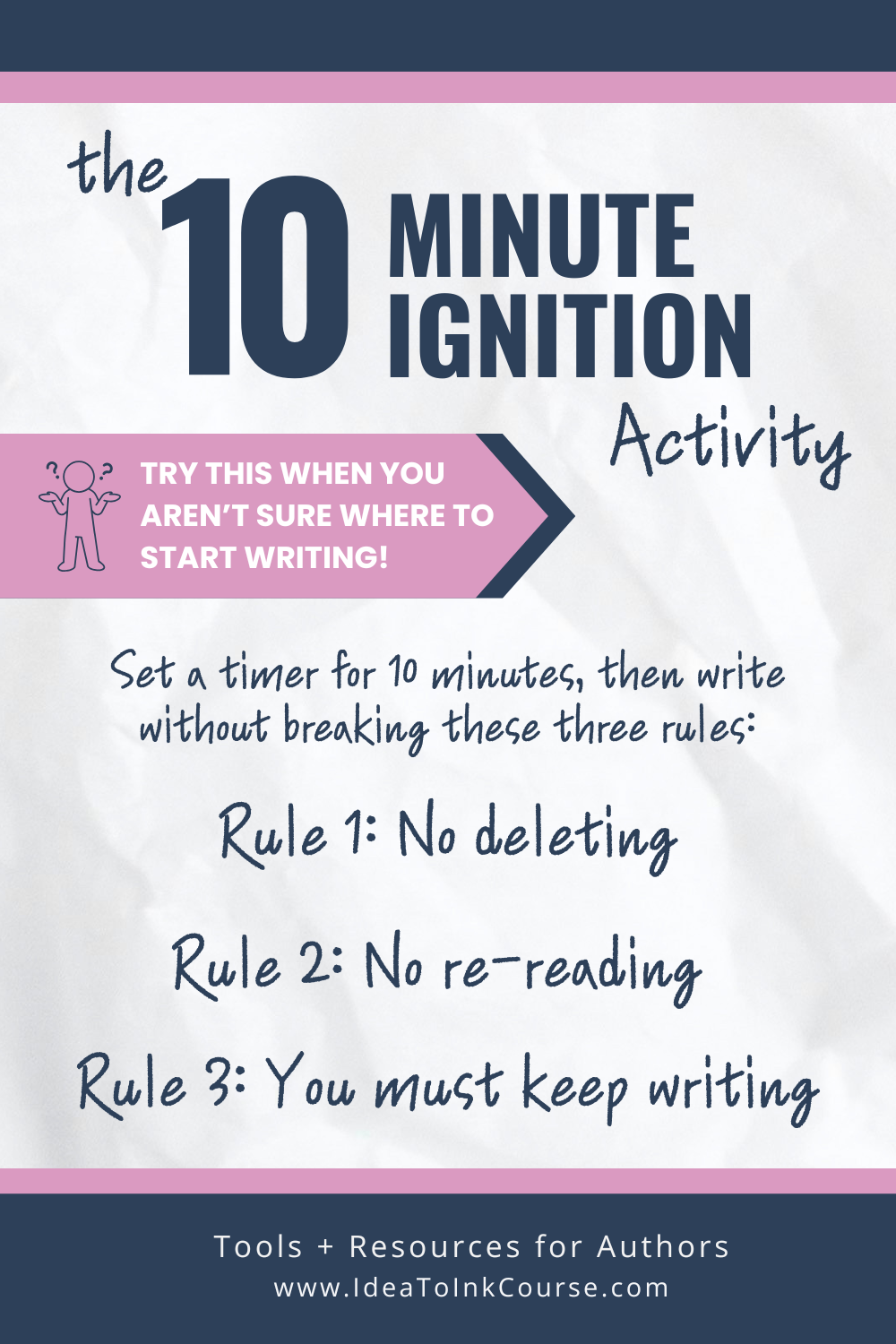
Set a timer for ten minutes.
During those ten minutes, follow three rules:
Rule one: no deleting.
Whatever appears on the page stays there. Even if the sentence feels awkward. Even if you immediately think of a better version. Deleting interrupts momentum, and momentum is the entire point of the exercise.
Rule two: no rereading.
Looking back invites judgment. And judgment slows everything down. Keep your attention moving forward instead of analyzing what’s already written.
Rule three: keep typing.
If you get stuck, write the next obvious thought. If the next thought is “I’m not sure how to explain this,” write that. Then continue.
The timer removes the pressure to produce something amazing. You’re not committing to finishing an article or crafting a masterpiece.
You’re just committing to ten minutes of motion. Think of it like Dory in Finding Nemo: when the words stall, you just keep swimming (🎶 just keep typing 🎶).
Most of the time, something interesting happens around the six-minute mark.
The brain warms up. The hesitation fades. Ideas begin connecting.
And when the timer finally rings, many writers discover they don’t want to stop.
The hardest part of writing isn’t continuing. It’s beginning.
Once the ignition happens, the process starts feeding itself.
When Blank Pages Keep Appearing
If blank-page anxiety shows up once in a while, don’t worry, that's totally normal.
Everyone has days when starting feels harder than it should.
But if it happens constantly, the issue usually isn’t talent. It’s structure.
Without structure, every writing session begins from zero. A new topic, a new direction, new uncertainty about how to organize the ideas.
And so the mind responds by hesitating. Freezing up.
Structure removes that hesitation before it has a chance to grow stronger.
When writers have a clear system for approaching a piece of writing, the blank page stops feeling like an empty void. The overwhelming thought of “where do I even begin?” fades away. Instead, it becomes the first step in a familiar process.
Then you know how to identify the core idea. How to shape the argument or story. How to move from rough draft to refined version without getting stuck halfway through.
In other words, writers don’t rely on inspiration. They rely on a method.
That’s the real difference between writers who constantly battle the blank page and writers who start quickly.
It isn’t creativity.
It’s preparation and practice.
That’s why we spend the first week (!) of our 3-week Idea to Ink writing course just plotting and planning (okay, and daydreaming). Because once you have a roadmap for where you want to go, the journey looks a whole lot less scary.
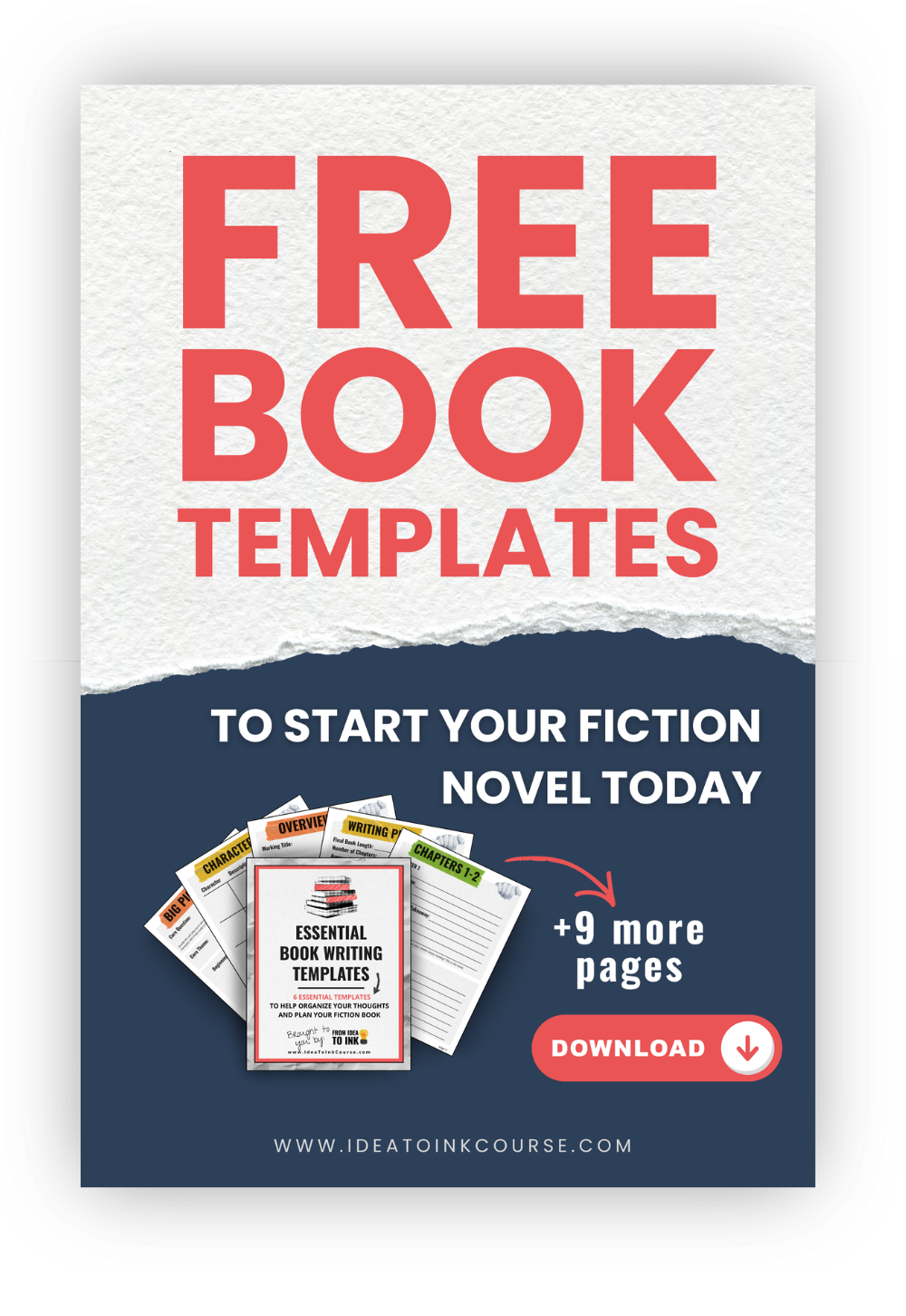
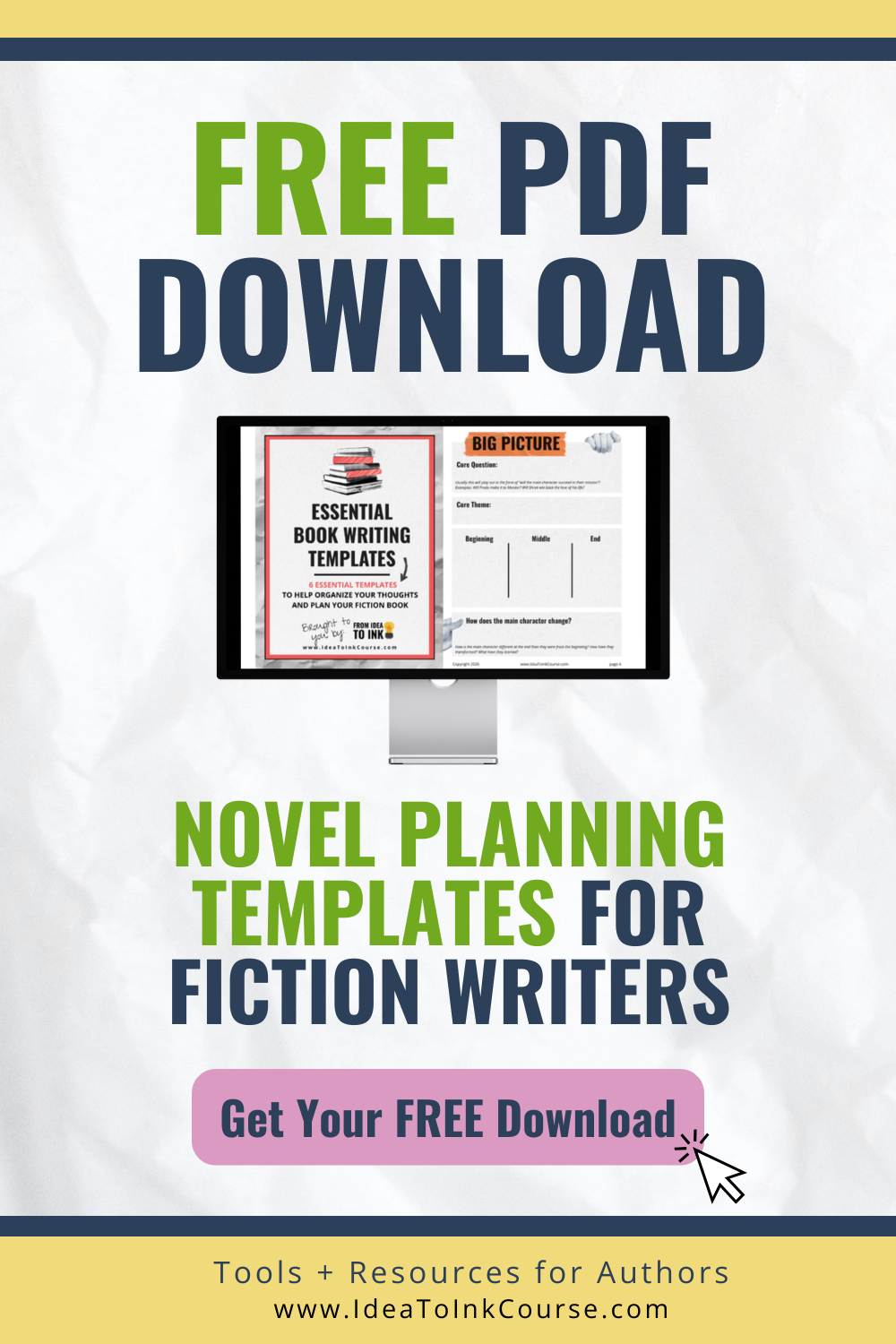
If you are working on (or thinking about writing) a fiction book, you can download these essential planning templates for free. It’s everything to get you moving in the right direction (without the expensive price tag!)
Momentum Is the Real Goal
There’s a quiet misconception about writing that causes more frustration than almost anything else.
Many people believe good writing begins with a good idea. In reality, good writing usually begins with momentum.
Momentum creates ideas. It uncovers angles and paths you didn’t see when you first started. It exposes weak arguments and stronger ones hiding nearby.
Without movement, those discoveries never happen.
The blank page tries to convince you that the first sentence matters more than the process that follows.
It doesn’t.
The first sentence is just the spark. The real work happens after the spark catches.
So, the next time you open a document and feel that familiar hesitation, remember this:
The page isn’t judging you.
You don’t need brilliance yet.
You just need the first imperfect sentence.
Start with who the piece is about.
Write what they want.
Explain what’s in their way.
Set the timer.
Write the wrong version on purpose.
Because the fastest way to overcome blank page anxiety, writer’s block, and the constant struggle of how to start writing isn’t waiting around for inspiration to appear.
It’s creating motion. And once motion exists, the blank page stops being intimidating.
Ready to write your book?
Download the Essential Book Writing Templates for FREE and start strong.
We think SPAM is icky. We will never sell your information, and you can unsubscribe at any time.