Best Novel Planning Templates for New Writers
I recently read a statistic that 81% of people want to write a book, but only about 1% do. That's a lot of people who either don't start or who quit along with way. Here's the thing. Writers don’t quit because they lack talent. They quit because they’re trying to navigate a novel with no map. They quit because their idea lives in fragments: a character voice here, a dramatic scene there, a vague ending they hope will somehow connect. The best novel planning template gives those fragments a place to land so your book stops feeling like a dream and starts acting like a project you can actually finish. (And major bonus points if it's free).
If you have ever opened a blank document and felt both excited and completely stuck, you are not behind. You are likely under-structured. That is fixable. A strong planning template does not take the magic out of writing. It gives your creativity something to build on.
What makes the best novel planning template?
The best novel planning template is not the longest one, the prettiest one, or the one with the most tabs. It is the one that helps you make decisions before those decisions start slowing you down in chapter three.
For most new writers, that means a template should answer five practical questions:
1. What is this story about at its core?
2. Who is driving it?
3. What does that character want?
4. What stands in the way?
5. What changes by the end?
That may sound simple, but simple is useful. A template becomes powerful when it turns big, emotional ideas into concrete story choices. Instead of saying, "I want to write something about grief and healing," you begin to define whose grief, what healing costs, and what events force that transformation.
A good template also creates momentum. You should feel more clear after using it, not more buried in paperwork. If a planning system asks you to spend ten pages detailing your fictional weather patterns before you understand your protagonist's problem, it may be impressive, but it is not helping you start. A good template helps you start and keeps you going once you're writing.
The great news is that planning templates can be completely free, especially if you make your own on a tool like Google Docs or Notion, or get them from somewhere like Idea to Ink! You don't have to spend a million dollars (or even 1!) to get started with the novel you've always dreamed about.
How much should you spend on a Novel Planning Template?
Here’s the honest truth: you should never have to spend a lot of money to start planning your novel. Templates are tools (not luxury items!!) and their entire purpose is to help you get organized, stay focused, and move forward with clarity. That means accessibility matters.
There are plenty of writers who assume they need to buy expensive software, premium planners, or elaborate plotting systems before they’re “allowed” to start writing. But that’s simply not true. In fact, some of the most effective planning tools are the simplest ones.
The great news is that planning templates can be completely free, especially if you make your own on a tool like Google Docs or Notion, or get them from somewhere like Idea to Ink. You don’t have to spend a million dollars (or even one!) to get started with the novel you’ve always dreamed about.
Paid templates can be helpful (especially if they’re thoughtfully designed, genre‑specific, or come with guided examples) but they’re not a requirement-- especially for writers just starting out. Think of them as an optional upgrade, not a barrier to entry.
The sections every workable novel template should include
A useful template does not need to be fancy, but it does need to be complete enough to support a draft. In practice, that usually means including your premise, protagonist, central conflict, supporting characters, story structure, setting, scene ideas, and writing goals.
1. A clear story premise
This is the spine (figuratively, of course) of the book. You need a short statement that captures who the story is about, what disrupts their world, and what they must do next. If you cannot explain the engine of your novel in a few sentences, that is often a sign you need to simplify or clarify before drafting.
This is really important, so listen up! Your premise is not marketing copy. That will come later. your premise is a working tool. It should help you stay oriented when new ideas show up and tempt you away from the story you meant to tell. You'll create your marketing copy later on and, while it will be related to your story premise, it won't be the same thing word for word.
2. A protagonist with a goal and a problem
Many beginners spend time on backstory and almost none on motivation. That creates characters who are interesting in theory...but inactive on the page. The best templates push you to identify what your main character wants, why it matters, and what makes getting it difficult.
That conflict can be external, internal, or both. Usually both works best. A character trying to save a family business is more compelling if she is also wrestling with shame, fear, or a belief that she is not capable of leading.
3. Key plot points, not every scene
This is where many writers either over-plan or under-plan. If you plan every breath, drafting can feel mechanical. If you plan nothing, you may write yourself into circles. A strong middle ground is to map the major turns of the story while leaving room for discovery inside the scenes.
Think of it as planning the bridges, not every step of the road. You want to know the opening disturbance, the first major decision, the midpoint shift, the low point, and the ending. That level of structure is often enough to keep moving without feeling trapped.
4. Supporting characters with purpose
Not every side character needs a biography. They do need a job in the story. A planning template should help you define how each important character influences the protagonist, complicates the conflict, or reveals something essential.
This matters because cluttered character casts often lead to sagging middle chapters. When each person has a clear function, your scenes become sharper and easier to write.
5. A scene bank and writing plan
Ideas rarely arrive in order. One of the most practical parts of any template is a place to store scene fragments, bits of dialogue, emotional beats, and chapter possibilities. This keeps you from losing material and gives you a running list of what to write next.
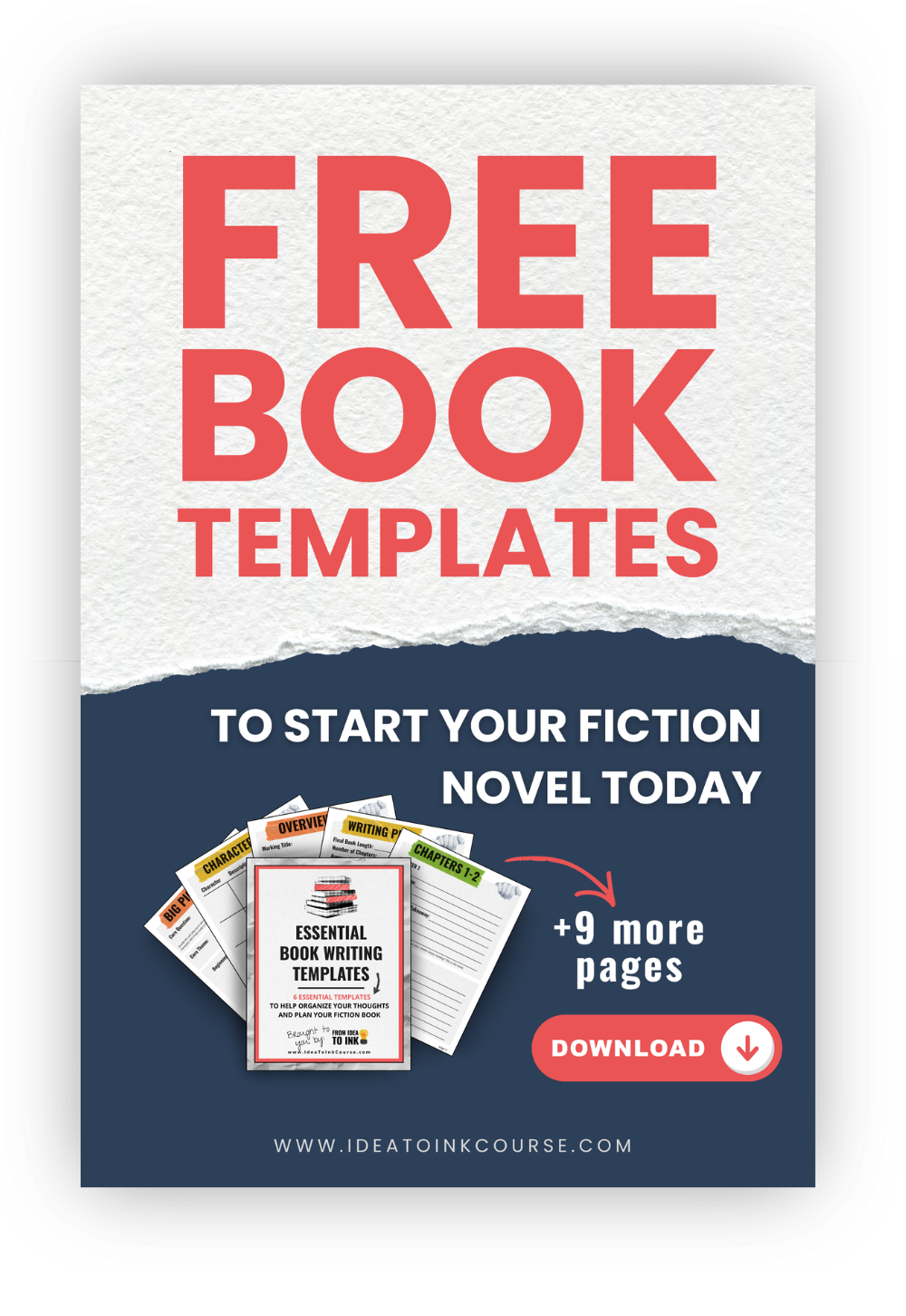
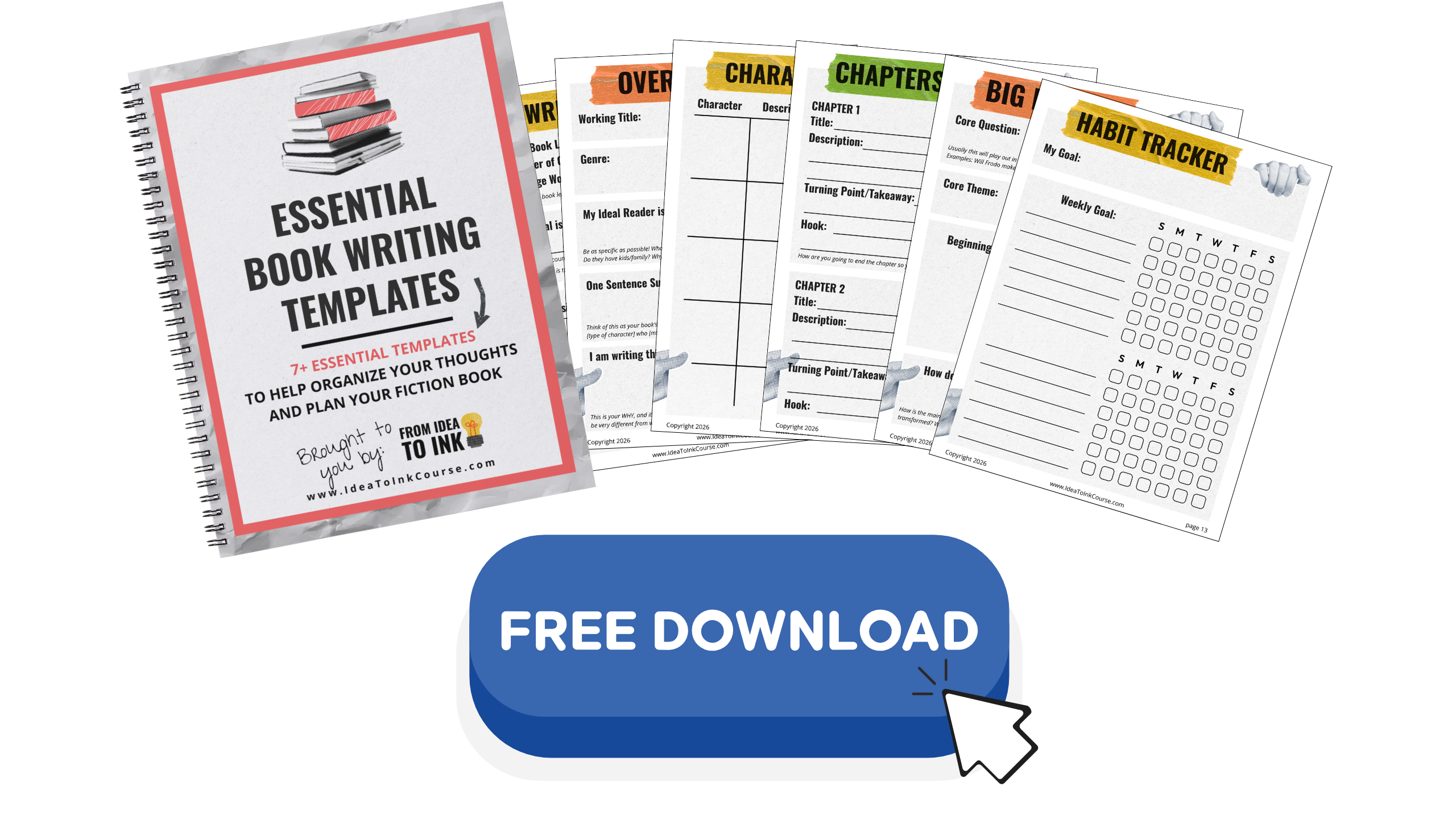
It also helps to include a writing goal section. Not because productivity is more important than craft, but because books get written through repeated sessions, not occasional inspiration. A plan for when and how you will write makes the template real. On the Fiction Novel Planning Templates we give away (that's right, they're free) we have a whole page that helps you figure out how much you need to write a day, etc. We call it chapter math, but I swear it's pretty painless (and that's being said by someone who is best friends with math).
The best novel planning template depends on your writing style
There is no single best novel planning template for every writer in every season. That is the truth most people need to hear earlier.
If you are a natural outliner, you may want a template with stronger plot structure and chapter planning. If you are more intuitive, you may need a lighter framework that lets you discover voice and character on the page while still tracking the core arc. Neither approach is wrong. The issue is whether your template supports your process or fights it.
This is where trade-offs matter. A detailed template can lower anxiety because it reduces uncertainty, but it can also feel heavy if you are still exploring the idea. A simpler template can feel freeing, but it may leave gaps that cause stalls later. The right choice depends on what usually trips you up.
If you tend to start enthusiastically and abandon drafts in the middle, choose more structure. If you tend to overthink and never begin, choose less. You can always deepen the plan once the story gains traction.
What to avoid in a novel planning template
A template should support writing, not replace it. If you find yourself spending weeks filling out forms and still not drafting, the template may be giving you the feeling of progress without actual movement. The free fiction novel planning templates we provide are designed to be filled out in a weekend or less (read: a few hours depending on how much you've thought about your story already).
Watch for planning systems that are too broad, too rigid, or too disconnected from your current stage. Broad templates stay vague and never force decisions. Rigid templates can make you feel like your story is wrong if it does not fit a prescribed beat exactly. And advanced worldbuilding tools can distract beginners who still need a clear protagonist and conflict.
Another common issue is emotional overwhelm. Some templates ask for everything at once. That sounds efficient, but it can freeze a writer who is already doubting herself. Better templates break the process into manageable sections so you can build confidence as you go.
How to choose a template you will actually use
Start by being honest about where your draft stands. If you have only a concept, you need a template that helps you shape premise, character, and conflict (this is what our templates focus on!). If you already know the story but cannot organize it, you need scene and structure support. If you are halfway through a messy manuscript, you may need a revision planning tool more than a fresh-start template.
Then look for clarity over volume. A good template should be easy to navigate and written in language that helps you act. Prompts should lead somewhere. By the end of each section, you should know more than you knew at the start.
Finally, choose something that feels encouraging, not intimidating. This matters more than people admit. If a template makes you feel inadequate, you are less likely to return to it. If it makes the process feel possible, you are more likely to build momentum.
A simple test for whether your template is working
After using your template, you should be able to answer a few questions without rambling. Who is your story about? What do they want? What changes after the opening? What is the biggest turning point in the middle? What would make the ending feel earned?
If those answers are getting sharper, your template is doing its job. If they are still fuzzy, the problem is not that you need more pages. You probably need better prompts and clearer story decisions.
The right template will not write the novel for you. That is good news. It means your voice, your choices, and your imagination still matter most. But when the path is organized, showing up gets easier. And for many new writers, that is the real difference between wanting to write a novel and finally beginning one with confidence.
Ready to write your book?
Download the Essential Book Writing Templates for FREE and start strong.
We hate SPAM. We will never sell your information, for any reason.