Novel Planning Template Free PDF That Works
If you have thirty different character names, half a premise, and a folder full of scattered notes, a novel planning template free PDF can feel less like a download and more like relief. When your book idea is buzzing around your brain with nowhere to live, a template becomes the container that finally lets you breathe. It gives your story a home, a place where loose thoughts turn into something you can shape, refine, and eventually write. Not to mention...it makes writing so much easier.
Here's the thing, most new writers don’t struggle with creativity. They struggle with turning creativity into structure. A story feels electric until you try to figure out what happens first, what your protagonist wants, or how the middle doesn’t fall apart. That’s where a planning template earns its keep. Not as a rigid formula, but as a framework that channels your imagination into momentum. It not only organizes all your thoughts, but it acts as a reference as you write, ensuring that you keep going forward on your novel at full speed.
What a novel planning template free PDF should actually do
A strong template should simplify your decisions, not multiply them. It should help you answer the core questions that keep drafts from stalling (what your protagonist wants, what blocks them, and what ultimately changes). And it should organize your ideas in a way that still makes sense days or weeks later, when the initial spark has cooled and you need something solid to return to. It should also be easy to reference. I personally favor charts and pictures because those are easier for me to look back and get the information I need quickly while I'm writing. What hair color does the main character have? No problem...it's right here on the character chart in the appearance column.
The best templates create clarity without forcing your story into a mold that doesn’t fit. Fast‑paced commercial fiction might need scene‑level planning and a clear external arc. Character‑driven fiction might need more room for emotional shifts, relationships, and theme. No single template can do everything, which is why knowing what you need matters more than grabbing the first free PDF you see.
At minimum, a useful template (or set of templates) should help you capture your premise, central conflict, major characters, setting, and a rough chapter or scene progression. Beyond that, it depends on how your brain works. Some writers thrive with detailed prompts. Others need a clean, minimal structure that keeps them focused without overwhelming them.
How to choose a novel planning template free PDF
Start with your writing stage, not just your writing goal. If you are at the idea stage, you need a template that helps you explore possibilities without locking everything down too early. If you already know your story but keep losing the thread, you need a template built for sequencing and continuity.
There’s also a difference between a planning tool and a workbook.
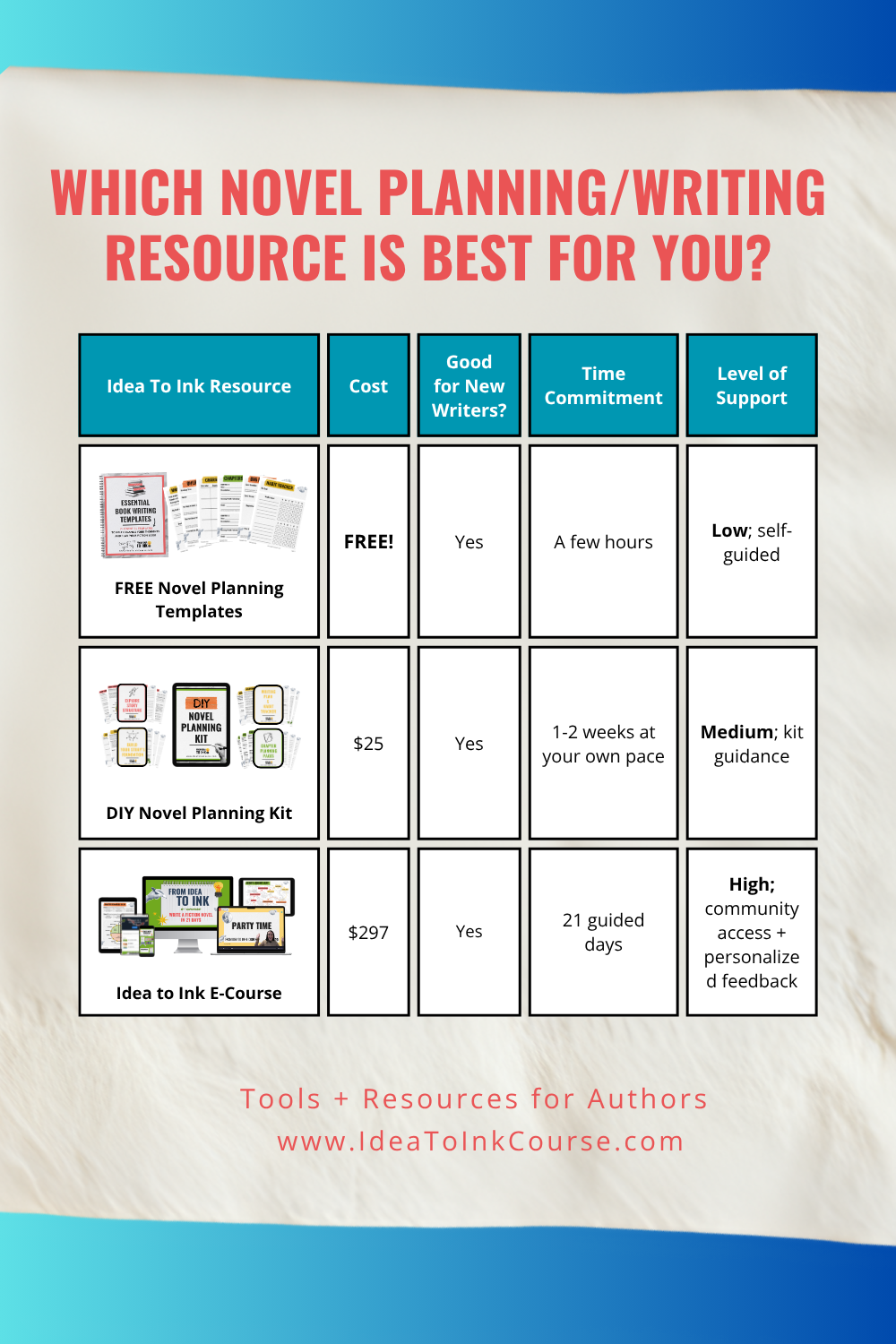
A planning tool captures the story. (Our FREE Fiction Novel Planning PDFs are planning tools)
A workbook teaches you how to think through the story. (Our DIY Novel Kit is more of a combination of workbook and planning tool)
Beginners often benefit from a blend of both. If open‑ended prompts make you freeze, choose a PDF with guided questions. If long worksheets feel like homework, choose something shorter and more visual.
Format matters more than people expect. A printable PDF is great if you like spreading pages out, annotating by hand, or stepping away from screens. But if you revise often, you may want something you can update easily. We've actually designed our PDFs to be editable on the computer or by hand. Remember- free PDFs work best when they’re simple enough to revisit and flexible enough to scribble on.
The sections that make a planning template useful
The strongest templates usually include a few key sections, and each one serves a different purpose in keeping your novel on track.
Story foundation
This is where your idea becomes a premise you can actually build on. You want space to define genre, conflict, protagonist, stakes, and the promise your story makes to the reader. If you can’t articulate what makes your book compelling in a few sentences, everything else will stay blurry.
This section should also help you identify the tension that pulls the reader through the book.
Will she risk everything to uncover the truth?
Can he survive the investigation without losing himself?
A strong story question gives your novel direction before you map the details.
Character planning
This is where writers often swing too far in one direction (either over‑planning every detail or barely planning at all). You don’t need a ten‑page dossier on your protagonist’s breakfast habits. But you do need to know what they want, what they fear, what belief or wound shapes them, and how they’ll change.
A good template keeps character work tied to plot. It asks not just who the character is, but how they create tension, make choices, and drive events. Backstory alone doesn’t build a novel. Decisions do.
I personally prefer a character chart where I can see everyone's traits together on one easy page. This helps me know if I have already used the same strength or problem on four characters before I start writing. It's also a lot easier (at least for me) to reference as I'm writing.
Plot and structure
This is the section most writers hope will fix everything, and sometimes it can. A clear plot map helps you locate your opening disturbance, rising complications, midpoint shift, low point, and climax. Even if you are not a strict outliner, seeing the shape of the story can reveal where the pacing drags or the stakes disappear.
We use the Hero's Journey to help outline the overall shape of the plot. It's a great starting point, especially for new writers, but it's not the only one that works. Feel free to try out different plot mechanisms to see what fits best for you.
Chapter or scene planning
This is the section where you start to roughly plan out what will happen in each chapter. Sometimes it's easy to fill out the hero's journey, but then it gets much more difficult to stretch that across 20 chapters when you're writing from the hip. Writing down what you want to happen (even if it's as vague as 'mom and daughter get in a fight') for each chapter helps guide your writing process and keeps you from hitting a chapter and thinking: what now??
When free is enough and when it is not
A novel planning template free PDF can be exactly what you need if your main problem is getting organized. It can help you collect your ideas, spot gaps, and create a plan you can follow. For many writers, that is enough to start a first draft with more confidence and less second-guessing.
It's particularly good for new writers who aren't ready to invest money in more indepth tools like a DIY Novel Kit or even an E-Course.
But free tools have limits. Some are too generic to support a specific genre. Some give you pages to fill out but little guidance on how the pieces connect. Others are so minimal that they leave beginners staring at prompts without knowing what a strong answer looks like.
If you download a free template and still feel stuck, that does not mean you are bad at planning. It may simply mean you need more teaching, more examples, or a more guided process. Structure works best when it matches your stage, not when it asks you to think like an experienced novelist before you have built the habit yet.
That is why some writers start with a free PDF and later move into a more complete planning system, course, or coaching support. The template gets the idea out of your head. The deeper support helps you develop it with consistency.
How to use a novel planning template free PDF without getting stuck in planning forever
Tip 1: Planning is supposed to make writing easier, not replace writing. The simplest way to avoid over-planning is to treat the template as a working document, not a final exam. Fill in what you know. Leave room for what you will discover later.
Tip 2: Set a short deadline for yourself. Give yourself one weekend, or three focused sessions, to complete a first pass. That keeps the process active. You are not trying to perfect the book before you write it. You are trying to create enough clarity to begin.
Tip 3: It also helps to expect change. Good planning does not prevent surprises. It gives you a way to handle them. If your protagonist shifts halfway through drafting, you can return to the template and update the arc rather than feeling like the whole book is collapsing.
For many beginners, the best rhythm is plan → draft → adjust → repeat. That rhythm builds confidence because it makes the novel feel manageable. You do not need to solve the entire book on day one. You need a next step that is clear enough to follow.
If you are looking for support that combines planning tools with guided instruction, that is where a structured writing resource like our 21-day E-Course can make a real difference. The goal is not just to hand you pages to print. It is to help you use them well.
A simple standard for judging any template
Before you commit to any PDF, ask one question: does this help me make decisions? A pretty worksheet is not enough. A useful template helps you choose a direction, identify what is missing, and move one step closer to a draft.
The right planning tool should leave you feeling clearer, not smaller. More focused, not more intimidated. Your novel does not need perfect planning before it begins. It needs a structure that supports your voice, your process, and your willingness to keep going.
Sometimes the most powerful thing a template does is prove that your idea is not too messy, too late, or too big to start. It just needs a place to begin.
Ready to write your book?
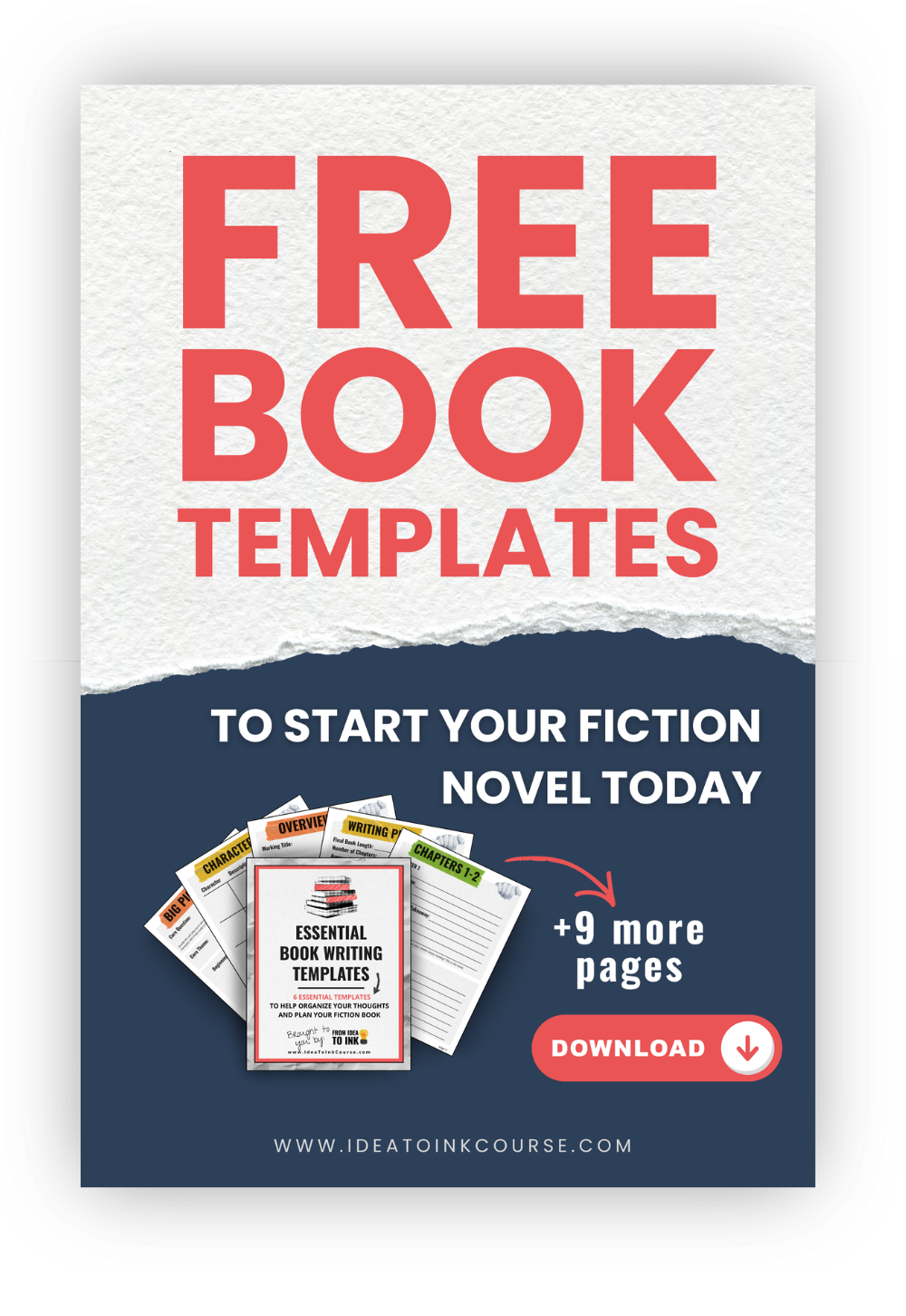
Download the Essential Book Writing Templates for FREE and start strong.
We hate SPAM. We will never sell your information, for any reason.