How to Start Writing a Book
Everyone has a story to tell. Yours might be a novel that’s been living in the back of your mind for years, a memoir shaped by personal experience, or a nonfiction book meant to teach, inspire, or guide others. Or, maybe it’s an epic novel complete with a world all to its own. And yet, despite that inner pull, many people never start writing their book at all.
Why?
Because a blank page is intimidating. Because life is busy. Because self-doubt whispers that you’re not “a real writer.” Because the process feels mysterious, overwhelming, or reserved for people with publishing contracts and MFA degrees.
If any of that sounds familiar, you’re not alone. Most aspiring authors struggle not with ideas, but with actually starting to write. This guide is designed to demystify the process and help you take the first real steps toward writing your book…so “someday” starts to feel possible.
Writing a book isn’t about talent or luck. It’s about clarity, consistency, and support. And it begins exactly where you are right now.
Step 1: Clarify Your “Why”
Before you write a single sentence, pause and ask yourself one important question: Why do you want to write this book?
Your “why” is your anchor. It’s what will keep you going when motivation fades or self-doubt creeps in.
Define Your Purpose
Books are written for many reasons:
- To tell a personal story
- To help others solve a problem
- To explore an idea or question
- To entertain
- To leave a legacy
- To make money
There’s no right or wrong reason...but being honest about yours matters. A memoir written for personal healing will look different from one written to inspire an audience of readers navigating similar experiences. A business book written to strengthen your professional voice will differ from one meant to spark cultural conversation.
Write down your purpose in one or two sentences. This doesn’t need to be polished…it just needs to be true.
Identify Your Audience
You don’t need to write for everyone. In fact, trying to do so often leads to vague or unfocused writing. Everyone is not going to read your book, but a certain type of person might. Who is that person?
Ask yourself:
- Who do I hope will read this book?
- What might they be struggling with?
- What do I want them to feel, learn, or do after reading?
Picture one ideal reader. Write as if you’re speaking directly to them. This creates clarity and connection from the start.
Understand Your Motivation
Some motivations are internal (self-expression, fulfillment), others external (career growth, income, impact). Both are valid...but knowing what drives you helps you plan realistically.
When writing gets hard, and it will, your “why” is what keeps you coming back.
I recommend distilling your why and your audience into something short and easy to read, and then putting it wherever you work on your book. That could look like a notecard that says, “I want to make a living writing beach reads for busy moms.” Or, maybe it’s a picture of your ideal reader that says, “This book should inspire her.” Keeping your why and your audience up front and center keeps you focused on the goal and motivated to start (and finish!).
Step 2: Brainstorm and Outline Without Overthinking
There are two types of writers: pantsers and planners. Planners like to (I know, this will shock you) plan out their books while pantsers (again, shocker) like to fly by the seat of their pants.
As someone who has written many books, I can say that no one is fully a planner or a pantser; we are all combinations of the two. And, it’s perfecting this combination that can make writing a novel both efficient and creative.
For me, the perfect combination of planning and freestyle is about 40/60. In our Ink to Idea Course, we spend 40% of the time planning our books and 60% writing them. The planning stage allows you to avoid major plot holes and gives you a road map so that when you get to the writing stage, you can get on the highway at 100 mph. Without a road map (planning), you’ll need to go slower and stop more often. This can kill your momentum and your motivation.
Here’s the short version for getting started with the planning process:
Start With Idea Dumping
Before worrying about order or quality, get your ideas out of your head and onto the page.
Try:
- Freewriting for 10–15 minutes about your topic
- Listing scenes, memories, or concepts that feel important
- Writing down questions that your book might answer
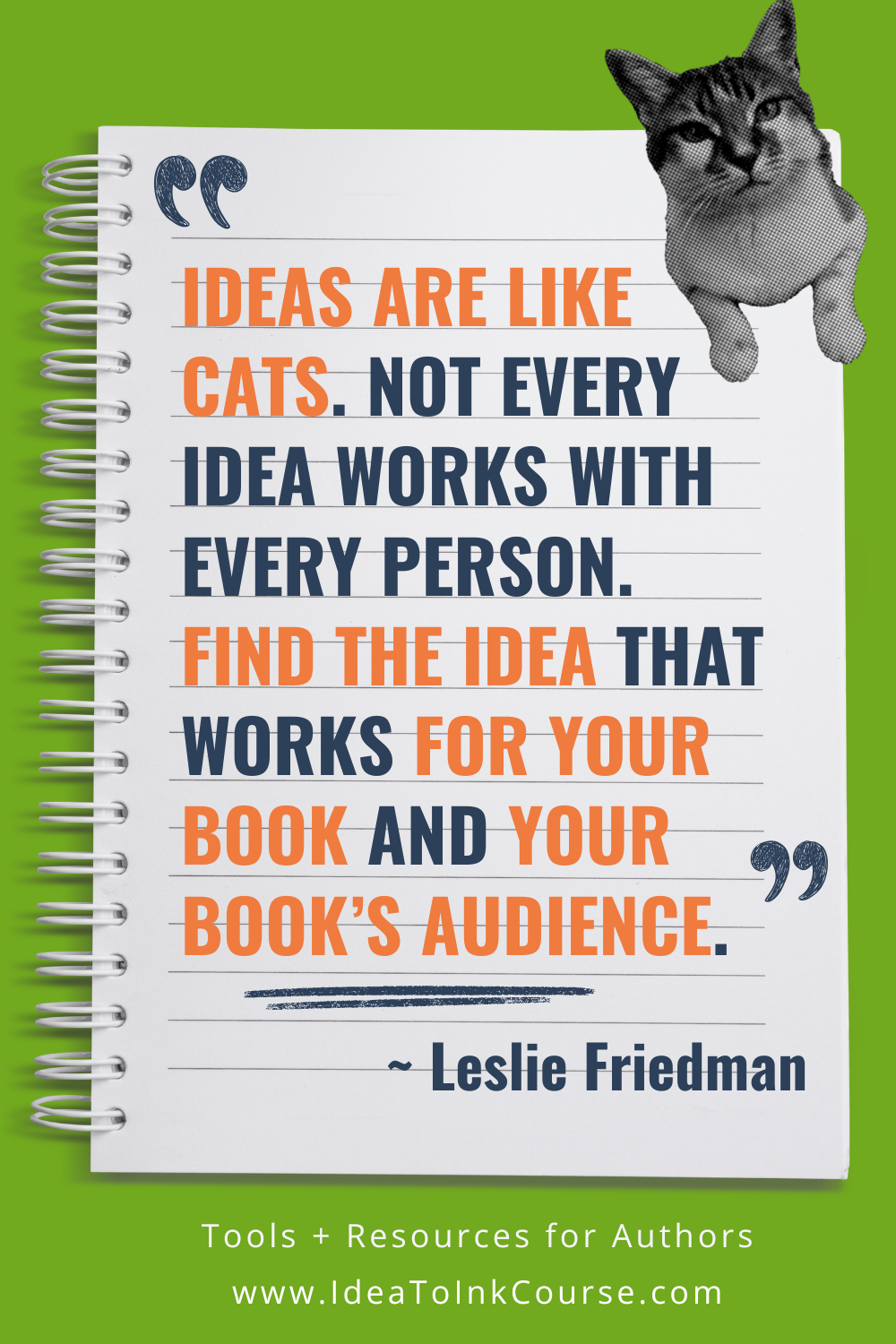
Don’t hold back or censor yourself. This is raw material, not a final product. I often create several mind dumps during my brainstorming time. And it gets really messy. But that’s ok because it’s just for me to get my ideas in order. Ideas are like cats. They’re all great, but you need to figure out which ones will be best for your goal (your why!) and your audience.
Use Mind Maps or Clusters
If you’re a visual thinker, mind maps can be incredibly helpful. Write your main idea in the center of a page, then branch out with related topics, stories, or chapters.
You may be surprised how much you already know.
Sketch a Flexible Outline
An outline doesn’t need to be rigid, and it doesn’t need to be super specific. Think of it as a roadmap, not a rulebook.
I like to start big picture and then zoom in, so I’ll start by deciding either intro, chapters, and conclusion (for non-fiction) or beginning, middle, end story arcs (for fiction).
For nonfiction, this might look like:
- Introduction: The problem or promise
- Chapters: Key themes or steps
- Conclusion: Transformation or takeaway
For fiction, you might outline:
- Beginning: Setup and characters
- Middle: Conflict and development
- End: Resolution and change
Once I have a general (emphasis on general!) idea of the book format and flow, then I zoom into the chapters. Once again, the format of each chapter will depend on the genre.
For nonfiction (like self-help or business books), each chapter may follow this pattern:
- Story (ex: The CEO of xyz company made this crazy decision)
- How the story relates to the chapter topic (ex. But, the crazy decision actually made the company huge profits. Here’s why.)
- Practical takeaway (ex. What the CEO did wasn’t hard, and you can do it too. Here’s how.)
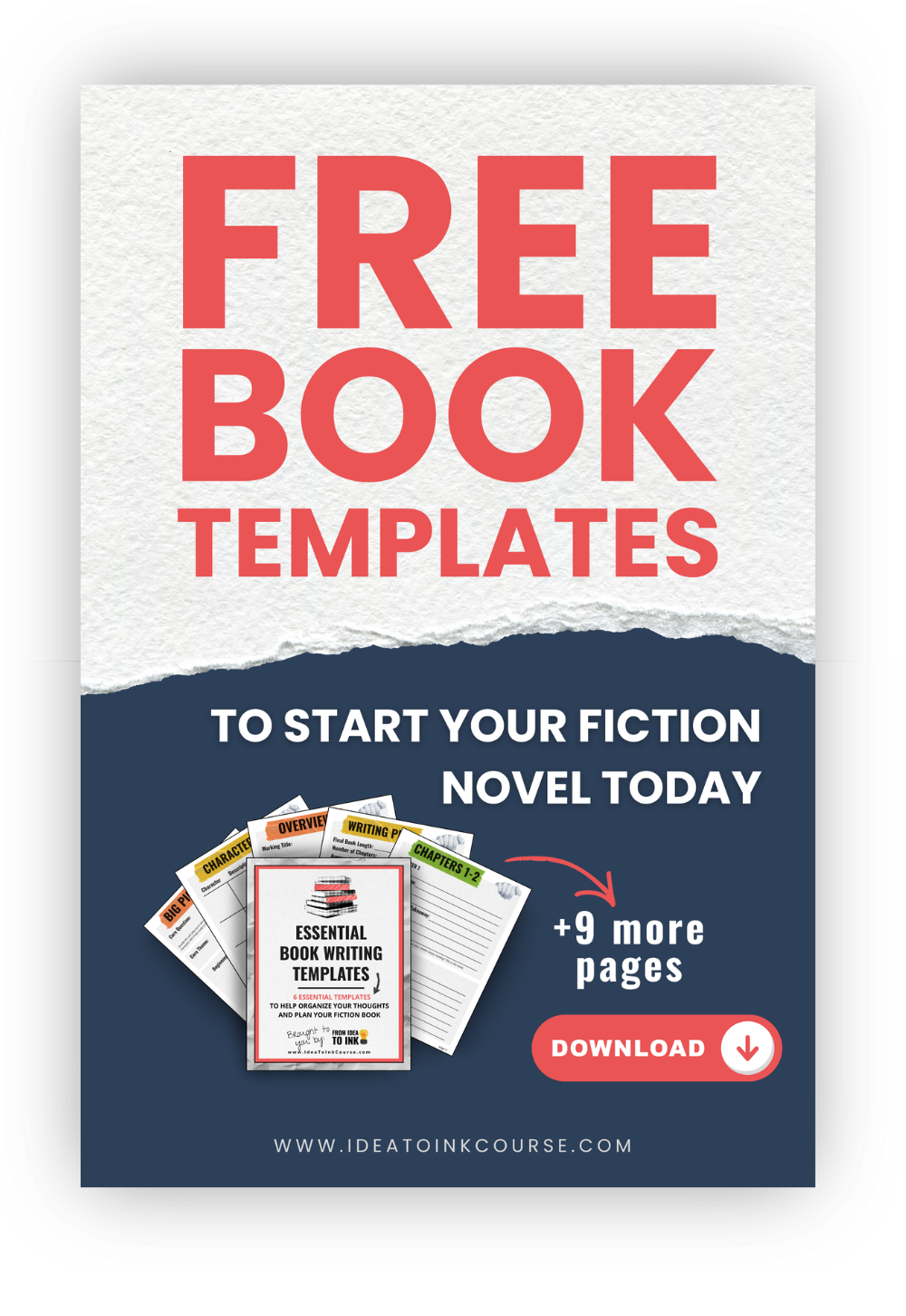
For fiction books, this is the chapter outline I suggest (PS! This is in our free book writing templates that you can download for free here.)
- Title. This is for you to quickly understand what chapter is what. Ex: Mark meets Sally.
- Description. Ex: Mark is in a bakery and Sally walks in. There is a meet cute. They realize they both come to the same bakery every morning.
- Turning Point/Takeaway. Ex: Mark leaves without asking for Sally’s number, but he can’t stop thinking about her.
- This is what keeps the reader reading. Ex: Mark decides to show up the next day with a dozen roses for Sally. (This leaves the reader thinking, “I need to know what happens next!”)
You can see that there is structure, but it’s certainly not micromanaging the 2500 words or so that the chapter will become.
Remember, even a rough chapter list gives you something concrete to work toward.
Step 3: Create Writing Rituals That Fit Your Life
Many aspiring authors believe they need long, uninterrupted blocks of time to write, but this is all too often impossible for most people’s busy lives. In reality, small, consistent habits beat out occasional big bursts every time.
Choose a Realistic Schedule
Instead of asking, “When will I write my book?” ask, “When can I write consistently?” I also ask myself, “When do I have the most energy?” If you put off writing until 3 am when you are completely brain dead, you’re not going to get very far. You’re better off blocking off a smaller amount of time during a more productive period of your day.
This might be:
- 20 minutes each morning
- One hour on weekends
- Three short sessions per week
The key is sustainability. A writing schedule that fits your life is far more powerful than an idealized one you can’t maintain.
Design a Simple Writing Ritual
Rituals signal to your brain that it’s time to write. They don’t have to be elaborate.
Examples:
- Making a cup of tea before writing
- Writing in the same place each time
- Playing instrumental background music
- Starting with a short warm-up paragraph
Consistency matters more than creativity here. This is just a cue to your brain that it’s writing time. This is basically the science behind creating habits… you're setting a trigger for your writing habit.
Warning! Don’t let your ritual become your excuse to not write. My writing ritual is to light a candle and turn on focus mode (on my computer). Here’s the thing, though, if I don’t have a candle, I still write. I don’t let that become an excuse for not writing (especially when I just don't feel like writing).
Set Manageable Goals
Instead of focusing on finishing the book, focus on:
- Writing 300–500 words per session
- Completing one chapter at a time
- Showing up even when you don’t feel like it
Progress builds momentum. And momentum builds confidence.
Once you start writing, you’ll figure out what works best for you. Maybe your brain is fried after 2,000 words, so that is your limit for each writing session. Personally, my goal is to write two chapters in each 2-3 hour writing session. I know that I can write (when I’m in flow state writing fiction) 2,500 words in an hour. That means I can write two chapters (roughly 5,000 words in draft mode) in about 2-ish hours.
Before that completely freaks you out, remember that
1) I’m a professional writer,
2) I don’t edit as I write. When I’m in draft mode, I’m simply getting ideas on the page in somewhat sentences (more on this in the next step!), and
3) This will not be the case for new authors! (I double this time when I give my Inkers time estimates for writing)
The more you write, the more data you will collect and the better you will know when and how much you are capable of writing. Don’t stress yourself out! Think of it as a little experiment and take note of when it’s easier to write and when you have the capacity to do so.
Step 4: Draft Without Perfection
One of the biggest obstacles new writers face is perfectionism. The desire to write beautifully, impressively, and exactly correctly from the start can completely block progress.
Here’s the truth: First drafts are not supposed to be good.
Give Yourself Permission to Write Messy
Your first draft exists for one reason only: to exist.
It can be:
- Rambling
- Repetitive
- Incomplete
- Full of placeholders like “[add example here]”
That’s not failure: that’s the process.
Editing comes later. Much later.
Separate Writing From Editing
Trying to write and edit at the same time is like trying to drive with one foot on the gas and one on the brake.
When drafting:
- Don’t reread yesterday’s work
- Don’t fix grammar or phrasing
- Don’t worry about word count or flow
Your job is to move forward.
Embrace Imperfect Progress
Every sentence you write, no matter how clumsy, is a step closer to a finished book. You can’t revise what doesn’t exist.
Progress beats perfection. Always.
- Stephen King
Step 5: Seek Support and Accountability
Writing a book can feel lonely, especially when you’re doing it for the first time. There are lots of “Am I doing this right?” and equal amounts of “Am I completely insane?” That’s why support systems matter more than most people realize.
Why Support Makes a Difference
Support provides:
- Clarity when you feel stuck
- Encouragement when motivation dips
- Accountability to keep you consistent
- Perspective when self-doubt takes over
You don’t have to figure everything out on your own.
Conceptually, we know this; we know that having a support system will help us. So why is it that most of us shy away from it?
Ego.
Oomph. That’s right.
It’s usually your ego saying things like:
What if the person I tell thinks I’m crazy?
What if they think the writing is horrible?
What if they hate it?
What if I never finish the book, and now this person knows that I’m a failure??
Basically, it’s our ego that tells us that it’s safer (at least, for the ego) not say a thing until you have a perfectly finished book. Your ego isn’t wrong, but it also isn’t helping you write a book. It’s helping itself not feel bad feelings. And, like most things that challenge us, we are probably going to feel some bad feelings.
But here’s the awesome thing that our ego doesn’t take into account: sharing our work with those who support us usually produces a lot of really good feelings.
Yes, there are little stings ("do you really need that paragraph?") but there are also huge boosters ("this is amazing. I’m so proud of you!") So, next time your ego keeps you from creating a support network, tell it to sit quietly and wait because some good will come!
Finding the Right Kind of Support
Help can come in many forms:
- Writing groups or workshops
- Accountability partners
- Online communities
- Guided frameworks or programs
The key is finding something that meets you where you are, without pressure or overwhelm.
How Idea to Ink Supports New Writers
I created Idea to Ink specifically for new writers. Because of this, our course features lots of guidance (30+ worksheets you can use over and over for every book you write!) and a supportive community. There’s no need to spend a month planning your book and then another month trying to figure out how to create a support group. It’s all built into the course.
Yes, it’s challenging. Yes, it is intense. Afterall, we are attempting to write a 50k first draft in 3 weeks. But it’s designed with certain guardrails that keep you on track and support you along the way.
Writing can be a solitary activity, but it doesn't have to be. Course participants (which I fondly call “Inkers”) are working on a big, scary goal, but they are doing it in a way that builds writing habits and doing it in a community full of cheerleaders (btw- I’m your biggest cheerleader!)
Common Fears (and How to Move Through Them)
Before we wrap up, let’s address a few common fears that stop people from starting.
“I’m not a real writer.”
You become a writer by writing. Not by publishing, not by having credentials, but by showing up and putting words onto the page.
“What if my story isn’t good enough?”
Every meaningful book begins as an imperfect idea. Quality is developed through revision, feedback, and time, not from the get-go.
“I don’t have enough time.”
You don’t need more time. You need consistent, protected time…even in small bursts.
“What if I fail?”
Not starting is the only true failure. Everything else is learning.
Your Book Begins With One Page
Writing a book doesn’t start with inspiration striking you at just the perfect moment. It starts with a decision: to begin before you feel ready, confident, or certain.
You don’t even need to know the ending.
You don’t need to write beautifully.
You don’t need to write perfectly or with deep meaning.
You don’t need permission.
You need one page.
One writing session.
One honest attempt.
One step forward.
Your story matters. And it deserves to be written.
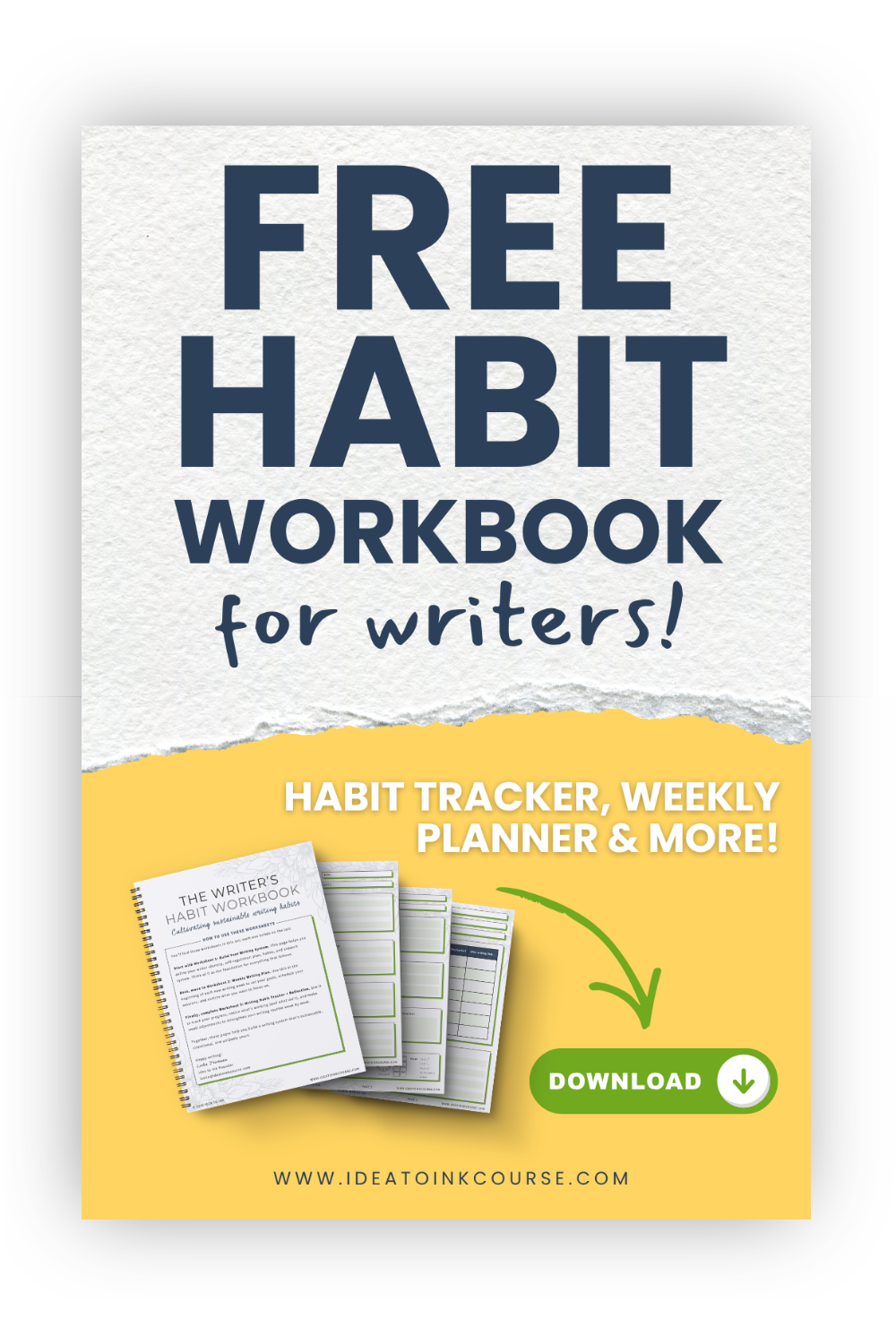
If you’re ready to take your first step, download our free template designed to help you clarify your idea, outline your chapters, and build sustainable writing habits.
Your book doesn’t begin someday.
It begins now.

Ready to write your book?
Download the Essential Book Writing Templates for FREE and start strong.
We think SPAM is icky. We will never sell your information, and you can unsubscribe at any time.