A Writing Routine Guide for Authors Who Need Momentum
Your book does not need a perfect morning, a silent house, or a sudden burst of inspiration to move forward. It needs a repeatable place in your real life. This writing routine guide for authors will help you build a practice that works around your responsibilities while giving your book the steady attention it deserves.
A routine is not a rule designed to make you feel behind. It is a decision you make before the day gets crowded: this is when I show up for my book, and this is what I will do when I get there. For aspiring authors, that clarity can turn writing from a wish you carry into pages you can shape.
Start With the Smallest Routine You Can Keep
Many writers begin with a bold promise: an hour every day, 1,000 words before work, a full chapter every weekend. Ambition is wonderful, but a routine that collapses after three days does not build confidence. Start with the smallest version you can realistically repeat, even during a demanding week.
That might be 20 minutes on Tuesday and Thursday evenings. (Don't want to write alone? We have virtual writing sessions 2x a week in our free online community. Join here.) It might be 15 minutes during your lunch break, four days a week. It might be a 90-minute Saturday session while the rest of the household is occupied. The right schedule depends on your energy, your responsibilities, and the kind of book you are writing.
Choose a minimum that feels almost too manageable. You can always write longer when time and energy allow. The goal is to create evidence that you are a writer who returns to the work.
Choose a Specific Cue
A writing routine becomes easier when it follows something that already happens in your day. Instead of telling yourself, “I’ll write when I have time,” attach writing to a reliable cue.
You might write after you make your first cup of coffee, after the kids are in bed, or immediately after your Tuesday workout. The cue reduces the number of decisions required. You are not negotiating with yourself about whether to write. You are simply following the next step in a sequence you have already chosen.
Be specific about where you will write, too. A corner of the dining table, a library desk, or the same chair with headphones can become a useful signal to your brain: this is book time. Your space does not have to be beautiful. It only needs to be ready enough that getting started is easy.
Give Each Writing Session a Clear Job
Blank-page paralysis often appears when a writing session is too vague. “Work on my novel” sounds productive, but it gives you dozens of choices: outline, research, revise chapter one, develop a character, stare at the document, or worry that the idea is not good enough.
Before each session, define one small task. For a fiction writer, that may be drafting the argument between two characters, listing what must happen in the next scene, or writing 300 rough words from your protagonist’s point of view. For a nonfiction writer, it could be outlining one section, gathering examples, or answering a reader question in plain language.
A useful routine includes both writing days and planning days. Drafting without any direction can feel frustrating, yet planning every session can become a way to avoid the draft. Give each type of work a place. For example, use one weekly session to review your outline and the remaining sessions to write forward.
End With a Note for Tomorrow
Do not wait until you are completely empty to stop writing. When possible, end your session by leaving yourself a short note about what comes next. Write a sentence such as: “Next, Mara finds the letter in the kitchen drawer,” or “Explain why readers struggle with step three and add an example.”
This small habit protects tomorrow’s momentum. When you sit down again, you have a doorway into the work instead of a fresh decision to make. It also helps you separate drafting from judging. Your next task is already waiting for you.
Build a Flexible Writing Routine, Not a Fragile One
Life will interrupt your schedule. A sick child, overtime at work, travel, grief, holidays, and ordinary exhaustion can all disrupt even the best plan. A routine that only works under ideal conditions is not a routine for real authors. It is a temporary arrangement.
Create a backup version of your practice now, before you need it. If your usual 30-minute session disappears, what is the five-minute version? You could write a few lines of dialogue in your phone notes, revise one paragraph, make a list of scene details, or answer one question about your main character. These small actions may not feel dramatic, but they keep your relationship with the book active.
There is a trade-off here. A tiny session will not replace focused writing time forever. You still need protected blocks to produce and revise meaningful pages. But during a full season, maintaining contact with the project is far more useful than waiting for the mythical week when everything finally calms down.
Try to avoid the all-or-nothing thought that says a missed day means you have failed. Missing a session is normal. The real skill is restarting at the next available opportunity without punishment, apology, or a complicated recovery plan.

Track Progress in a Way That Encourages You
Word counts can be motivating, especially during a first draft. They give you visible proof that your book is growing. But they are not the only measure of progress. Planning a chapter, clarifying your central message, researching an essential detail, and revising a confusing section are also part of writing a book.
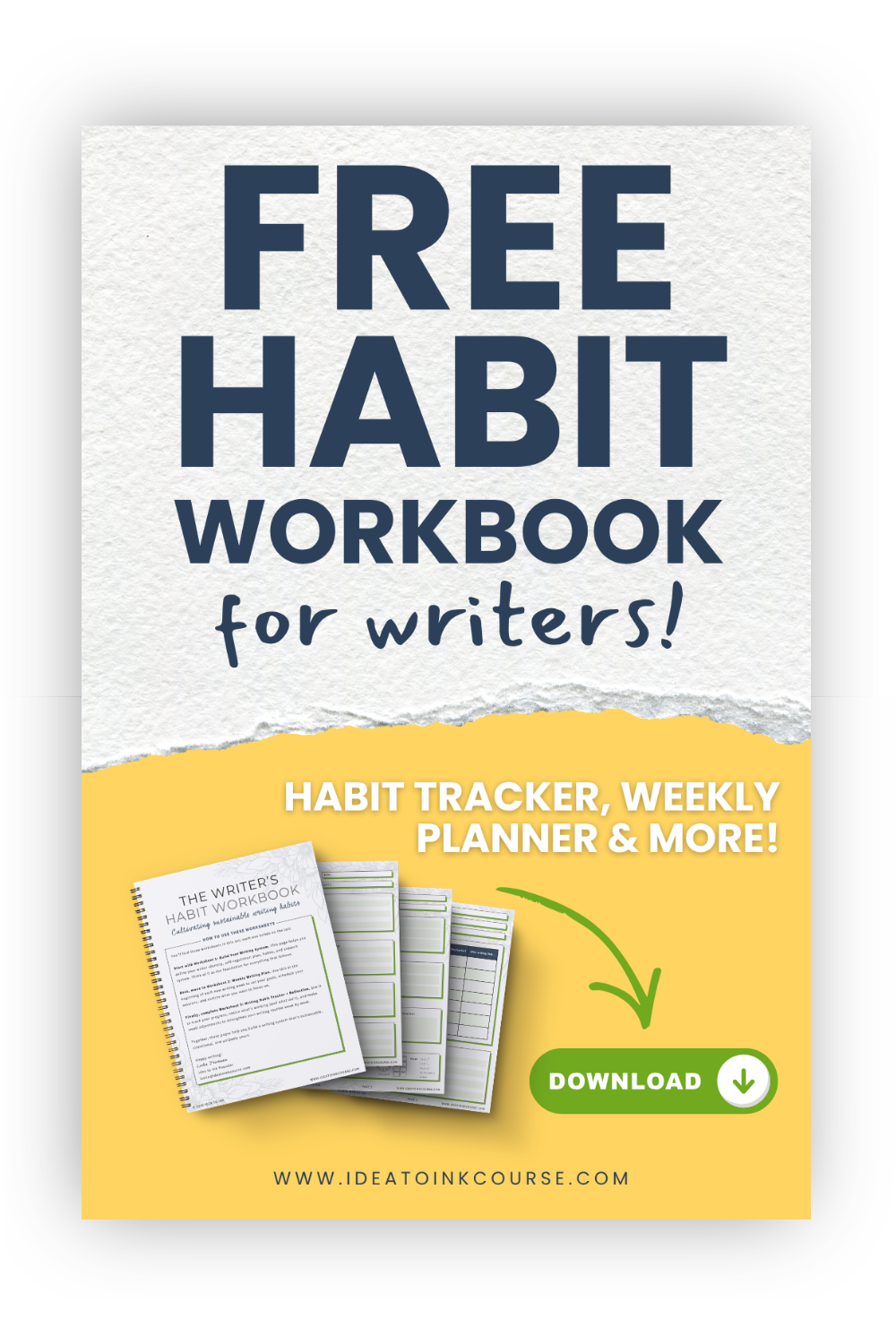
Use a simple tracker (we have one that you can download for free, here) that reflects the stage you are in. During drafting, you may track sessions completed and words written. During revision, track chapters reviewed or specific issues addressed. Keep it easy enough to update in less than a minute.
At the end of each week, take a brief look at what happened. Ask yourself: When did writing feel easiest? What got in the way? Was my goal realistic? What is one adjustment I can make next week?
This is not about grading yourself. It is about learning your own creative patterns. Perhaps early mornings sound appealing but leave you too tired to think. Perhaps a weekend block works better than daily sessions. Your routine should be informed by your actual life, not someone else’s social media schedule.
Protect Your Draft From Perfectionism
A routine can become unhelpful when every session turns into a test of whether you are talented enough to write a book. First drafts are supposed to be incomplete, uneven, and full of places that need better choices later. Their job is to give you material to work with.
Consider separating drafting and editing whenever you can. During a draft session, let yourself mark a gap with a note like “[research this]” or “[add stronger transition]” and keep moving. If you stop to perfect every paragraph, you may spend weeks polishing the beginning while the rest of the book stays unwritten.
Set a gentle boundary around distractions as well. Put your phone in another room, close extra browser tabs, and tell the people around you what your writing time means. You do not need to defend your creative work. You are allowed to take your goal seriously.
Make Accountability Supportive
Some authors thrive with private routines. Others need a person, group, or coach who knows they have committed to writing. Accountability is not about pressure or shame. At its best, it gives your intention a witness and makes it easier to return after a difficult week.
You might share a weekly goal with a trusted friend, join a scheduled writing session, or use a structured workbook that breaks your book into smaller milestones. If you need more personalized guidance, coaching can help you identify where your process is getting stuck and create a plan that fits your project.
At Idea to Ink, the focus is not on forcing every writer into the same formula. It is on giving you practical structure so you can make decisions, build skills, and keep moving with confidence.
Your routine does not have to look impressive from the outside. It only has to bring you back to the page often enough that your book becomes possible. Choose your next writing time before you close this article, decide on one small task, and let that appointment be a promise you keep to your own voice.

Ready to write your book?
Download the Essential Book Writing Templates for FREE and start strong.
We hate SPAM. We will never sell your information, for any reason.