How a Guided Book Writing Process Helps
You do not need more willpower to write your book. You need a process you can trust on the days when inspiration is nowhere to be found. That is why a guided book writing process matters so much for new and early-stage authors. It gives shape to the work before doubt has a chance to take over.
For many writers, the real problem is not a lack of ideas. It is the gap between wanting to write a book and knowing what to do next. A blank page feels heavy when every choice seems equally important. A guided process reduces that pressure. Instead of asking you to figure out everything at once, it breaks the work into manageable decisions you can actually act on.
What a guided book writing process actually does
At its best, a guided book writing process gives you structure without squeezing out your creativity. It does not tell every writer to work in the same way, because books are different and writers are different. What it does is create a path. You know where to start, what to focus on now, and what can wait until later.
That matters more than most people realize. New writers often lose momentum because they are drafting, researching, outlining, revising, and second-guessing all at the same time. When every stage overlaps, the project starts to feel messy fast. A guided approach separates those stages so your brain is not trying to solve ten writing problems in one sitting.
This is especially helpful if you have been carrying a book idea for months or even years. The longer an idea stays in your head, the more emotionally loaded it can become. You start to think the first chapter has to be brilliant. You worry the whole concept is not strong enough. Structure helps lower the emotional temperature. It turns a big personal dream into a series of clear tasks.
Why writers stall without structure
Most stalled writers are not lazy. They are overloaded.
If you are writing fiction, you may be unsure whether to build your characters first, map your plot, or start with a scene. If you are writing nonfiction, you may be sitting on a valuable message but struggling to shape it into chapters that readers can follow. In both cases, uncertainty creates friction. Friction leads to avoidance. Avoidance gets mislabeled as procrastination.
A strong process helps because it replaces vague ambition with visible progress. That shift is powerful. When you can say, "Today I am defining my reader," or "Today I am building my chapter map," writing feels less abstract. You are no longer waiting to feel ready. You are moving.
There is also a confidence benefit here. Writers often think confidence comes first and action follows. Usually, it works the other way around. Confidence grows when you complete small steps and see proof that you can keep going.
The core stages of a guided book writing process
Every book develops in its own way, but most guided systems work because they walk you through a few essential stages in the right order.
1. Start with clarity before pages
This is the step many writers skip because they are eager to begin. But writing faster is not always writing better. A little front-end clarity saves a lot of mid-draft confusion.
For fiction writers, this might mean identifying your main character's desire, the central conflict, and the shape of the story. For nonfiction writers, it often means getting clear on the reader's problem, the promise of the book, and the transformation each chapter supports.
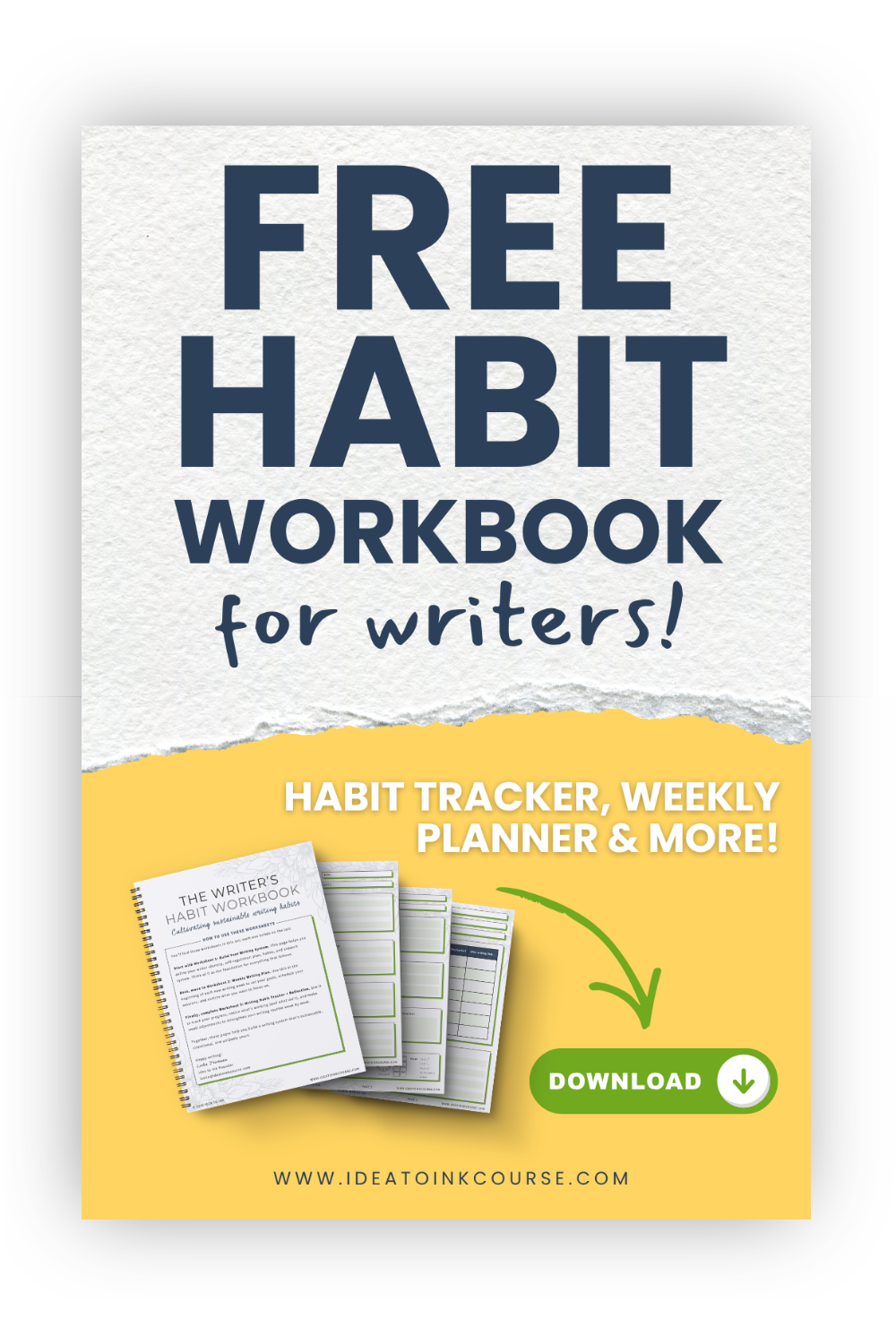
You do not need a perfect outline before you start. You do need enough direction to know what kind of book you are building. We have 7 or so (what I like to call) essential book writing templates. They are the basic outlines you need to get moving in the right direction and you can download them for free here.
2. Build a writing plan you can sustain
A good plan is not ambitious on paper and impossible in real life. It fits your actual schedule, energy, and responsibilities.
This is where guided tools can make a major difference. Prompts, worksheets, chapter planners, and writing schedules help translate intention into action. Instead of telling yourself you will "work on the book," you define what that means. Maybe it is 30 minutes each morning. Maybe it is three focused sessions a week. The best plan is the one you can repeat.
There is always a trade-off here. A tighter plan creates more consistency, but too much rigidity can backfire if your life is unpredictable. The goal is structure with enough flexibility that one missed session does not turn into three missed weeks.
3. Draft before you over-edit
This stage is where many writers get stuck. They start drafting, then stop every few paragraphs to revise, rethink, or judge what they just wrote.
A guided process helps by giving drafting its own lane. Your job in this phase is to generate material, not perfect it. That does not mean writing carelessly. It means staying focused on forward motion long enough to create something you can shape later.
If you tend to freeze while drafting, smaller targets usually work better than vague ones. A scene. A section. Five hundred words. One chapter problem solved. Specific goals calm the nervous system because they feel finishable (probably not a word, but you get it).
4. Revise with purpose
Revision becomes less intimidating when it is not treated like one giant cleanup job. Guided revision usually works best in layers. First, you look at structure. Then clarity. Then voice. Then sentence-level polish.
This order matters. There is no point polishing lines in a chapter that may need to be cut or reorganized. When revision is guided, you make stronger decisions faster because you are looking at the right problem at the right time.
What to look for in a truly helpful guided system
Not every writing resource is equally useful. Some are inspirational but too vague to apply. Others are so prescriptive that they make writers feel boxed in.
A helpful system should do three things. It should simplify your next step, reduce overwhelm, and help you stay in motion. That often means practical materials like templates, checklists, prompts, and coaching questions rather than broad advice alone.
It also helps if the guidance reflects how people actually learn. Most adults do better when information is broken into smaller parts, reinforced through repetition, and connected to action right away. That is one reason structured writing education can be so effective. It respects both creativity and cognition.
If you know you struggle with follow-through, accountability matters too. For some writers, that means a course with milestones. For others, it means a coach, writing partner, or set of deadlines. The right support depends on your habits, but very few writers benefit from trying to build an entire book in isolation. Our Idea to Ink E-Course comes with a built-in writing community, but we also have communities for those not in the course.
Guided does not mean rigid
This is an important distinction. Some writers hear the word 'guided' and worry it will make their work formulaic. In practice, the opposite is often true.
When you are not wasting energy wondering what to do next, you have more room for creative thinking. Structure handles the scaffolding so your imagination can do its job. A chapter framework does not erase your voice. A planning worksheet does not weaken originality. These tools simply hold the project steady while you build it.
Of course, not every writer needs the same level of guidance. Some people need a full roadmap from idea to draft. Others only need help at the start, or during revision, or when motivation drops. It depends on your experience, your personality, and how much ambiguity you can comfortably handle.
That is why the best guided book writing process is not the strictest one. It is the one that supports your progress without making you feel managed.
When support changes everything
There is a point in many book projects where motivation alone stops being enough. You may still care deeply about the book, but the excitement has worn off and the real work is staring back at you. This is where support can shift the outcome.
Sometimes support looks like a clear workbook that helps you organize your thoughts. Sometimes it is a step-by-step course that tells you what to focus on this week. Sometimes it is personalized coaching that helps you move through fear, confusion, or momentum dips with real feedback.
For aspiring authors who want both encouragement and structure, that combination can be the difference between circling an idea and finishing a manuscript. Brands like Idea to Ink are built around that exact need, helping writers move from uncertainty to action through guided tools and practical support.
Writing a book is creative work, but it is also process work. The more clearly you can see the path, the easier it becomes to keep walking it.
If your book has been living in your head for too long, this may be the moment to stop asking whether you are ready and start choosing a process that helps you begin.
Ready to start your book? Download our free novel writing templates to get started.
Ready to write your book?
Download the Essential Book Writing Templates for FREE and start strong.
We hate SPAM. We will never sell your information, for any reason.