A Beginner's Guide to Story Structure That Works
You may know your main character’s name, their secret, and the opening scene that keeps replaying in your mind. But when you try to plan what happens next, the story suddenly feels too big. This beginner-friendly guide to story structure is here to make that blank space feel manageable. Structure is not a cage for your creativity. It is the support that helps your best ideas become a book readers can follow and feel.
What Story Structure Actually Does
Story structure is the order of meaningful change in your book. (Note- if you're not sure what mean by meaningful change...keep reading!) It gives your protagonist something to want, puts obstacles in their way, raises the cost of failure, and carries them toward a choice or outcome that matters.
That sounds simple, but it solves several common beginner problems at once. Without structure, a draft can become a series of scenes that are individually interesting but do not build on one another. You may also lose momentum halfway through because you cannot tell what the next chapter needs to accomplish.
A useful structure gives you a map, not a script. You still choose the voice, setting, characters, twists, and emotional texture of the story. The map simply helps you see where pressure should increase and where your character needs room to respond.
For nonfiction writers, the same principle applies. Your reader begins with a problem, question, or desire. Your chapters guide them through insight and action until they can reach a useful transformation. The details differ, but the movement from where someone is to where they need to be remains essential.
A Beginner Guide to Story Structure: Start With Change
Before you label acts, plot points, or chapters, define the change at the heart of your book. Ask: who is your main character at the beginning, and who are they by the end? (This is your meaningful change!!!)
That change does not have to mean they become a completely different person. Often, the most satisfying stories show a character gaining the courage, clarity, skill, or honesty to act differently when it counts. A people-pleasing lawyer might learn to risk disapproval. A guarded widow might decide to let someone into her life. A young detective may learn that being right is not the same as being just.
For a nonfiction book, consider what your reader believes, struggles with, or cannot yet do before they begin reading. Then identify what they will understand, feel prepared to do, or see differently by the final chapter.
Write this as one plain sentence. For example: “A talented baker who hides from competition learns to trust her own work after her family business is threatened.” You are not locking yourself into every detail. You are giving your planning process a center.
Use the Three-Part Framework
You do not need to memorize a dozen plotting methods to begin. I mean, you can, but it feels like an awful lot of work. A three-part framework is enough for most first drafts because it reflects how people naturally experience change: a beginning, a difficult middle, and an ending that asks for a final decision.
Part One: Set Up the Ordinary World and the Problem
The opening of your story introduces the person readers will follow and shows what their life looks like before it changes. This is where you establish what matters to them, what they are missing, and what they may be avoiding.
Then something disrupts that normal pattern. This is often called the inciting incident. It is the event that makes the old way of living impossible or insufficient. A job offer arrives, a secret is exposed, a body is found, a relationship ends, or a promise must be kept.
By the end of this first section, your protagonist should make a choice that moves them into the main conflict. They may not feel ready. In fact, reluctance often makes the choice more believable. But they need to engage with the problem rather than simply watch it happen.
Part One should be roughly a fourth (or less) of your book.
Part Two: Add Pressure, Complications, and Consequences
The middle is where many writers get stuck, usually because they treat it as a waiting room between the beginning and ending. Instead, think of the middle as a series of attempts.
Your character wants something. They make a plan. The plan creates a new problem, reveals an unexpected truth, or forces a harder choice. Each major scene should change the situation in some way.
A helpful question is: “Why can’t my character solve this easily?” The answer creates conflict. Perhaps they lack information, have a flawed belief, face a powerful opponent, or want two things that cannot coexist. Strong conflict is not simply bad luck piled onto a character. It grows from what the character wants and what stands in the way.
Around the middle of the book, give the story a meaningful turn. Your protagonist might gain a crucial clue, make a costly mistake, discover a betrayal, or realize their original goal is not what they thought. This moment should increase both the stakes and the emotional weight of the journey.
Part Two is the bulk of your book and should take up roughly half (or more) of your novel.

Part Three: Bring the Character to a Defining Choice
Near the end, the pressure reaches its highest point. The protagonist faces the central conflict with fewer easy options left. This is the climax, and it should test the very change your story has been building toward.
If your character needs to become more honest, the final problem should demand honesty. If they need to trust others, they should not be able to win alone. The ending feels earned when the external resolution and internal growth work together.
After the climax, allow space for the result. Readers want to see what the choice cost, what it changed, and what the new normal looks like. You do not need to explain every future detail, but you do need to provide emotional closure.
Part Three is roughly another fourth of the book.
Turn Structure Into Scenes
A story structure becomes useful when it helps you decide what to write next. Rather than planning every chapter in detail, begin by identifying a handful of anchor scenes: the disruption, the first major choice, the middle turning point, the lowest moment, and the final confrontation or decision.
From there, build connecting scenes that create cause and effect. One scene should lead naturally to the next because of a decision, discovery, failure, or consequence. If a scene could be removed without changing anything afterward, it may need a clearer purpose.
For each scene, jot down three things: what the character wants, what gets in the way, and what changes by the end. This small planning habit prevents scenes from becoming static conversations or background information. It also gives you a practical tool for drafting when motivation is low.
Not every scene needs dramatic shouting or a shocking reveal. Quiet scenes can carry real tension when a character has something to lose. A difficult conversation, a withheld truth, or a private realization can move a story forward just as effectively as a chase scene.
Let Your Structure Stay Flexible
New writers sometimes worry that planning will make their book predictable. The truth is that readers do not come to stories hoping for random events. They want surprise with meaning. Structure helps you create that meaning.
Still, your outline is allowed to change. You may discover that a secondary character has a stronger role than expected, that a plot twist arrives too early, or that your protagonist needs a different final choice. That is not evidence that you planned badly. It is evidence that you are learning your story through the writing.
If outlining every chapter makes you feel boxed in, plan only the major turning points. If a loose plan leaves you overwhelmed, add more detail before drafting. The right amount of structure depends on how you work, not on what another writer’s process looks like.
A Simple Next Step for Your Draft
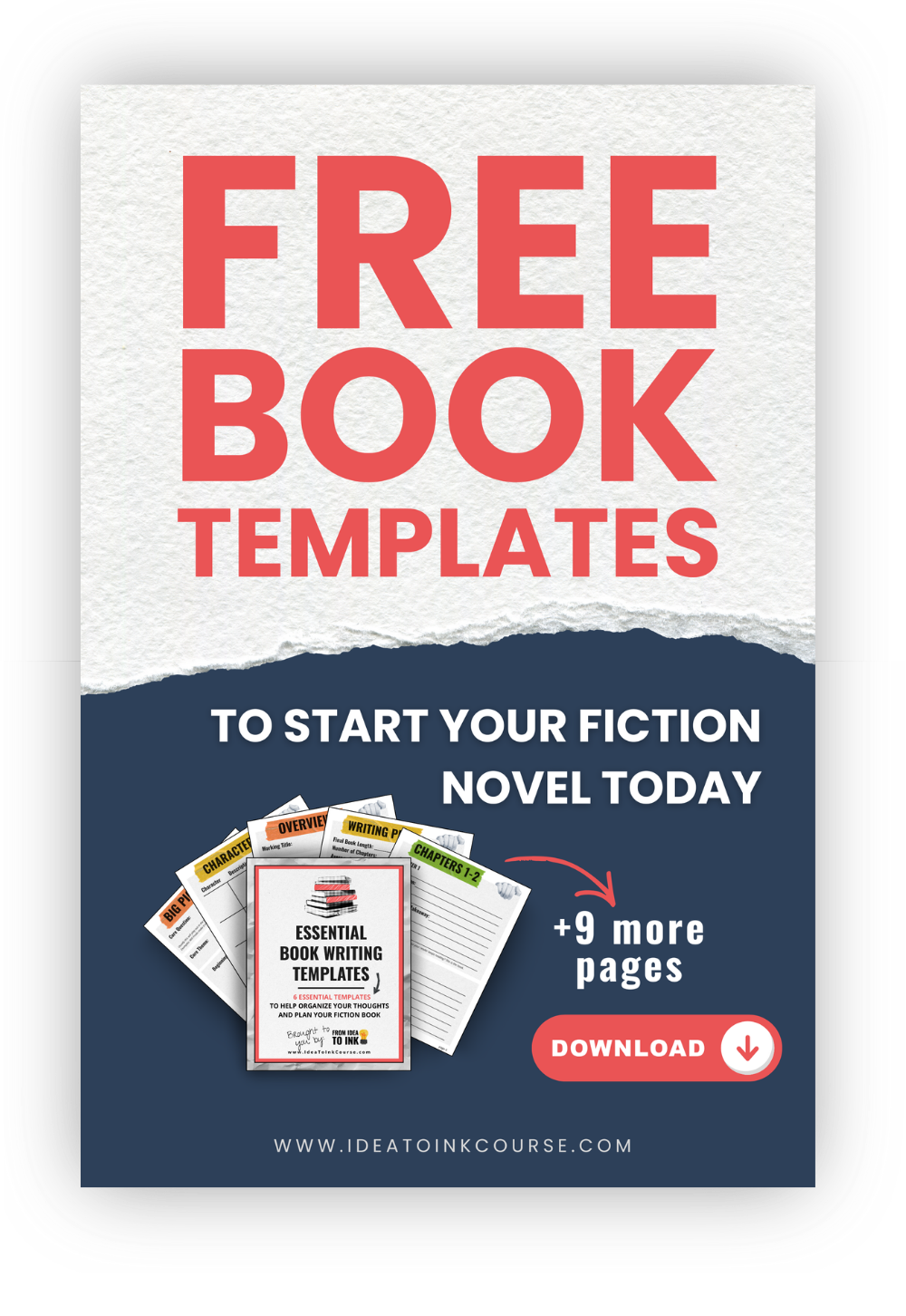
Choose your book’s central change, then write one sentence for the beginning, middle, and ending. Keep it imperfect and specific. You are not trying to create a polished outline today. You are creating a path your future self can trust. If you need something to get started, try out free novel planning templates.
At Idea to Ink, we believe confidence grows from visible progress, not from waiting until you feel completely ready. Give your story a sturdy starting shape, write the next scene that belongs on that path, and let each small decision carry you closer to the book you have been wanting to write.
Ready to write your book?
Download the Essential Book Writing Templates for FREE and start strong.
We think SPAM is icky. We will never sell your information, and you can unsubscribe at any time.