How to Create a Chapter Roadmap That Works
If your book idea feels exciting in your head but messy on the page, you probably do not need more inspiration. You need a better map. Learning how to create a chapter roadmap gives you a clear path from vague concept to workable draft, which is often the difference between talking about a book and actually writing one.
A chapter roadmap is not a rigid outline that traps your creativity. It is a planning tool that helps you see where your book is going, what each chapter needs to do, and what to write next when you sit down. For new writers especially, that kind of clarity lowers resistance. Instead of facing a blank page, you are facing one chapter with one job.
What a chapter roadmap actually does
A strong chapter roadmap organizes your thinking before you ask yourself to produce polished pages. It helps you test the shape of your book early, while changes are still easy to make. That matters because most writers do not get stuck from lack of talent. They get stuck when their ideas are still too loose to support steady progress.
For fiction writers, a roadmap helps you track narrative movement. You can see whether the opening sets up the right conflict, whether the middle drifts, and whether each chapter creates momentum. For nonfiction writers, it helps you sequence ideas in a way that feels useful and satisfying for the reader. You can spot repetition, gaps, and chapters that sound interesting but do not really belong.
The point is not perfection. The point is direction.
How to create a chapter roadmap from your big idea
Start with the promise of the book. Before you list chapters, get clear on what this book is trying to deliver. In fiction, that might be an emotional journey, a transformation, or a central question the story explores. In nonfiction, it is often the result, insight, or change the reader should gain.
If you cannot explain your book in one or two sentences, your roadmap will probably stay fuzzy. Try this: write a simple statement that begins with either “This story is about...” or “This book helps readers...” That sentence becomes your filter. Every chapter should support it.
Next, identify the major stages of the book. Do not think in chapters yet. Think in sections, movements, or phases. A novel might move from setup to disruption to escalation to climax to aftermath. A nonfiction book might move from problem to perspective shift to method to application.
This middle step is easy to skip, but it makes chapter planning much easier. When you know the larger movements, you are not inventing 12 chapters from thin air. You are simply breaking each section into smaller pieces.
Once you have those stages, begin drafting possible chapter titles or working labels. Keep them simple. A chapter does not need a clever name while you are planning. It just needs a clear purpose. “The moment she finds the letter” is more useful than a poetic phrase you will forget next week. “Why most writers stall here” is more useful than a broad label like “Mindset.”
Then write one to three sentences under each chapter that answer three questions: what happens or gets covered, why it matters, and what should change by the end of the chapter. That last question is where many roadmaps get stronger. A chapter should move something. If nothing changes, the chapter may be unnecessary or underdeveloped.
Build each chapter around a job
The easiest way to strengthen a roadmap is to stop thinking of chapters as containers and start thinking of them as workers. I've said it before and I'll say it again: each chapter has a job.
In fiction, that job might be introducing tension, revealing backstory at the right moment, forcing a decision, deepening a relationship, or raising the stakes. In nonfiction, it might be reframing a problem, teaching a concept, providing a tool, or helping the reader apply what they learned.
When a chapter has a clear job, you are less likely to wander. You are also more likely to notice when two chapters are doing the same work. That is a common issue in early drafts. Writers often circle the same emotional beat or repeat the same teaching point because they are still figuring it out. Your roadmap helps you catch that earlier.
A useful test is this: if you removed the chapter, what would the reader lose? If the answer is “not much,” revise it, combine it, or cut it.

How detailed should your roadmap be?
This depends on how your brain works.
Some writers need a lean roadmap with chapter names and short summaries. Too much detail makes them feel boxed in. Others need scene-level or subsection-level notes so they do not freeze when drafting begins. Neither approach is better. The right level of detail is the one that helps you keep moving.
If you tend to over plan and avoid drafting, keep your roadmap lighter. If you tend to draft in circles and lose the thread, add more structure. You are not trying to impress anyone with your planning system. You are building a tool you will actually use.
A good rule is to plan until you feel guided, not crowded.
A practical way to organize your roadmap
Keep your roadmap visible and editable. A buried document you never open will not help you. Use a format that feels easy to update, whether that is a spreadsheet, table, notebook, or simple document.
For each chapter, include the working title, the chapter goal, the main content or events, and any notes about transitions. Fiction writers may also want to track point of view, conflict, and emotional change. Nonfiction writers may want to track the reader takeaway, examples, and exercises or reflection points.
You do not need fancy software. You need a clean system that reduces friction.
At Idea to Ink, we often encourage writers to choose tools that support action, not just organization. If a color-coded board makes you want to write, great. If it turns into a craft project you keep rearranging instead of drafting, simplify.
Expect your chapter roadmap to change
One reason writers resist outlining is that they are afraid of being wrong too early. That fear makes sense, but it is based on the idea that a roadmap is a contract. It is not. It is a working plan.
As you draft, you will learn more about the book. A character may become more central. A chapter may need to move earlier. A nonfiction concept may need an extra bridge chapter because readers need more support before the next step makes sense.
That does not mean your roadmap failed. It means it did its job. It gave you enough structure to begin, and enough visibility to revise intelligently.
What matters is that you update the roadmap when the book changes. Many writers keep drafting based on an old plan, then wonder why the manuscript feels uneven. Your roadmap should reflect the current version of the book, not just the original idea.
Common mistakes when creating a chapter roadmap
The first mistake is planning chapters before clarifying the book’s purpose. When the core promise is unclear, chapter ideas multiply without direction. Everything sounds interesting, but nothing quite fits.
The second is making chapters too broad. If a chapter tries to cover five major developments or teach seven different ideas, it will likely feel scattered. Chapters need focus. Readers can feel when a chapter is trying to do too much.
The third is confusing order with progress. A list of chapters is not automatically a roadmap. The chapters need to build on one another. Ask yourself whether the sequence creates momentum or just collects content.
The fourth is ignoring the reader experience. This is especially important in nonfiction. You may understand your topic deeply, but your reader is arriving step by step. Your roadmap should reflect what they need to know first, where they may hesitate, and how to keep them engaged.
A simple checkpoint before you start drafting
Before you move from roadmap to manuscript, read through your chapter plan from beginning to end in one sitting. Notice where your attention drops, where the logic skips, or where the emotional arc weakens. You are not looking for perfect wording. You are listening for flow.
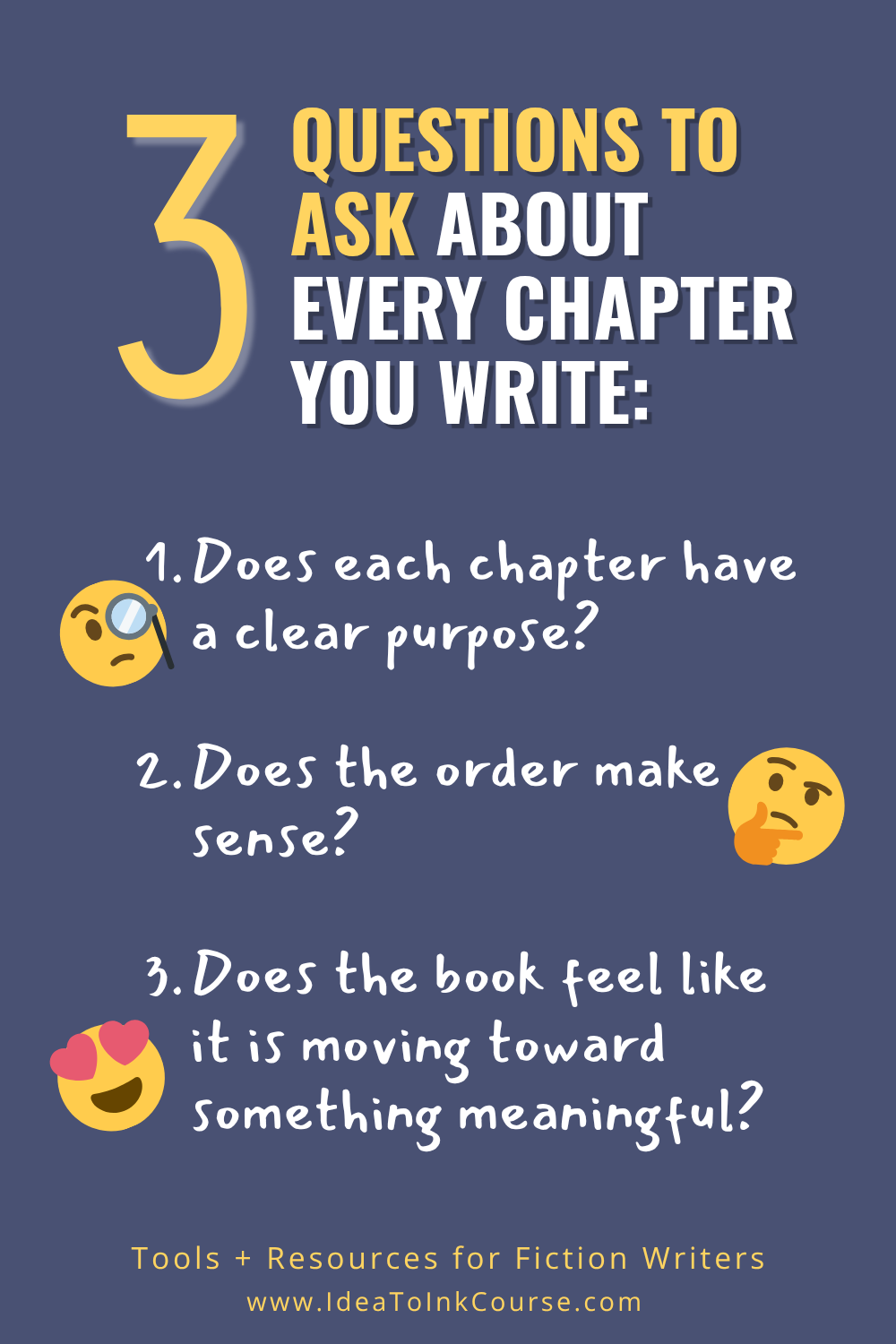
Then ask three questions. Does each chapter have a clear purpose? Does the order make sense? Does the book feel like it is moving toward something meaningful?
If the answer is mostly yes, you are ready. Not finished planning. Ready to write.
That is the real value of learning how to create a chapter roadmap. It turns your book from a huge, intimidating dream into a series of manageable moves. And once you can see the next move, you are much more likely to make it.
Start simple. Name the chapters. Give each one a job. Let the plan support you without controlling you. Your roadmap does not need to be impressive. It needs to help you keep going, one chapter at a time.

Ready to write your book?
Download the Essential Book Writing Templates for FREE and start strong.
We think SPAM is icky. We will never sell your information, and you can unsubscribe at any time.