7 Writing Accountability Methods That Work
Your book does not need more pressure. It needs a reliable way to stay visible when work gets busy, confidence dips, or the blank page feels louder than your original idea. The best writing accountability methods create a gentle expectation: you know what to work on, when you will return to it, and how you will recognize progress.
Accountability is not about proving that you are disciplined enough to be an author. It is a support system that makes writing easier to repeat. For aspiring authors, especially those starting their first draft, the right method turns “I should write someday” into a practice you can keep.
What makes writing accountability work?
A useful accountability system has three parts: a clear commitment, a visible record of progress, and a response when you miss a session. Without the first two, writing stays too vague. Without the third, one missed day can become a month of avoidance.
Your method should fit your real life, not an imaginary schedule with three uninterrupted hours every morning. A parent with 20 minutes before school pickup needs a different structure than someone writing during a quieter season. The goal is consistency you can sustain, not a plan that looks impressive for one week.
1. Schedule a small, specific writing appointment
“Write more” is not an appointment. “Draft 300 words at 7:30 p.m. on Tuesday and Thursday” is. Put your writing session on your calendar with the same care you would give a meeting, class, or medical appointment.
Start smaller than you think you need to. A 25-minute session three times a week is enough to build evidence that you are someone who returns to the page. If you have more time, wonderful. But protect the minimum session first. Small commitments reduce the emotional weight of getting started.
In our Start Your Novel Mini-Course, we don't suggest more than 30-minute sessions! (And that still gets you a 40,000 word first draft in well under a year)
At the end of each session, leave yourself a short note about what comes next: “Describe the argument in chapter two,” or “Write the moment Maya opens the letter.” That note becomes a runway for your next appointment, so you are not spending your precious writing time deciding where to begin.
2. Track the input, not only the word count
Word counts are helpful, but they are not the only measure of real writing work. Planning a chapter, revising a confusing scene, researching a nonfiction example, and organizing your notes all move a book forward.
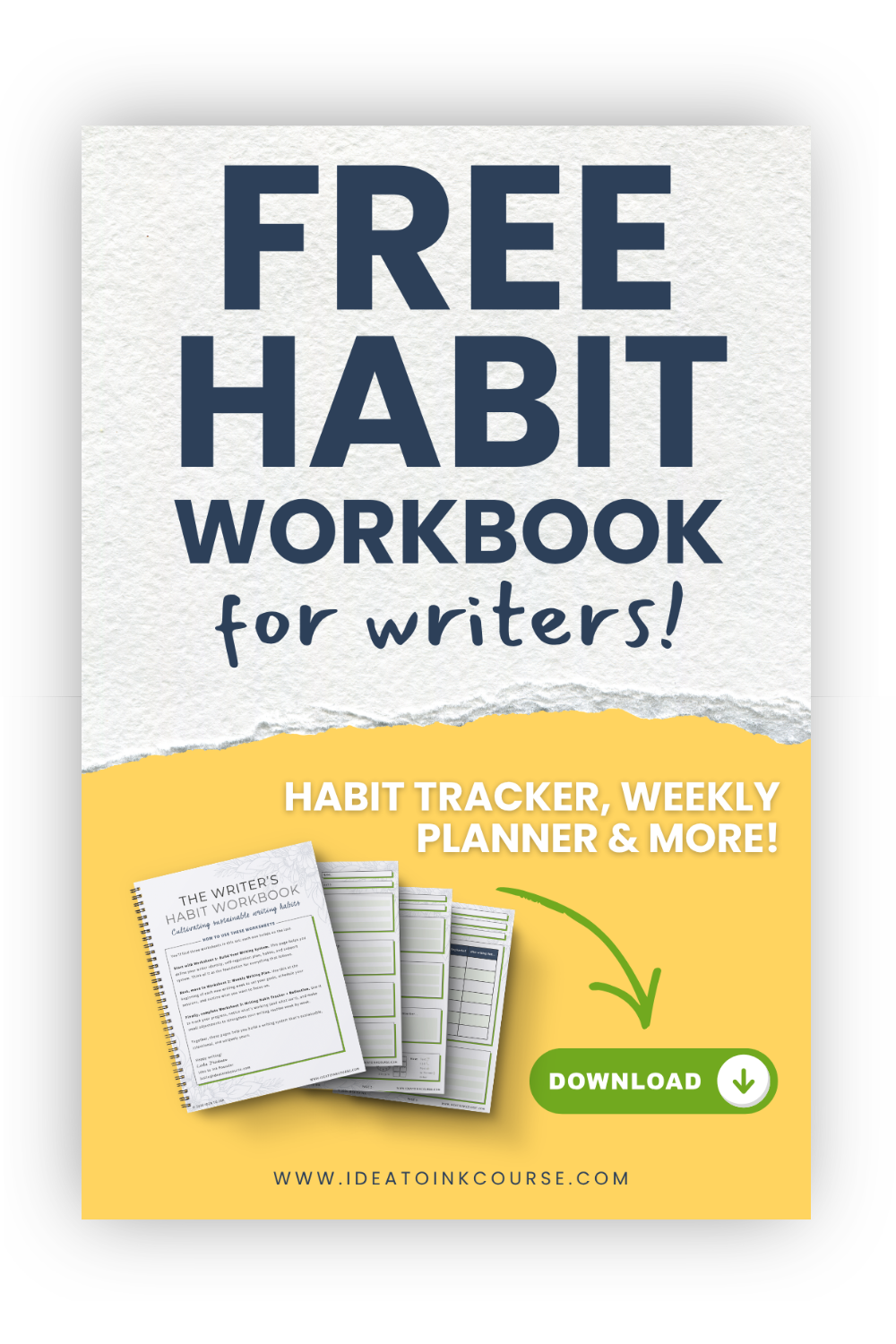
Choose one simple tracker and use it consistently. You might mark an X on a paper calendar every time you complete a writing session, record your minutes in a notebook, or keep a weekly worksheet with your planned and completed sessions. The point is to make your effort visible. (Psst. Looking for a habit tracker just for writers? You can get ours for free here)
This matters on low-word-count days. If you spent 30 focused minutes solving a plot problem, you kept your promise to your book. Tracking the habit protects you from the belief that a session only counts when it produces a large number of polished words.

3. Use a weekly promise instead of daily perfection
Daily writing can be powerful, but it is not the only path to a finished draft. For many writers, a weekly commitment is more realistic and less likely to collapse after one difficult day.
Try setting a promise such as three writing sessions, 90 minutes of drafting, or one completed scene each week. Decide on the promise before the week begins, then review it at the end of the week. Did you complete it? If not, what got in the way: an unclear task, an overfull schedule, fear about the chapter, or a goal that was simply too large?
This is where accountability becomes educational rather than harsh. You are gathering information about your process. Adjust the plan based on what you learn, rather than labeling yourself inconsistent.
4. Create a check-in with one trusted person
A writing partner can make a private goal feel real. You do not need someone to read every chapter or give detailed feedback. Often, the most useful arrangement is a brief check-in once a week.
Each person can share what they planned, what they completed, and what they will do next. Keep it specific. “I worked on my book” is encouraging, but “I drafted 650 words of chapter one and will outline chapter two on Saturday” gives your partner something concrete to follow up on.
Choose someone who is supportive without being vague. The right partner celebrates progress and also asks, kindly, “When will you make up that missed session?” If you tend to disappear when you feel behind, agree in advance that missed goals deserve an honest update, not silence.
If you need an accountability partner, join our free community: The Story Studio. It's a supportive, encouraging group of people who are ready to cheer you on.
5. Join a focused writing session
Sometimes the hardest part of writing is sitting down alone. A scheduled co-writing session solves that problem by giving you a start time, a finish time, and other people who are also choosing their creative work.
This can be a virtual session with a friend, a local writing group, or a recurring time where you both work quietly on your own projects. Begin by stating your intention, write without chatting for 25 to 50 minutes, then report back. The structure is simple, but it reduces the temptation to reorganize your desk, answer email, or wait for inspiration. We host two virtual writing sessions weekly, and you can access them through our free community.
Focused sessions work especially well if your book has been sitting in the “someday” category. You are not waiting to feel ready. You are practicing the behavior of a working writer alongside others.
6. Build a visible deadline ladder
A final deadline such as “finish my novel by December” can feel far away. Break it into smaller deadlines that tell you what to do this month, this week, and in your next session.
For example, a novel writer might set a monthly target of four chapters, a weekly target of one chapter draft, and a session target of one scene. A nonfiction writer might set deadlines for choosing a reader, building an outline, drafting one section, and gathering examples. Each rung should be clear enough that you can tell whether it is done.
Be careful not to confuse rigidity with commitment. If a family emergency, illness, or major work project interrupts your month, move the dates deliberately. A revised plan is still a plan. What weakens accountability is not changing a deadline when life changes. It is avoiding the plan altogether because it no longer feels perfect.

7. Add support when you keep getting stuck
If you repeatedly set goals and do not follow through, the problem may not be motivation. You may need more structure, clearer instruction, or a space to work through the uncertainty underneath the delay.
A course, writing group, or coach can provide external deadlines and feedback, but the best support also helps you build skills. You may need a chapter-planning worksheet because every session begins with confusion. You may need prompts because you are overthinking your opening. You may need coaching because fear of getting it wrong has made every decision feel high stakes.
At Idea to Ink, the goal is not to hand writers a rigid formula. It is to offer guided tools and encouragement that help a big, meaningful goal become a series of doable next steps. Accountability is strongest when it is paired with a process you understand.
How to choose among writing accountability methods
Start with the obstacle you face most often. If you forget to make time, schedule appointments. If you write but cannot see progress, use a tracker. If you regularly break promises to yourself, add a check-in partner. If you freeze because you do not know what to write next, create a deadline ladder and a clearer session plan.
You can combine methods, but do not build an elaborate system before you have written a page. Choose one method for the next two weeks and make it easy to use. A calendar appointment plus a simple weekly check-in is enough for many beginning writers.
Give yourself credit for showing up before the book feels easy. Open the document, follow the next small instruction, and let each completed session become proof that your story deserves a place in your schedule.

Ready to write your book?
Download the Essential Book Writing Templates for FREE and start strong.
We think SPAM is icky. We will never sell your information, and you can unsubscribe at any time.