What Should First Time Authors Write First?
The first book idea is rarely the only idea in your head. Maybe you have a novel that has followed you for years, a personal story you feel called to tell, and a practical topic you could teach tomorrow. When you ask what should first time authors write, the most useful answer is not "the most impressive book." It is the book you can clearly imagine finishing.
That distinction matters. A first book does not need to prove everything you know or carry every story you have lived. Its job is to teach you how to move from an idea to pages, from pages to a draft, and from a draft to a completed manuscript. Choose a project that gives you enough excitement to return tomorrow and enough structure to keep going when the early enthusiasm fades.
Start With a Book You Can Sustain
The best first book sits at the intersection of interest, clarity, and scope. You want to care about it deeply enough to spend months with it. You also need to be able to describe it simply. If explaining your idea takes ten minutes and still feels fuzzy, the problem may not be your talent. The idea may need a smaller container.
For fiction writers, that container could be one central character facing one meaningful problem. Rather than beginning with a seven-book fantasy series, consider the first complete story from that world. Rather than trying to include every family member across four generations, focus on the season when one relationship changed.
For nonfiction writers, start with a specific reader and a specific outcome. “I want to write about wellness” is a subject area, not yet a book. “I want to help busy women create a simple evening routine that supports better sleep” is a beginning. It tells you who the reader is, what problem they have, and what your book will help them do.
A smaller idea is not a lesser idea. It is often the idea that gets written, tested, and completed.
What Should First Time Authors Write? Choose a Clear Promise
Every book makes a promise. A novel promises a reader an emotional experience: suspense, comfort, wonder, laughter, heartbreak, or a satisfying transformation. A nonfiction book promises insight, guidance, or a useful change. Before you build a chapter plan, write your promise in one or two sentences.
For example, a romance writer might say: “This novel follows a guarded chef who must work with her first love to save her family’s restaurant.” A nonfiction writer might say: “This book helps first-time gardeners grow herbs in small spaces without expensive equipment.”
Notice what these statements do not do. They do not explain every subplot, chapter, or lesson. They create a focal point. That focus helps you decide what belongs in the book and what can wait for another project.
If you cannot yet name the promise, try answering three questions in a notebook:
- Who is this book for?
- What do they want, need, fear, or struggle with?
- What will be different by the final page?
For a novel, the “who” may be your protagonist rather than your ideal reader. For nonfiction, it is usually the reader you most want to serve. The answers do not need to be perfect. They need to give your writing a direction.
Pick a Project That Matches Your Current Season
A book can be meaningful and still be the wrong project for right now. First-time authors often choose an enormous, emotionally demanding, or research-heavy topic because it feels important. Sometimes that is exactly the right choice. Other times, it creates a level of pressure that makes starting nearly impossible.
Consider the real conditions of your life. How much time can you protect each week? Do you have access to the research you need? Are you ready to write about a painful personal experience, or would some distance make the work more manageable? A memoir about a recent loss may be deeply valuable, but it can require emotional support, reflection, and strong boundaries. There is no deadline that says you must write your hardest story first.
Likewise, a historical novel or business book may require extensive research. Research is not a reason to avoid the project, but it needs a plan. If you have only a few hours a week, choose a narrow question to investigate and set a limit on research time. Otherwise, collecting information can quietly replace writing.
Your first book should stretch you without asking you to become a different person before you begin. It should fit your current capacity well enough that you can build a steady practice.

Separate Your First Draft From Your Big Vision
Many aspiring authors carry a big vision: a trilogy, a signature framework, a story world, or a book that changes lives. Keep that vision. It can be a powerful source of purpose. But give your first draft a more practical assignment.
Ask yourself: what is the smallest complete version of this book?
For a fiction project, that may mean writing one standalone novel before planning the sequel. For nonfiction, it may mean helping readers solve one problem before addressing an entire life transformation. A concise, focused manuscript gives you a finish line you can see.
This is not about thinking small. It is about creating momentum. Completing a draft teaches skills that planning alone cannot teach: how to make decisions, recover from a difficult chapter, spot gaps, revise imperfect work, and keep promises to yourself. Those skills will support every larger book you write later.
Use a Simple Test Before You Commit
You do not need to wait for total certainty. But you can test an idea before giving it months of your attention. Spend one writing session answering the following questions in full sentences:
- What is the book about in one sentence?
- Why do I want to write it now?
- Who will care about this book?
- What are the likely chapters or major story turns?
- What would “finished” look like for this project?
Then pay attention to your response. Do the answers create energy, or do they make you feel trapped? A little nervousness is normal. A persistent sense of confusion may signal that the idea is too broad or that you need more planning before drafting.
You can also test your concept by writing a rough opening scene or a short section of advice. Do not judge the quality yet. Look for evidence of movement. Did questions arise that you want to answer? Did the voice feel natural? Did you find yourself thinking about the project after you stopped writing? Those are useful signs.
Give Yourself Structure, Not Pressure
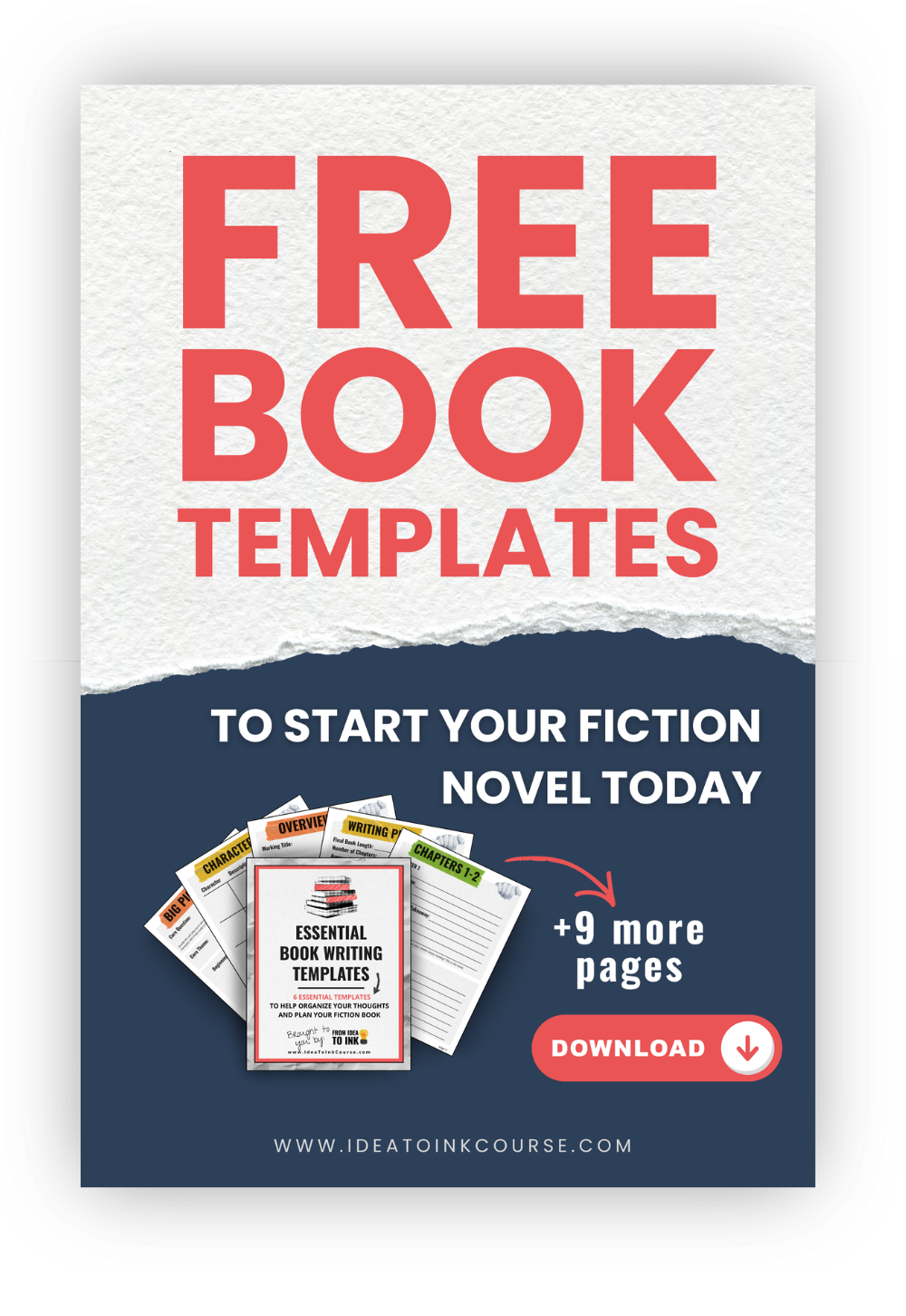
Once you choose your idea, avoid the trap of starting with a blank document and a demand to write a whole book. Break the project into visible steps. Create a working title, a one-sentence promise, and a simple chapter or scene list. Set a realistic weekly goal based on your schedule, such as three 30-minute sessions or 1,000 words. If you want a structured way to go about this, we made a Novel Writing Kit that you can get here.
Your plan can change. In fact, it probably will. Structure is not a contract that prevents creativity. It is a support system that keeps you from having to make every decision from scratch each time you sit down.
If you are writing fiction, plan the character’s goal, obstacle, and change before mapping every scene. If you are writing nonfiction, outline the reader’s starting point, the steps you will teach, and the outcome they can expect. That is enough structure to begin with confidence while leaving room for discovery.
At Idea to Ink, the goal is not to make every writer follow the same formula. It is to help you use a clear process so your own voice has room to emerge.
Let Your First Book Be a Beginning
Your first book may not be the book you imagined writing when you were younger. It may be more focused, more practical, or quieter than your biggest dream. That is okay. The right first project is the one that helps you become an author through action, not just intention.
Choose the idea that has a clear heart, a manageable shape, and a reason for you to return to it. Then make the next step small: write the promise, sketch the chapters, or draft one page. You do not need permission to begin. You need a project you can carry forward, one honest writing session at a time.
Ready to write your book?
Download the Essential Book Writing Templates for FREE and start strong.
We hate SPAM. We will never sell your information, for any reason.