Author Accountability Systems That Work
You do not need more guilt about your unfinished book (If you're like the rest of us, you have plenty of guilt). You need a writing process that keeps moving even when life gets busy, motivation drops, or your confidence wobbles. That is where author accountability systems matter. Stay with me. I know the word 'accountable' is scary. But, here's the thing: the right system does not pressure you into perfection. It gives you enough structure to help you return to the page, make visible progress, and trust yourself as a writer.
For many aspiring authors, accountability sounds intense. It can bring up images of strict deadlines, word count shaming, or someone checking in just to ask why you are behind. That kind of setup may work for some writers, but for many beginners, it backfires. If you are already overwhelmed, a harsh system often adds resistance instead of momentum.
A better approach is to think of accountability as support plus clarity. You are not creating a trap for yourself. You are building a framework that makes writing easier to start and easier to continue.
What author accountability systems actually do
At their best, author accountability systems reduce the number of decisions you have to make every time you sit down to write. Instead of asking, "Do I feel inspired today?" you already know what your next step is, when you plan to work on it, and how you will track progress.
That matters because inconsistency is usually not a character flaw. It is often a systems problem. Writers stall when the goal is too vague, the project feels too large, or the plan depends too heavily on willpower. A good accountability system closes those gaps.
It also turns writing into something measurable. Not mechanical, but visible. When you can see that you drafted three scenes this week, revised one chapter, or showed up for four twenty-minute sessions, your progress becomes real. That creates momentum, and momentum is often more reliable than motivation.
Why most writers quit their systems too quickly
A system can look great on paper and still fail in real life. Usually, that happens for one of three reasons.
First, the system asks for too much too soon. A writer decides they will write 2,000 words a day, six days a week, while working full-time and managing family responsibilities. It feels exciting for about four days. Then one missed session turns into shame, and shame turns into avoidance.
Second, the system is too vague. "Write more" is not a plan. Neither is "be consistent." Accountability only works when it connects to specific actions. That might mean writing from 7:00 to 7:30 a.m., finishing one messy scene by Thursday, or reviewing your outline every Sunday.
Third, the system tracks the wrong thing. Word count is useful, but it is not the only sign of progress. Some stages of book writing involve planning, researching, revising, or solving story problems. If your system only rewards drafting, you may feel like you are failing during other important parts of the process.

The most effective types of author accountability systems
The best system depends on your personality, schedule, and stage of writing. There is no single perfect setup, but most strong systems include a mix of self-accountability, external accountability, and project planning.
Level 1: Self-accountability: simple and steady
This is the foundation. Self-accountability means you have a clear writing routine, a defined next step, and a way to record what you complete. It can be as simple as a weekly writing plan and a daily check-in with yourself.
This works especially well for writers who want flexibility and do not want to rely on other people. The trade-off is that self-accountability can weaken when you hit a hard patch in your draft. If your system lives only in your head, it is easier to negotiate with yourself and quietly step away from the work.
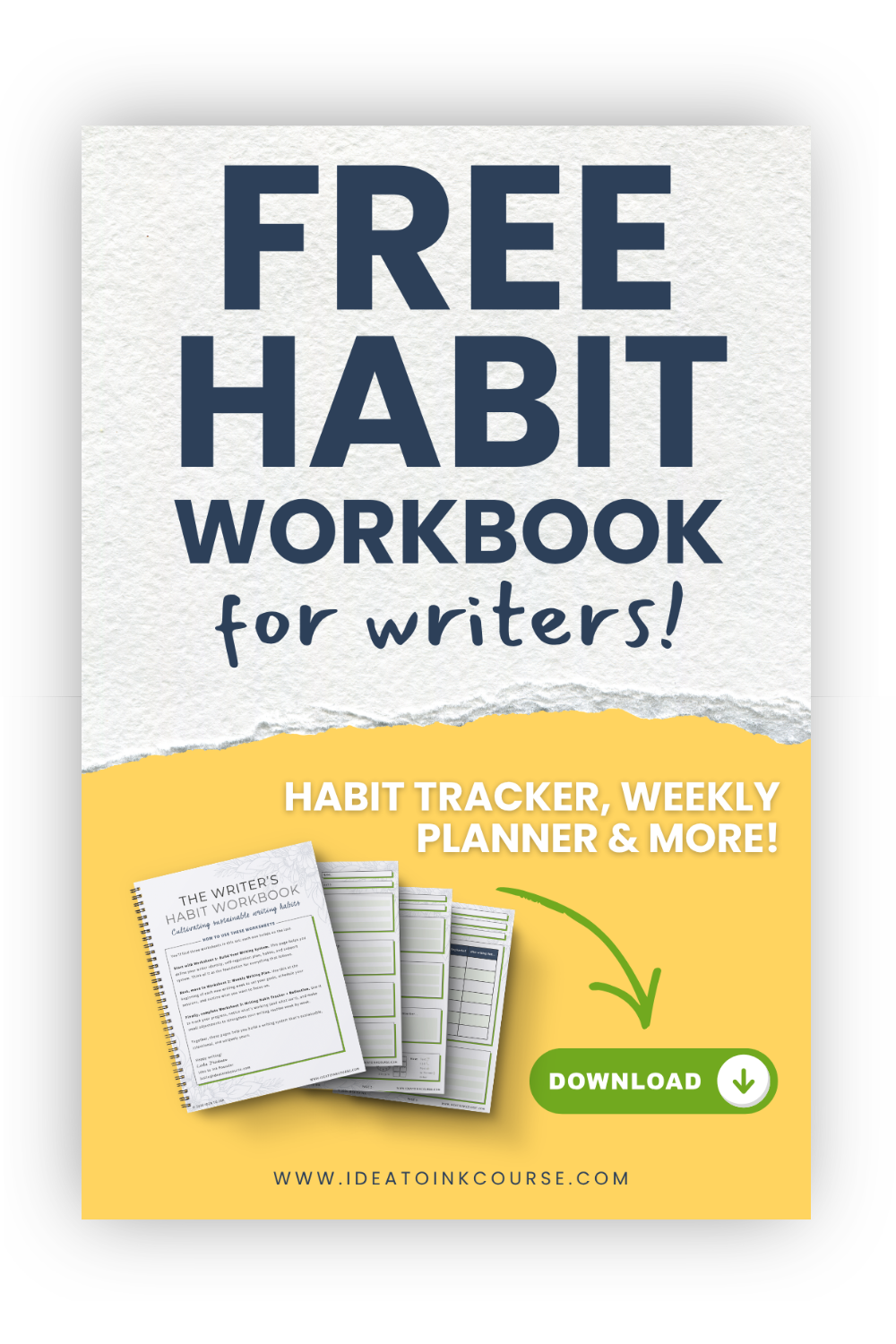
That is why visible tracking matters. A calendar, worksheet, progress log, or weekly planning page can make a big difference. When your writing goals are written down, they feel less optional. If you don't have a habit tracker, you can download ours for free as part of the Writer's Habit Workbook. Additionally, our Start Your Novel: The Beginner's Blueprint Mini-Course and our signature Idea to Ink: Write a Book in 21 Days Course have schedules/trackers built in.
Level 2: Partner accountability: personal and motivating
An accountability partner can be incredibly effective if the relationship is a good fit. This works best when both people are clear about expectations. Are you checking in daily or weekly? Are you sharing goals, pages, or just proof that you showed up? Do you want encouragement, feedback, or both?
The strength of a partner system is connection. Someone else knows what you said you would do, and that can help you follow through. The risk is mismatch. If one person is highly committed and the other disappears for two weeks, frustration builds quickly.
If you choose this route, keep it simple. A short weekly message with your goal, your result, and your next step is often enough. We've created an encouraging online community to help you stay accountable (if that's what you want. If you want to share cat pictures, you can do that too). Check it out here and sign up for free.
Level 3: Group accountability: structure with community
Writing groups, classes, and coaching programs can provide a stronger framework because they combine deadlines, education, and encouragement. For many beginner authors, this is where consistency finally clicks. You are not just trying to be disciplined in isolation. You are working inside a clear process with support around you.
This can be especially helpful if you struggle with blank-page paralysis or do not know what to do next. Accountability works better when paired with instruction. It is much easier to keep a promise to write when you also have prompts, templates, or lesson-based steps guiding the work.
The trade-off is that group systems require commitment to someone else’s schedule. That can be helpful, but it also means you need a format that fits your life.
How to build author accountability systems that last
Start smaller than your ambition wants to start. That may sound unimpressive, but it is one of the smartest things a writer can do. A system you can maintain beats a system that looks impressive for one week.
Begin with three decisions: when you will write, what counts as progress, and how you will review your week. Those three pieces create the core of a sustainable writing practice.
Decide when writing happens
Choose a realistic writing rhythm before you choose a big goal. If you can write four days a week for thirty minutes, claim that. If weekends are your only reliable time, build around weekends. Consistency grows from honesty, not optimism.
Attach your writing session to a specific time or cue whenever possible. "After dinner" is stronger than "sometime tonight." A scheduled session removes friction because you are no longer deciding from scratch each day.
Define progress clearly
Your writing goal should be concrete enough that you can tell whether it happened. "Work on my book" is too broad. "Draft 500 words," "revise scene two," or "complete the character worksheet for my protagonist" gives your brain a finish line.
This is especially important for beginners, because vague goals create the feeling of effort without the satisfaction of completion.
Review without judging yourself
A weekly review keeps your system alive. Look at what you planned, what actually happened, and what needs to change. The goal is not to scold yourself. The goal is to notice patterns.
Maybe your morning writing block keeps getting interrupted, but Sunday afternoons work beautifully. Maybe your word count goal is too high, but your session goal is realistic. Your system should adapt to your real life, not the other way around.
What accountability should feel like
Good accountability creates gentle pressure, not dread. It should make writing feel more doable, not more intimidating. You should be able to miss a day without deciding you have failed.
That balance matters. Too little structure, and the book stays in your head. Too much pressure, and the book starts to feel heavy before it has room to grow.
A healthy system also leaves room for the actual creative process. Some days you will draft quickly. Some days you will untangle a problem for thirty minutes and write one paragraph. Both can count. The point is not to force every session to look the same. The point is to keep the relationship with your book active.
A practical starting point for overwhelmed writers
If you have tried to be consistent before and it never sticks, do not start with a complicated tracking method. Start with a two-week experiment.
Pick three writing sessions each week. Decide in advance what you will work on in each session. Keep the sessions short enough that you can complete them even on a busy day. At the end of each week, write down what you finished and what your next step is.
That is a real accountability system. It may be simple, but simple systems are often the ones writers actually use.
If you want more support, add one layer at a time. Share your weekly goal with a friend. Join a writing group. Use guided worksheets or a course that breaks your draft into manageable steps. Idea to Ink is built around that kind of structure, because most writers do not need more pressure. They need a plan they can follow.
Your book does not get written through intensity alone. It gets written through return. Return to the page, return to the plan, return to the next small step. When your accountability system helps you do that, you are no longer waiting to feel ready. You are already writing.
Ready to write your book?
Download the Essential Book Writing Templates for FREE and start strong.
We think SPAM is icky. We will never sell your information, and you can unsubscribe at any time.