Overcoming Blank Page Paralysis One Step at a Time
Your book idea may have lived in your mind for months, or even years. You can picture the cover, imagine the reader who needs your message, and feel a spark whenever someone asks what you are working on. Then you open a document, see the cursor blinking, and nothing comes. Overcoming blank page paralysis is not about forcing yourself to become more creative or to 'just write'. It is about giving your creativity a clear place to begin.
A blank page asks too much of you at once. It seems to demand a brilliant opening, a complete plan, polished prose, and proof that you really are capable of writing a book. No wonder it feels intimidating. The good news is that you do not need to solve your entire book today. You only need a next step small enough to take.
Why Blank Page Paralysis Happens
Blank page paralysis is often mistaken for a lack of discipline. More often, it is a response to uncertainty. When the task is vague, your brain has to make too many decisions at once: What should I say? Where should I start? Is this good enough? What if I choose the wrong direction?
That mental load can stop even deeply motivated writers. You may have a meaningful story, useful expertise, or a fictional world you cannot wait to share. But motivation alone cannot replace a process. A process reduces the number of choices in front of you, which makes starting feel safer and more manageable.
Perfectionism adds another layer. Many aspiring authors try to write a first draft that reads like a finished book. But drafting and polishing are different jobs. Drafting is for discovering what you want to say. Revising is for shaping it into writing that serves your reader. Asking yourself to do both at the same time is like trying to build a house while judging the paint color.
Tip #1: Make the Page Smaller Before You Write
When “write my book” is the assignment, procrastination makes sense. Replace that enormous task with a specific, limited action. Instead of opening a blank document titled My Novel, open a page labeled with one focused question.
For fiction writers, your question might be: “What does my main character want in this scene?” For nonfiction writers, it might be: “What problem will this chapter help my reader solve?” You are no longer trying to create a book from nothing. You are answering one question.
Try setting a 10-minute timer and giving yourself permission to stop when it ends. This is not a test of your commitment. It is a way to lower the stakes. Often, the hardest part of a writing session is crossing the threshold from thinking about writing to actually putting words on the page.
If 10 minutes still feels heavy, begin with three sentences. Write what you know your reader needs. Write what happens immediately before your scene begins. Write a messy explanation of the point you want to make. Three imperfect sentences are more useful than an untouched page because they give you something to develop.
Tip #2: Start With a Container, Not a Blank Document
Writers do not need more pressure. They need useful constraints ('useful' being the key word here. A container tells you what belongs in the writing session and what can wait until later.
Before you draft, create a simple frame for the section you are working on. For a nonfiction chapter, write a working title, the reader problem, the central lesson, and one example you want to include. For a novel scene, note the point-of-view character, their goal, the obstacle in their way, and what changes by the end.
This does not lock you into a rigid plan. It gives your imagination something to respond to. You can change the chapter title, the plot point, or the lesson later. Right now, the frame is there to keep you from having to invent the entire book every time you sit down.
A useful writing container also includes a realistic finish line. “Draft Chapter One” may be too broad. “Write the conversation where Maya decides to leave” is clear. “Explain the first mistake new business owners make when setting prices” is clear. Specificity turns intention into an assignment you can complete.
In our Start Your Novel Mini-Course: The Beginner's Blueprint we start with writing 500 words. It sounds simple, but if you've been carrying a story around in your head for years (and yet to get it onto the page) this little trick works wonders. Start with ten minutes. Start with 500 words. Start with one scene. It doesn't have to be the beginning, it just has to be a piece of the bigger puzzle.
Tip #3: Use Prompts That Pull Words Out of You
When you feel stuck, do not ask, “What should I write?” Ask a question that makes a response almost unavoidable. Prompts work because they bypass the pressure to perform and invite you to explore.
For a memoir or personal nonfiction book, try writing from the sentence, “I did not understand this until...” Then continue without correcting yourself. You may uncover the story, realization, or turning point that belongs in your chapter.
For a novel, begin with, “The worst possible person entered the room when...” Let the situation unfold. You are not committing to the scene forever. You are giving your characters something to react to, and reaction creates movement.
For how-to nonfiction, start with, “My reader is frustrated because...” Follow that with, “What they need to hear first is...” This keeps your focus on the person you are helping rather than on whether your writing sounds impressive.
Save prompts that work for you in one document or notebook. On difficult days, you should not need to search for a way in. Your next starting point should already be waiting.
Tip #4: Separate Writing From Evaluating
One of the kindest habits you can build is separating the part of you that creates from the part of you that critiques. Both are valuable. They simply should not lead the same session.
During a drafting session, make a small agreement with yourself: no rereading from the beginning, no fixing every sentence, and no researching every detail the moment it appears. If you need information later, leave a quick note in brackets, such as [check the date] or [describe the kitchen]. Then continue.
This may feel uncomfortable if you are used to polishing as you go. Some writers do prefer to revise lightly before moving forward, and that can work when it helps them stay connected to the draft. But if editing becomes a way to avoid generating new material, it is time to protect your drafting time.
Consider using two different documents or two different parts of your writing routine. One is for messy pages and forward motion. The other is for notes, research, and revision. This simple division helps your brain understand what kind of work is expected right now.

Tip #5: Build a Repeatable Starting Ritual
Confidence grows when writing becomes familiar. You do not need an elaborate routine, but you do need a reliable cue that tells your mind, “We are beginning now.” It might be making tea, opening your chapter outline, setting a timer, or writing one sentence by hand before you type.
Keep the ritual short. The purpose is not to create a perfect atmosphere that you can only find once a week. The purpose is to make starting easier on an ordinary Tuesday evening, after a long day, when you have limited energy but still want to honor your book.
A practical routine could look like this: read yesterday’s final paragraph, write one sentence about what comes next, and set a 15-minute timer. That is enough structure to create momentum without making the process feel heavy.
A Simple Plan for Overcoming Blank Page Paralysis
The next time the page feels intimidating, use this sequence. First, name the smallest piece you can write today. Next, give that piece a container with a question, scene goal, or chapter purpose. Then set a short timer and write without editing. When the timer ends, leave yourself one note about where to begin tomorrow.
That final note matters. It might say, “Describe what she sees through the window,” or “Explain why this strategy failed the first time.” Ending with a visible next step makes it much easier to return. You are not facing a blank page tomorrow. You are picking up a thread you already placed in your own hands.
If you have been waiting to feel completely ready, let this be your permission to begin before certainty arrives. Resources such as the guided templates and writing tools from Idea to Ink can help turn your ideas into a workable plan, but your first act of authorship is simpler: write the next true sentence.
Your book does not need a flawless first page. It needs a first page that exists, followed by another page, and another. Start small enough that you can begin today, and let each imperfect paragraph become proof that you are moving forward.
Ready to write your book?
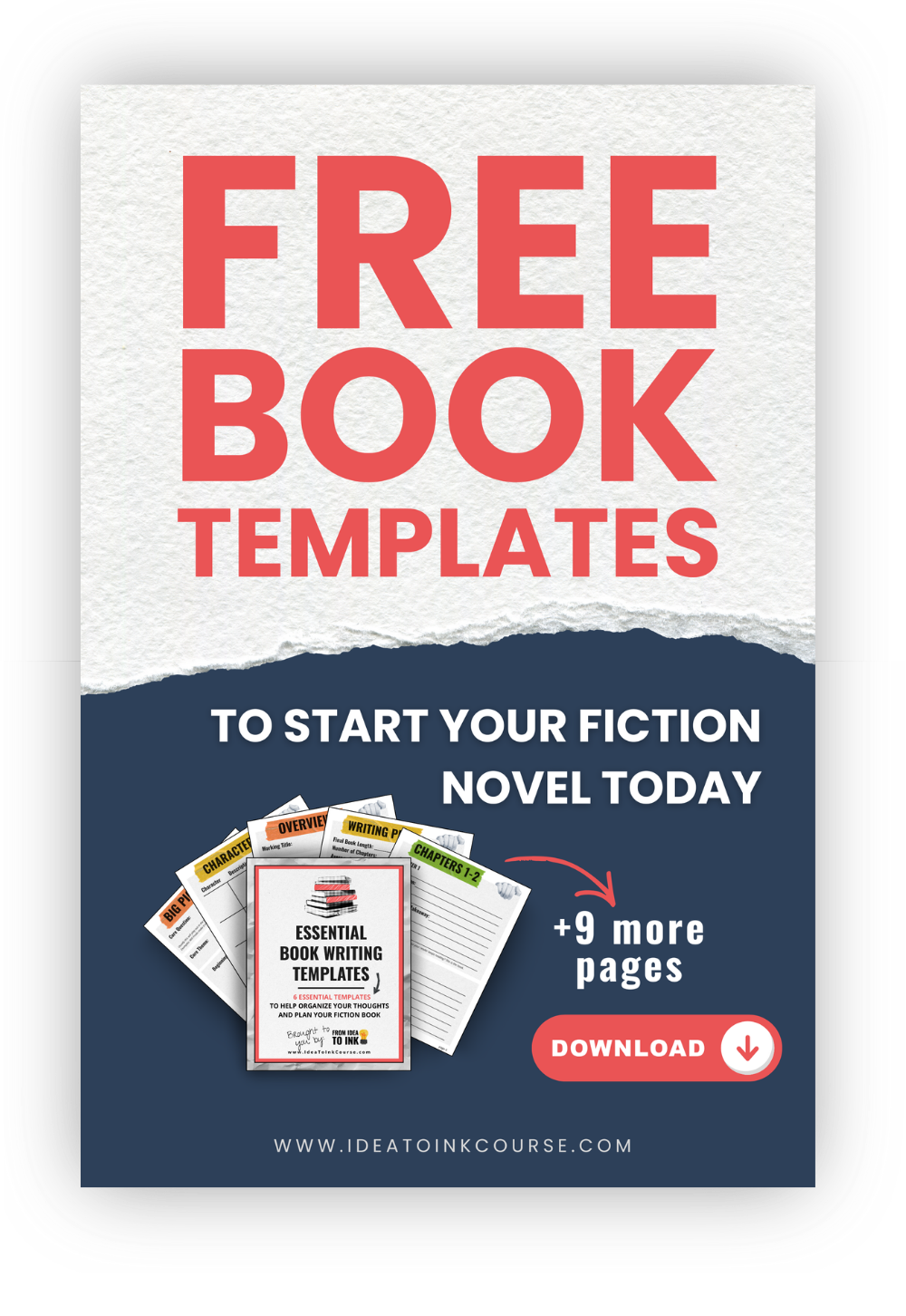
Download the Essential Book Writing Templates for FREE and start strong.
We think SPAM is icky. We will never sell your information, and you can unsubscribe at any time.