How to Choose a Book Idea You’ll Finish
A book idea does not need to arrive fully formed, dramatic, and ready for a publishing contract. More often, it begins as a persistent question, a personal experience you cannot stop replaying, or a character who keeps showing up in your thoughts. Learning how to choose a book idea is less about waiting for one perfect lightning-bolt moment and more about recognizing which idea has enough meaning, energy, and room to grow.
If you have a notes app full of possibilities, choosing can feel surprisingly hard. You may worry about picking the wrong idea, wasting time, or discovering halfway through that you are not qualified to write it. The good news is that you do not need certainty before you begin. You need a simple way to evaluate your options and make a decision you can support with a plan.
Start With the Ideas That Keep Returning
Pay attention to the ideas that repeat themselves. Maybe you have tried to dismiss them because they seem too personal, too ambitious, or not original enough. Yet they return whenever you read, walk, talk to a friend, or sit down to write.
A recurring idea is not automatically the right book, but it is worth investigating. Repetition can signal emotional connection, curiosity, or unfinished thinking. Those qualities matter because a book takes time. You want an idea that still has something to say after the excitement of the first week fades.
Give yourself permission to collect ideas before judging them. Write down fragments: a premise, a memory, a problem you want to solve, a setting, a question, or a transformation you want readers to experience. At this stage, your job is to notice patterns, not make a final commitment.
How to Choose a Book Idea That Fits You
The best book idea is not necessarily the most marketable one on paper or the most impressive when you explain it at a party. It is the idea that meets at the intersection of your interest, your reader, and your current capacity.
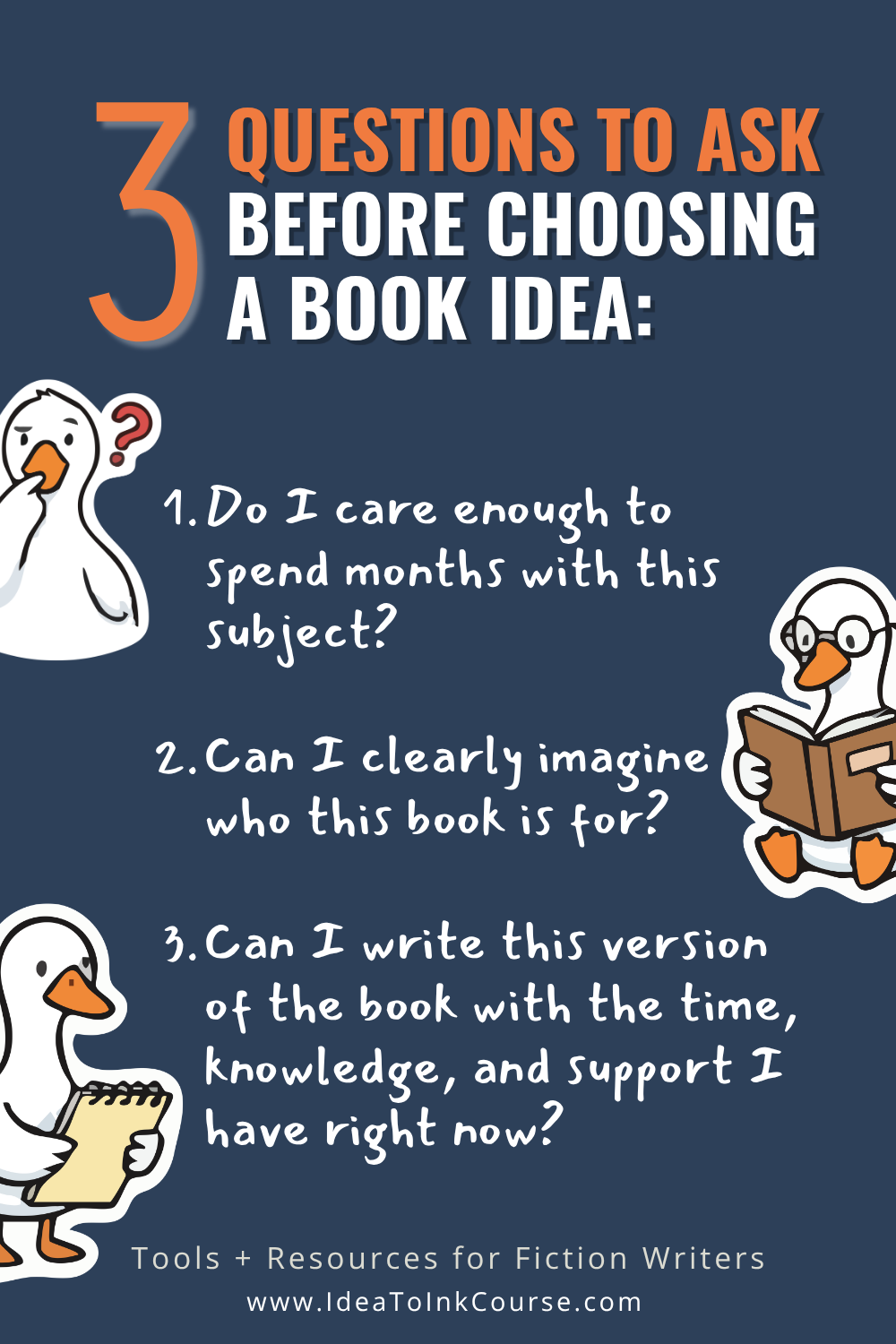
Start by asking three practical questions: Do I care enough to spend months with this subject? Can I clearly imagine who this book is for? Can I write this version of the book with the time, knowledge, and support I have right now?
That last question is especially helpful for aspiring authors who are balancing work, family, health, and a full life. You do not have to choose the smallest possible dream. But choosing a manageable first project can build the confidence and writing habit that make bigger projects possible.
For example, a sweeping fantasy trilogy may be a true long-term goal. But if you are still learning how to complete a draft, you might begin with a standalone novel set in that same world. A memoir covering every chapter of your life may feel overwhelming, while a focused memoir about one defining season can be both more writeable and more powerful.
Look for emotional energy, not just excitement
Excitement is wonderful, but it can be temporary. Emotional energy is different. It is the feeling that remains when the idea becomes difficult, messy, or less glamorous than you imagined.
For fiction writers, emotional energy might come from a relationship you want to explore, a moral dilemma that unsettles you, or a character whose choice matters deeply to you. For nonfiction writers, it may come from a hard-won lesson, a mission, or a problem your readers deserve help solving.
Try this prompt: “I feel compelled to write this book because...” Keep writing until you move beyond surface-level answers such as “because I love reading books like this.” You may discover that your real reason is to help someone feel less alone, preserve a family story, challenge an assumption, or create the story you needed years ago. That deeper reason can steady you when motivation dips.
Identify one clear reader
You do not need to know every detail about your future audience before drafting, but you should be able to picture at least one person your book serves. A clear reader helps you make decisions about tone, scope, examples, and what belongs in the book.
If you are writing nonfiction, ask what problem your reader is trying to solve and what change they hope to make. A book about confidence is broad. A book for women rebuilding confidence after a major career change is much clearer. Specificity does not limit your readership. It gives the right readers a reason to feel seen.
If you are writing fiction, think about the reading experience you want to create. Is your reader looking for a hopeful romance, a fast-paced mystery, a family saga, or a coming-of-age story with emotional depth? You are not writing to a demographic spreadsheet. You are creating a promise about how your book will make someone feel.

Test Your Ideas Before You Commit
You do not have to choose based on instinct alone. A small idea test can turn vague possibilities into useful information.
Take your top three ideas and give each one a page. For every idea, write a working title, a one-sentence description, the intended reader, and the central question or conflict. Then spend 15 minutes freewriting a scene, an opening, or a section from each project.
When you finish, notice what happened. Which idea gave you more to say? Which one created new questions? Which one made you want to keep going after the timer ended? Also notice resistance. Sometimes resistance means an idea needs more planning. Other times, it reveals that you are trying to write a book you think you should write rather than one you genuinely want to write.
You can also give each idea a simple score from one to five in four areas:
- Personal connection: How much does this subject or story matter to you?
- Reader value: Can you explain why someone would want or need this book?
- Scope: Can you imagine completing a focused version of it?
- Momentum: Do new scenes, questions, chapters, or examples come to mind?
The highest score is not a command. It is a conversation starter. If one idea has a lower scope score but a strong personal connection, you may not need to abandon it. You may simply need to narrow it.
Narrow the Idea Until It Has a Shape
Many writers mistake a broad subject for a book idea. “Friendship,” “grief,” “starting over,” and “my experience with burnout” are meaningful subjects, but they need shape before they can guide a draft.
For a novel, shape often comes from identifying the main character, what they want, what stands in their way, and what they stand to lose. Instead of “a story about sisters,” you might have “two estranged sisters must restore their late mother’s failing bookstore before it is sold, forcing them to confront the secret that divided them.” You do not need every plot point yet. You need a situation with movement.
For nonfiction, shape comes from a specific reader, problem, and promise. Instead of “a book about organizing,” you might write “a practical guide for overwhelmed new homeowners who want to create simple household systems in 30 days.” The more clearly you define the transformation, the easier it becomes to outline useful chapters.
Narrowing is not reducing the value of your idea. It is giving your reader a clear doorway into it. A focused book can still hold big emotions, generous insight, and lasting impact.
Watch for the Wrong Reasons to Reject an Idea
Writers often reject workable ideas because fear sounds reasonable. You may tell yourself the market is crowded, someone else has written something similar, or you are not an expert enough to begin.
Yes, research matters. If you are writing nonfiction, you should understand the existing conversation and be honest about the knowledge you need to develop. If you are writing fiction, reading widely in your genre helps you recognize reader expectations. But similarity is not proof that your idea has no place. Readers return to familiar themes because they want new voices, fresh situations, and different points of view.
Your perspective is part of the value. No one else has your exact combination of experiences, observations, language, and questions. You do not need to claim that you are the only person who can write this book. You only need to decide that you are ready to write your version of it.
Make a Decision You Can Act On
At some point, more brainstorming becomes a form of hiding. Set a decision date, choose the idea with the strongest combination of energy and clarity, and call it your working project for the next 30 days.
The word “working” matters. You are not signing a lifelong contract with one concept. You are giving yourself enough commitment to learn whether the idea can become a book. During those 30 days, create a basic premise, map a few possible chapters or scenes, and schedule small writing sessions you can realistically keep.
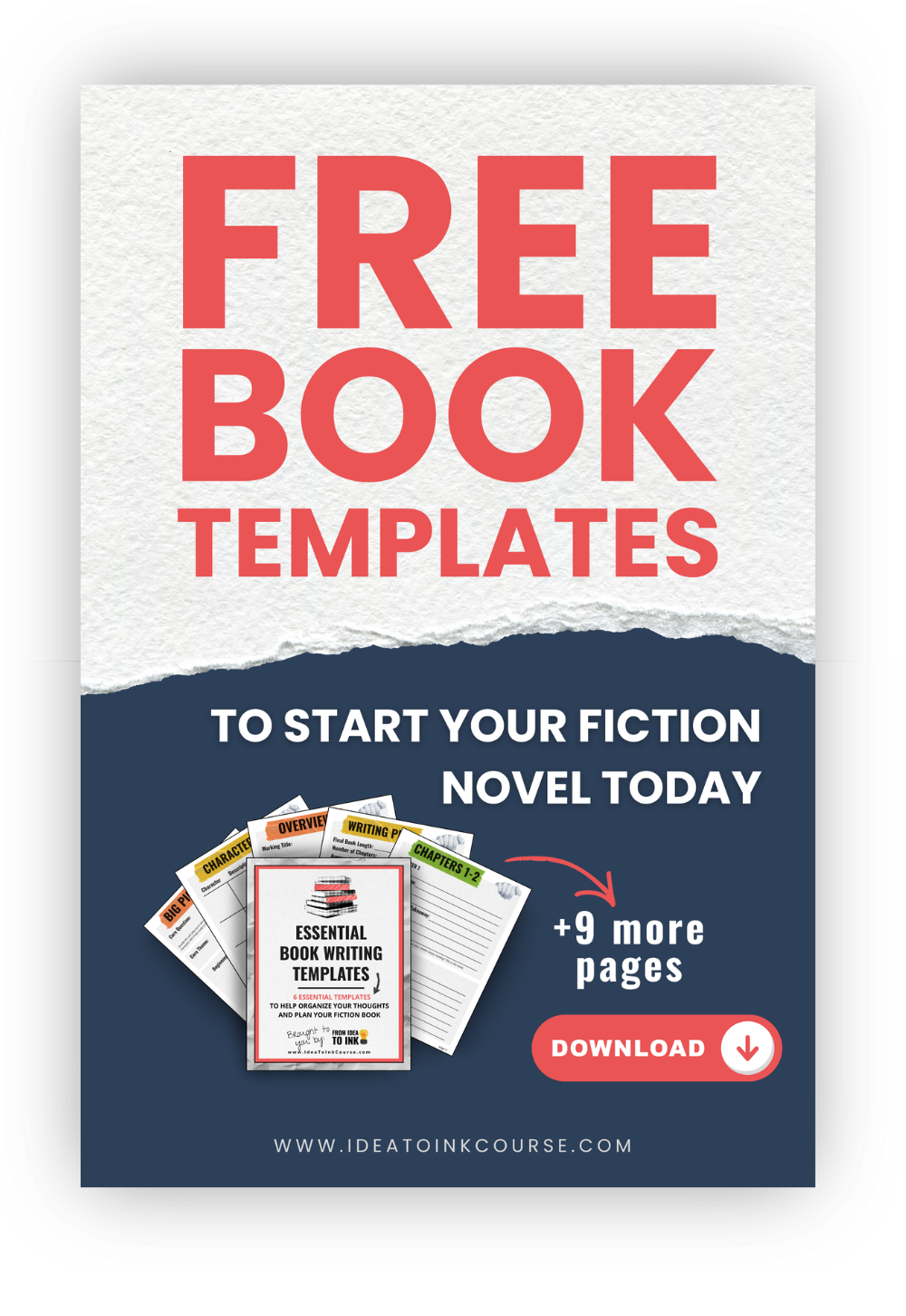
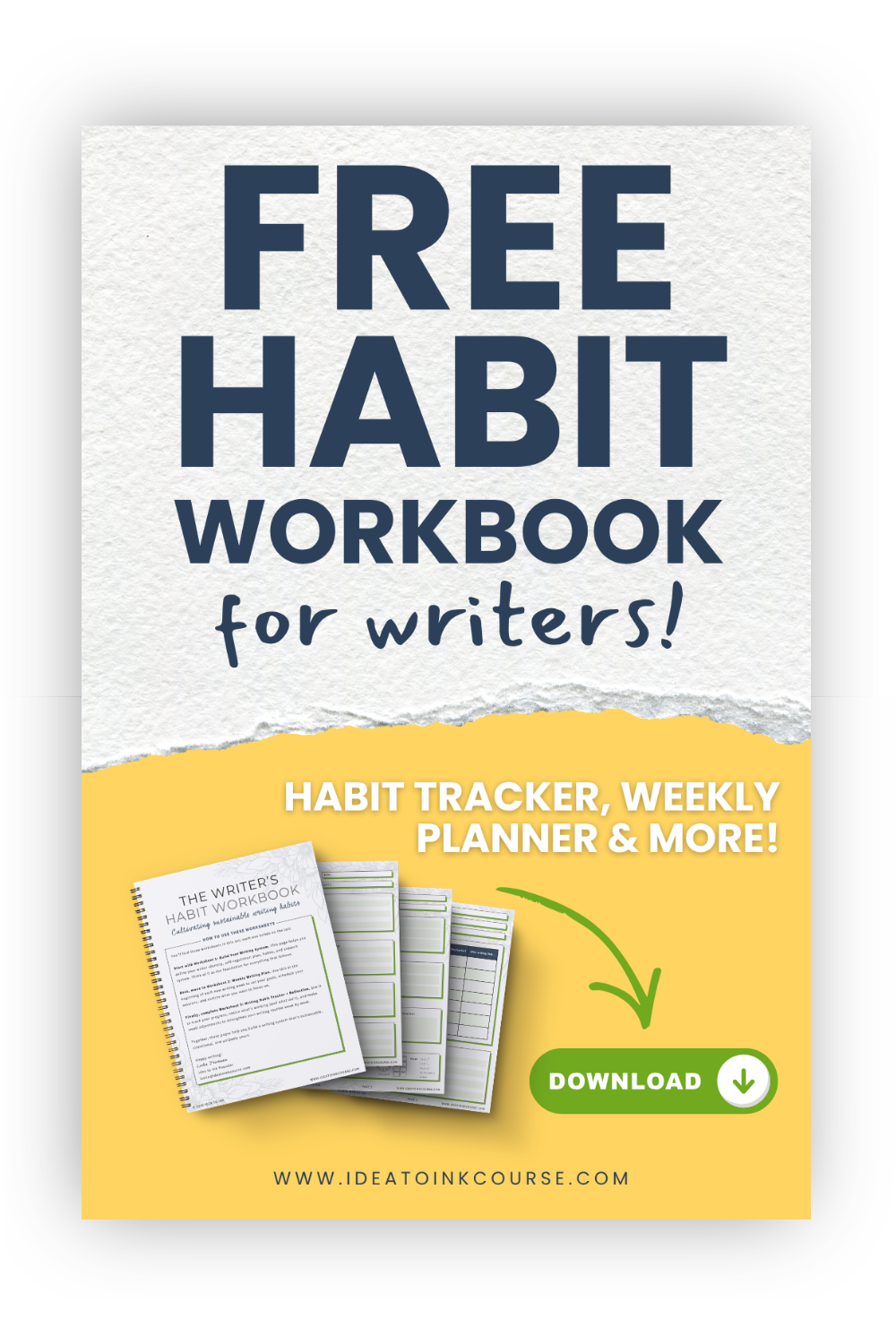
If you need help moving from an idea to a plan, a structured worksheet (like our FREE ones here) or guided course (this one will help you write your draft in 21 days) can give your creativity a container without taking away your voice. Idea to Ink is built around that kind of support: practical prompts, planning tools, and clear next steps for writers who are ready to stop circling their ideas and begin.
Choose the idea that makes you a little nervous because it matters, then make it small enough to start this week.
Your book does not need your perfect certainty.
It needs your next honest page.
Ready to write your book?
Download the Essential Book Writing Templates for FREE and start strong.
We hate SPAM. We will never sell your information, for any reason.