Best Novel Outline Template for New Writers
You do not need a prettier notebook or a better burst of inspiration. If you are searching for the best novel outline template, what you probably need is a story structure that helps you stop guessing and start writing. A good template does not make your book formulaic. It gives your ideas a place to land so you can build momentum instead of circling the same plot problem for weeks.
That matters most when you are new to fiction or returning to it after a long break. Many writers think outlining means locking every scene into place before the fun begins. In practice, a strong outline template should do the opposite. It should reduce decision fatigue, highlight weak spots early, and give you enough direction to draft with confidence.
What makes the best novel outline template?
The best novel outline template is not the longest one or the most detailed one. It is the one that helps you answer the right questions at the right stage of the process.
For most aspiring authors, that means the template should help you clarify five things: who the story is about, what that character wants, what stands in the way, how the stakes rise, and what changes by the end. If your outline can hold those elements clearly, you already have the bones of a novel.
A useful template also leaves room for discovery. Some writers need a full chapter-by-chapter plan before drafting. Others freeze when a template asks for too much detail too soon. If you are the second kind of writer, a lighter structure is often better. You can map the major turning points first, then fill in scenes as your story becomes clearer.
This is why there is no single perfect format for everyone. The best template depends on your writing habits, your genre, and how much uncertainty you can tolerate while drafting.
The core sections every novel outline should include
No matter what format you use, a solid outline needs a few non-negotiables.
Start with your story premise. This is the short version of what the novel is about, usually in one to three sentences. Think of it as your compass. When you get lost in subplots or side characters, the premise reminds you what book you are actually writing.
Next, define your protagonist. Go beyond surface traits. What do they want at the beginning of the story? What fear, flaw, wound, or false belief shapes their choices? A plot becomes more compelling when the external conflict presses against an internal struggle.
Then identify the main conflict. What force keeps your character from getting what they want? This could be a person, a system, a secret, an environment, or even the protagonist's own habits. Conflict gives the story movement. Without it, your outline may read like a sequence of events instead of a novel.
After that, map the major turning points. You do not need fancy labels if those do not help you, but you do need key moments that shift the story. What disrupts the character's normal life? What raises the stakes? What midpoint changes the game? What pushes everything toward a final confrontation? Those moments create the structure that supports your scenes.
Finally, include the ending. You do not need every last detail, but you should know what kind of resolution you are building toward. Even a flexible destination helps you draft with more purpose.
A simple best novel outline template that actually helps
If you want a practical starting point, this framework is simple enough to use now and flexible enough to adapt later.
1. Story idea
Write your premise in one or two sentences. Focus on the protagonist, the goal, and the central obstacle.
2. Main character profile
Capture the essentials: what your protagonist wants, what they need emotionally, what they fear, and what might change by the end.
3. Story stakes
Spell out what happens if your character fails. Personal stakes matter just as much as external ones. A lost job may matter less than what that loss means to the character's identity, family, or future.
4. Key plot points
Outline the major beats in plain language:
- Opening situation
- Inciting incident
- First major decision
- Midpoint shift
- Major setback
- Climax
- Resolution
This gives you a story spine without forcing every chapter too early.
5. Scene roadmap
Once the major beats are clear, sketch the scenes that connect them. Each scene should have a purpose. It should reveal character, create conflict, raise a question, or move the plot forward. Ideally, it does more than one.
6. Character arcs and subplots
Add a brief note for any important side character or subplot. Ask how each one supports the main story. If a subplot does not add pressure, contrast, or emotional depth, it may not need much space.
How to choose the right level of detail
One of the biggest outlining mistakes is choosing a system that does not match how your brain works.
If you are overwhelmed easily, start lean. Use a one-page outline with just the premise, character goal, conflict, and major turning points. This is often enough to begin drafting. You can expand later when you hit uncertainty.
If you tend to abandon drafts halfway through, a more detailed template may help. In that case, planning scenes in advance can reduce the chances of drifting into a story that loses focus. More detail up front can feel slower, but it often saves time in revision.
If you are writing genre fiction, structure matters even more. Romance, mystery, suspense, and fantasy readers all expect certain kinds of movement and payoff. That does not mean your book must be predictable. It means your outline should help you deliver emotional and plot satisfaction in the right places.
If you are writing literary or voice-driven fiction, your template may center more on character evolution and thematic tension than plot mechanics. That is fine too. The goal is not to force every novel into the same shape. The goal is to create enough structure that you can finish.
What to avoid in a novel outline template
A template can help, but it can also become another form of procrastination.
Be careful with templates that ask for every detail before you have discovered the heart of the story. Too much complexity too early can make writing feel like paperwork. If you are spending hours color-coding scenes you have not emotionally connected to, the template is getting in the way.
Also watch for templates that focus only on plot and ignore character. Readers stay for what happens, but they care because of who it happens to. If your outline tracks events without tracking emotional change, your draft may feel flat even if the structure looks solid.
And do not confuse rigidity with discipline. A good outline supports your creativity. It should not punish you for having a better idea on page 47 than you had on day one.
How to use your outline without feeling trapped
Think of your outline as a working document, not a contract.
As you draft, you will learn things you could not have known at the planning stage. A side character may become more important. The midpoint may need more pressure. The ending may sharpen. That is not a sign you outlined badly. It is a normal part of writing a novel.
The key is to revise the outline as the story becomes clearer. When you make a change in the draft, go back and update your roadmap. This keeps the rest of the manuscript aligned and helps you avoid a tangled middle.
For many writers, this is where a guided system makes a real difference. A framework that combines prompts, planning pages, and step-by-step progression can keep you moving without making the process feel intimidating. That balance of structure and encouragement is exactly what helps beginners turn a good idea into a finished draft.
So what is the best novel outline template?
It is the one that gives you clarity before you write, direction while you draft, and flexibility when the story evolves.
For most new writers, that means starting with a simple structure: premise, protagonist, conflict, stakes, major turning points, and scene purpose. You do not need a complicated story bible to begin. You need a template that helps you make decisions and keep going.
If you have spent months thinking about your novel without making real progress, try this approach: outline the big movements first, then draft the first chapter before you plan every scene. That small shift often creates more momentum than waiting for the plan to feel perfect. At Idea to Ink, we have seen again and again that writers gain confidence faster when they work from clear, manageable tools instead of pressure-filled expectations.
Your outline does not need to prove that you are a real writer. It just needs to help you write your book. Start there, keep it simple, and let structure support your voice instead of replacing it.

Ready to write your book?
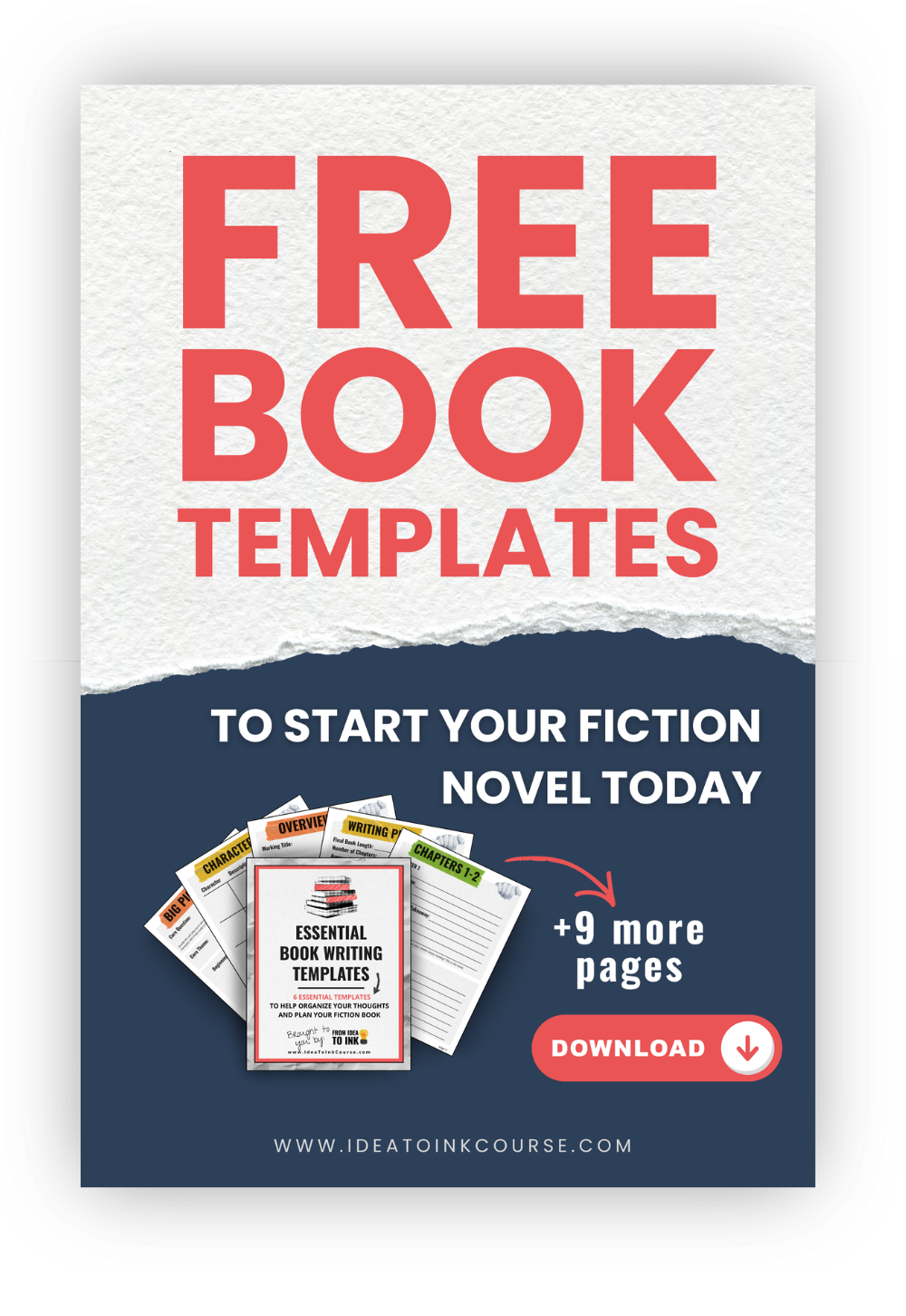
Download the Essential Book Writing Templates for FREE and start strong.
We hate SPAM. We will never sell your information, for any reason.