Writing Rituals That Keep You Inspired (Without Turning Into a Cliché)
Forget tortured-genius clichés. We’re going to talk about simple, funny, and effective writing rituals that actually keep you inspired.
The Great Ritual Lie
Sure, you could light a candle, pour herbal tea into your lucky mug, stare out the window like you’re contemplating the meaning of life, and pretend that you’re a tortured genius. You could also insist that you “can’t possibly write” unless Mercury is in retrograde and your cat is sitting exactly three inches to the left of your keyboard (although, let’s be real, the cat will always be ON the keyboard).
Or—you could admit the truth that most writers eventually learn: most of the time, your “ritual” is just opening a Word doc, cracking your knuckles, and bribing yourself with snacks like a raccoon that learned how to use Google Docs.
Writing rituals are often presented as sacred, mystical practices handed down by literary gods. Hemingway had his standing desk. Maya Angelou rented hotel rooms. Stephen King writes every day, even on holidays. Somewhere along the way, this turned into pressure: If I don’t have my own quirky ritual, am I even a real writer?
Relax. You don’t need a raven perched nearby whispering despair into your ear. What you need are writing rituals that actually keep you inspired—without turning you into a parody of a brooding author from a moody author photoshoot.
Let’s dismantle the myth, steal what works, and build creative routines that motivate you instead of making you feel ridiculous.
The Myth of the Perfect Ritual
There’s a persistent belief that serious writers have Serious Rituals . They wake at dawn. They write with a specific pen. They only work after drinking exactly two cups of black coffee and staring into the void for exactly seven minutes.
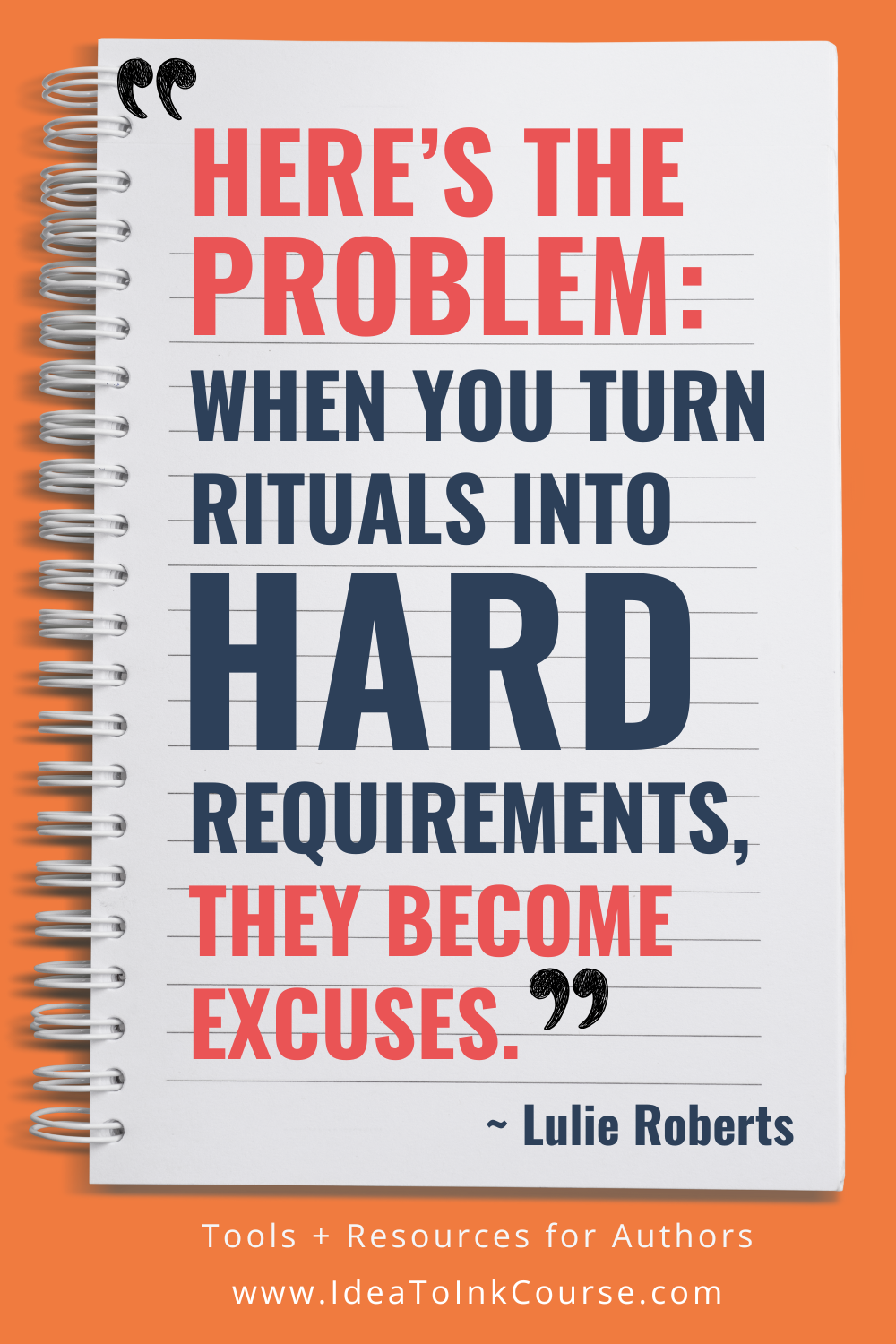
Here’s the problem: when you turn rituals into hard requirements, they become excuses.
“If I don’t have my candle, I can’t write.”
“I didn’t have time to make my tea properly, so today’s a wash.”
“I’m not inspired because I didn’t sit in my special chair.”
And at that point, the ritual isn’t supporting your creativity—it’s holding it hostage.
Let’s be blunt: if you need a quill, parchment, and a raven perched nearby, you’re not writing—you’re just cosplaying Edgar Allan Poe.
Most famous author habits are not magic spells. They are practical solutions to real problems. Hemingway stood because it helped his back. Angelou rented rooms to avoid distraction. Stephen King writes daily because it supports his mental endurance. None of them were trying to be aesthetic. They were just trying to get words onto the page.
The myth of the perfect ritual convinces writers that inspiration comes before action. In reality, inspiration is usually a side effect of showing up consistently—even when your setup is boring and unglamorous.
The truth? The best writing rituals are boring, flexible, and a little bit silly. But that’s exactly why they work.
What Writing Rituals Are Actually For
Before we talk about which rituals work, let’s clarify why rituals exist in the first place.
A writing ritual is not a superstition. It’s a signal.
It tells your brain: Hey, we’re doing this now.
That’s it. Nothing mystical required.
Think of rituals as mental shortcuts. They reduce second-guessing. Instead of debating whether you feel inspired enough to write, your ritual moves you straight into action. Over time, your brain starts associating that signal—music, coffee, a timer—with focus and creativity.
Good creative routines do three things:
- Lower resistance – They make starting easier.
- Create consistency – They help you show up regularly.
- Trigger focus – They nudge your brain into “writing mode.”
Notice what’s missing? Drama. Suffering. Artistic anguish.
If your ritual feels heavy, complicated, or exhausting, it’s doing the opposite of its job. Writing rituals should make it easy to start, not harder.
Once you understand this, you’re free to design rituals that fit your life instead of trying to copy someone else’s idea of “perfect.”
Simple Rituals That Actually Work
Now for the fun part: rituals that don’t require incense, leather-bound journals, or a vow of suffering.
- The Power Playlist
Music is one of the fastest ways to shift your mental state. A playlist that makes you feel confident, focused, or slightly unhinged (in a productive way) can become a powerful start signal.
This isn’t about “writing music” in the classical sense. It’s about y our boss energy. Maybe that’s epic cinematic scores. Maybe it’s smooth lo-fi beats. Maybe it’s aggressive feminist pop that makes you feel unstoppable.
The rule is simple: one playlist, only for writing.
Over time, your brain learns the association. Music on = words happen. No thinking required.
- A Clear Start Signal
A start signal is a small, repeatable action that marks the beginning of your writing session. Examples:
- Making coffee or tea
- Setting a 25-minute timer
- Putting on a ridiculous hat
- Sitting in a specific chair
The key is consistency, not significance. Your start signal doesn’t need meaning—it just needs repetition.
Eventually, your brain stops negotiating. The signal happens, and you begin. No inspirational pep talk required.
- The “Minimum Viable Writing” Rule
One of the most effective author habits is lowering the bar so far that it’s impossible to trip over.
Your ritual might be: Open the document and write one sentence.
That’s it.
Not a chapter. Not brilliance. Just one sentence.
Most of the time, once you start, momentum kicks in. And on the days it doesn’t? Congratulations—you still showed up. That consistency builds trust with yourself, which is a far more powerful motivator than guilt.
Why Complicated Rituals Kill Motivation
Here’s where many writers accidentally sabotage themselves: they design rituals that are too complicated or too fragile.
If your creative routine requires:
- Total silence
- Perfect lighting
- An entirely uninterrupted three-hour block
- A perfect mood plus planetary alignment
…it will collapse the moment real life shows up.
Complicated rituals create an all-or-nothing mindset. Either everything is perfect, or you don’t write at all. That’s a fast track to stalled projects and constant self-doubt.
Simple rituals, on the other hand, are portable. You can do them tired. You can do them busy. You can do them badly.
And that’s the point.
Writing is a long game. Motivation comes from progress, not perfection. The more adaptable your ritual, the more often you’ll use it—and the more inspired you’ll feel over time.
Celebration Over Suffering
Let’s talk about the most underrated writing ritual of all: celebration.
Somewhere along the way, writers absorbed the idea that art must hurt. That suffering equals seriousness or professionalism. That if you’re enjoying yourself, you must not be doing “real” work.
This is total nonsense.
Your brain is not inspired by punishment. It’s inspired by reward.
Instead of using rituals to force yourself through misery, reframe them as incentives. Make writing something your brain wants to return to.
For example:
- Finish 500 words? Dance break.
- Finish 1,000 words? Chocolate.
- Finish 2,000 words? Glorious couch time with zero shame.
This isn’t childish—it’s neuroscience. Rewards reinforce behavior. When your brain associates writing with pleasure instead of dread, motivation stops being a problem that you have to solve.
Celebration rituals don’t have to be big. They just have to be simple and rewarding. A walk. A snack. A meme break. A smug sense of accomplishment.
Writing gets to be hard and fun. Those things are not mutually exclusive.
How Rituals Help You Stay Inspired Long-Term
Inspiration isn’t a sudden spark. It’s a slow burn.
The writers who stay inspired over years aren’t the ones waiting around for inspiration to show up. They’re the ones who’ve built systems that carry them through boredom, doubt, and distraction.
Writing rituals help because they:
- Reduce decision fatigue
- Build creative momentum
- Create emotional safety around your work
When you know exactly how you’ll start, writing stops feeling like a confrontation. It becomes familiar. Predictable. Manageable.
And paradoxically, that structure creates freedom.
Once you’re inside the ritual, your mind can wander, explore, take risks. You’re not asking: Should I write today? You’re already
That’s how inspiration shows up—mid-sentence, unannounced, while you’re busy doing the work.
The Anti-Cliché Writer’s Ritual Checklist
If you want writing rituals that keep you inspired without turning you into a stereotype, aim for rituals that are:
- Simple – Easy to repeat, even on bad days
- Flexible – Portable across environments, schedules, and lifestyles
- Personal – Designed for y ou, not an imaginary writer persona
- Rewarding – Paired with celebration, not suffering
Forget what you think a writer’s life is supposed to look like. Focus on what actually gets you writing.
Because the most powerful ritual of all? Showing up again tomorrow.
Write Now, Romanticize Later
Stop waiting for the perfect setup. Stop treating struggle like a prerequisite for creativity. Stop believing inspiration only arrives if you suffer convincingly enough.
Start writing with whatever tools, rituals, and rewards actually work for you—and enjoy them.
Your creativity doesn’t need a shrine or a persona. It needs consistency, permission, and maybe a snack you really like.
Ready to write your book?
Download the Essential Book Writing Templates for FREE and start strong.
We think SPAM is icky. We will never sell your information, and you can unsubscribe at any time.