Writing Prompts for New Authors That Build Momentum
The blank page can make a future author feel as though they need the whole book figured out before writing a single sentence. You do not. Writing prompts for new authors give you one small, clear place to begin, so you can stop waiting for certainty and start collecting material that belongs in your book.
A prompt is not a test of talent. It is a focused invitation to make a choice: enter a scene, name a belief, remember a moment, or answer a question your reader is already asking. Used well, prompts reduce the pressure to be brilliant on demand. They help you build the more useful skill of returning to the page.
Why prompts work when you are starting a book
Most beginning writers do not lack ideas. They have too many ideas, along with questions about whether the idea is good enough, where the story should begin, or how to turn a personal experience into a useful chapter. That uncertainty can lead to planning forever or abandoning pages that are still allowed to be messy.
A good prompt narrows the decision. Instead of asking, “What should I write?” it asks something answerable, such as, “What did my character notice first when she walked into the room?” That small shift gives your brain a task rather than a vague demand.
Prompts also create evidence. After several sessions, you may have a scene that belongs in chapter three, a strong opening image, a list of recurring themes, or a reader problem that clarifies your nonfiction book. You are no longer trying to imagine yourself as a writer. You have pages. You are a writer.
How to use writing prompts for new authors
Set a timer for 10 to 20 minutes and choose one prompt only. Write continuously until the timer ends. If you get stuck, repeat the last sentence or write what you are thinking about the prompt. Keep your inner editor out of the first draft.
When time is up, do not immediately judge the piece. Underline one sentence, image, question, or detail with energy in it. That is your thread for the next writing session. The goal is not for every prompt response to become part of your manuscript. The goal is to find what has life.
If you are writing fiction, let yourself change names, settings, and timelines while you explore. I've been known to switch character names halfway through a book because all of a sudden the character just doesn't feel like a Jerry anymore. Don't get caught up on the little details. If you are writing nonfiction, write from your reader's point of view as often as from your own. A memoirist may use both approaches: begin with a lived scene, then ask what the scene reveals for the reader.
Prompts to find the heart of your book
Before you organize chapters or build a detailed outline, get closer to what is pulling you toward this project. These prompts can help you identify the emotional center and the promise behind your book.
- Write about the moment you realized this book needed to exist. Include where you were, what happened, and what you felt but did not say aloud.
- Finish this sentence ten times: “I want to write this book because…” Do not stop at the first polite answer.
- Imagine one ideal reader closing the final page. What do you hope has changed for them?
- Describe the question your book keeps trying to answer, even if you do not yet know the answer.
- Write a one-page letter to the person who needs your book most. What do they need to hear from you now?
These responses may not appear word for word in your final draft. Still, they can guide your decisions when a chapter feels scattered. A book becomes more focused when you know both what you want to say and why it matters to someone else.
Fiction prompts that create story movement
New fiction writers often begin with character biographies, world notes, or a beautifully written opening. Those pieces can be valuable, but a novel needs movement. Use these prompts to put your character under pressure and see what they do.
- Your main character receives something they have wanted for years. Within one hour, it creates a problem they cannot ignore. Write the scene.
- Two people want the same outcome, but for completely different reasons. Put them in a setting where one of them must give something up.
- Write the moment your character tells a small lie. Then write the consequence that makes the lie harder to maintain.
- Your character enters a familiar place and notices that one detail has changed. What does that detail mean, and why does it unsettle them?
- Write an argument in which neither person says what they are actually upset about.
- Put your character one step from getting what they want. What fear, loyalty, wound, or false belief makes them hesitate?
After each scene, ask one practical question: What has changed? If nothing changes in the character's situation, understanding, relationship, or options, give the scene a turn. A turn can be as simple as new information, a choice, or a consequence.
Nonfiction prompts that clarify your reader and message
For a nonfiction author, expertise does not require having every answer or presenting a perfect life. It requires offering a clear perspective, useful experience, careful research, or a process that helps the reader move forward.
Start with these prompts when your topic feels too broad.
- Describe the specific problem your reader faces on an ordinary Tuesday. What are they doing, avoiding, worrying about, or wishing they understood?
- Write the advice people usually hear about your topic. Where does that advice fall short, and what would you offer instead?
- Tell the story of a mistake you made related to this subject. What did it teach you that a list of tips could not?
- List five questions a beginner would be embarrassed to ask. Answer one with honesty and plain language.
- Explain your core idea without using industry jargon. If you had two minutes with a friend, what would you say?
- Write a before-and-after picture of your reader. What can they do, feel, understand, or decide after reading your book?
Notice which responses make you want to keep explaining. That energy may point toward a chapter. If your answer relies on a personal story, write the scene first and draw the lesson afterward. Readers connect more deeply when they can see how an insight was earned.
Turn prompt pages into a workable book plan
Prompts are most helpful when they lead somewhere. Once you have completed eight to ten sessions, review your pages with three labels in mind: story, insight, and question. A story is a scene, example, memory, or moment you can expand. An insight is a belief, lesson, or observation worth developing. A question shows you what still needs research, reflection, or another writing session.
Then group related pages together. A fiction writer might notice several scenes about a character's strained relationship with her sister. That can become a subplot or a key source of conflict. A nonfiction writer may find repeated material about fear, planning, and taking the first step. Those patterns may become the foundation for early chapters.
Do not force every prompt response into the manuscript. Some pages exist to help you discover the book, not to become the book. Keeping that distinction gives you freedom to write honestly instead of trying to make every paragraph publishable.
If your writing feels scattered, add a simple structure: choose a weekly focus, such as character, conflict, reader problem, or chapter purpose. Idea to Ink teaches this kind of guided approach because momentum grows when creativity has a clear container.
A seven-day prompt practice to begin now
For the next seven days, protect one short appointment with your book. On day one, write why this book matters. On day two, write for your ideal reader. On day three, create a high-stakes scene or describe the reader's real-world problem. On day four, explore a central conflict or common misconception. On day five, write a personal story connected to the book's message. On day six, answer one question you have been avoiding. On day seven, review everything and circle the ideas you want to develop.
This practice will not produce a finished manuscript in a week. It can do something more immediate: replace uncertainty with material. You will know more about your characters, your reader, and your message than you did seven days earlier.
Your first job is not to write a flawless book. It is to make a small promise to the page, keep it today, and give tomorrow's author something real to continue.
Ready to write your book?
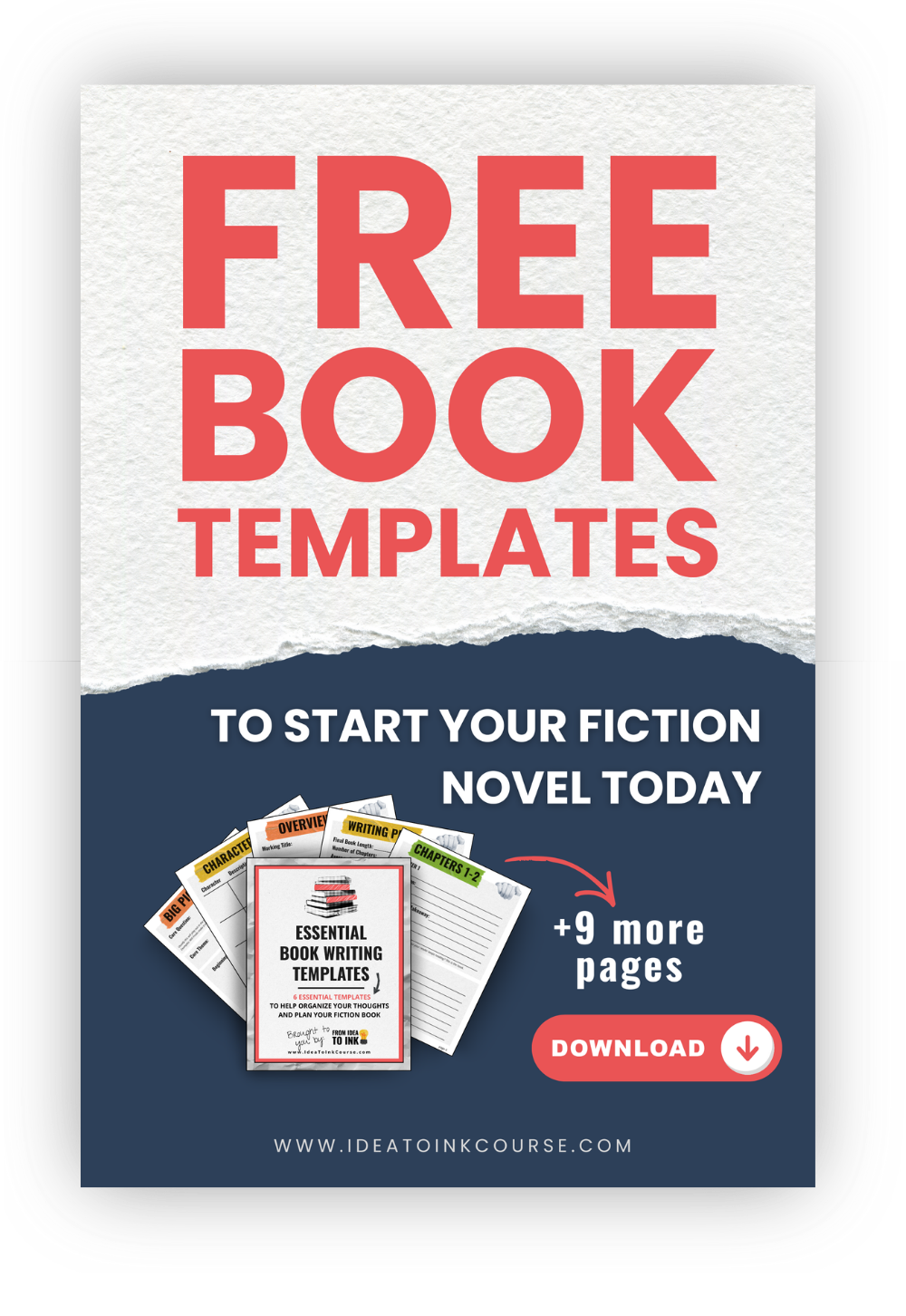
Download the Essential Book Writing Templates for FREE and start strong.
We think SPAM is icky. We will never sell your information, and you can unsubscribe at any time.