

How to Write Dialogue That Sounds Natural
A character says, “I am upset because you forgot my birthday,” and the scene goes flat. The feeling may be true, but most people do not speak in perfectly labeled emotions. To write dialogue that sounds natural, you need to listen for what people mean, what they avoid saying, and what they want from the person across from them.
Natural dialogue is not a transcript of real life. Real conversations are full of false starts, repeated words, filler, and unfinished thoughts. On the page, you are shaping speech so it feels believable while still moving your story forward. That is a skill you can practice, one scene at a time.
Start with what each character wants
Before you revise a line of dialogue, ask a simple question: What does this character want right now?
Maybe your protagonist wants an apology. Maybe her sister wants to avoid blame. Maybe both want to leave the conversation feeling like they have won. When characters have competing goals, their dialogue develops tension naturally because they are not simply exchanging information.
Compare these two versions:
“Did you tell Mom I quit my job?”
“Yes. I thought she should know.”
“I asked you not to.”
The first version is clear, but it is mostly information. Now give each person an agenda:
“Mom called me crying.”
“You told her?”
“She asked why you were selling your car.”
“You could have said you didn’t know.”
“I could have. I didn’t.”
The facts have not changed, but the second exchange carries more pressure. One character is trying to make the other feel guilty. The other is refusing to apologize. Neither person needs to announce their emotions because the reader can feel them.
When dialogue feels stiff, the problem is often not the wording. It is that the characters do not have a clear purpose in the scene.
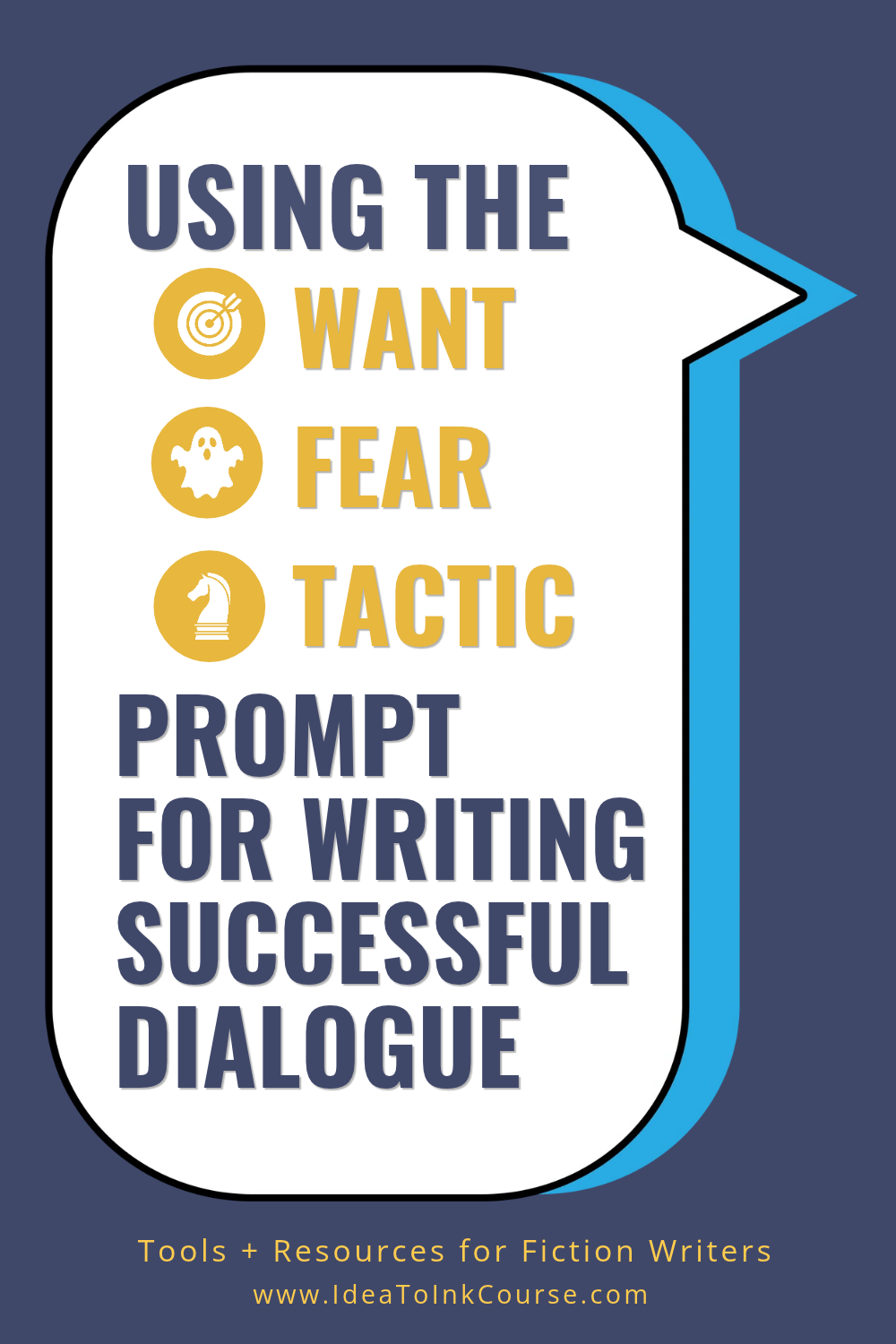
Use the “want, fear, tactic” prompt
Before drafting a conversation, write three quick notes for each speaker:
- What do they want from this conversation?
- What do they fear will happen?
- What tactic will they use to get what they want?
A character who wants reassurance may joke. A character who fears rejection may change the subject. A character trying to maintain control may answer a question with another question. These choices create a voice that feels human and specific.
Let people speak around the truth
People rarely say the most vulnerable thing first. If your character is hurt, they may complain about a small detail. If they are jealous, they may sound overly curious. If they are scared, they may become practical.
Instead of writing:
“I am worried you do not love me anymore.”
Try:
“You’ve been staying late a lot.”
“That’s called having a deadline.”
“Three weeks of deadlines?”
The concern is still there, but the dialogue gives the reader room to participate. This is subtext: the meaning underneath the spoken words.
Subtext does not mean making every conversation mysterious. Readers still need clarity. Use it when a character has a reason to hold back, protect themselves, or avoid conflict. In a high-trust relationship, a direct line can be more powerful precisely because it is earned: “I need you to tell me the truth.”
Give each character a distinct verbal pattern
Your characters do not need accents, catchphrases, or unusual grammar to sound different. Those tools can work in moderation, but they can also become distracting. (Have you ever read an entire book written in dialect? It's almost always a DNF for me because it's so difficult to read!) Stronger differentiation comes from how a person thinks and responds.
One character may answer with short, efficient sentences. Another may explain too much when nervous. A third might use questions to keep attention off themselves. Consider their background, education, work, relationships, and emotional habits, but avoid turning identity into a stereotype.
For example, two friends can respond very differently to the same news:
“I got the offer,” Maya said.
“Take it,” Ren said. “We’ll figure out the rest.”
Or:
“You got the offer?” Elise grinned, then stopped. “Wait. Is that the one in Seattle?”
Ren is decisive. Elise is warm, then immediately begins considering consequences. You do not need to tell the reader this directly. Their responses reveal it.
A helpful revision tool is to remove dialogue tags from a short exchange. Could you identify who is speaking from the rhythm, word choice, and focus of each line? If not, your characters may be sharing the same default voice.

Cut the lines that explain too much
Beginning writers often use dialogue to deliver information the reader needs. This is understandable. You know your characters and backstory, and you want the reader to catch up. But people do not usually explain shared history to one another.
This sounds forced:
“As you know, Dad left us when I was ten, and that is why I hate Thanksgiving.”
Try letting the history surface through conflict:
“You’re going to Thanksgiving at Mom’s?”
“It’s dinner, not a treaty signing.”
“You said that last year. Then Dad showed up with pie and a new girlfriend.”
The reader now understands the emotional history without receiving a lecture. Notice that the characters are talking about the present moment, not performing a summary for the audience.
During revision, highlight any line that exists only to explain. Then ask whether you can replace it with a reaction, a detail, a disagreement, or a well-placed piece of narration.
Use dialogue beats to show what words cannot
A dialogue beat is a small action attached to speech. It can ground the scene and reveal emotion without relying on adverbs.
Instead of writing:
“Don’t touch that,” he said angrily.
You might write:
“Don’t touch that.” He reached across the table and pulled the envelope toward him.
The action tells us what anger looks like in that moment. It also gives the conversation movement.
Use beats with intention. If every line includes a shrug, sigh, glance, or nod, the scene becomes busy. Choose actions that change the emotional temperature, reveal power, or create a pause. A character folding a napkin into neat quarters may be working hard not to cry. A character checking the door twice may be ready to leave.
Read your dialogue out loud
This is one of the fastest ways to find awkward phrasing. When you read silently, your brain often supplies the rhythm you intended. When you speak the words, you hear where a sentence is too formal, too long, or hard to say.
Read the scene slowly and notice where you run out of breath. Listen for lines that sound like a speech when the moment only needs an answer. Pay attention to repeated sentence openings and words you would never use in conversation.
You do not need to make every line casual. A lawyer preparing an argument, a teenager avoiding trouble, and a grandmother telling a family story will all sound different. The goal is not “casual.” The goal is truthful for that character, in that situation.
If reading aloud feels uncomfortable, record yourself on your phone and listen back later. The distance can make patterns easier to hear.
A simple revision pass for natural dialogue
When you have a rough scene, do not try to fix everything at once. Make one focused pass using these questions:
- Does each speaker want something specific?
- Is anyone saying exactly what they feel when they would realistically hold back?
- Does each character sound like themselves?
- Have I explained information the characters already know?
- Can an action replace an adverb or an emotional label?
- Does the conversation change something by the final line?
That last question matters. A conversation should leave the characters in a slightly different place. They may gain information, lose trust, make a decision, or deepen a misunderstanding. If nothing shifts, the scene may need more conflict, a clearer goal, or fewer lines.
Practice with a low-pressure scene
You do not need to wait for the perfect chapter to practice dialogue. Set a timer for ten minutes and write a scene between two people who want different things. Keep the setting ordinary: a grocery store parking lot, a kitchen after dinner, a waiting room, a car ride home.
Give one character a secret they do not want to reveal. Give the other a question they will not stop asking. Do not explain the secret. Let it shape the pauses, deflections, jokes, and sharp replies.
When the timer ends, read the exchange aloud. Circle the one line that feels most alive. That line is evidence that you already have an ear for dialogue. Your job is to build a repeatable process around it: clear character goals, specific choices, and revision that listens closely.
Your characters do not need to sound perfect. They need to sound like people with something at stake. Give them room to hesitate, push back, misread each other, and tell only part of the truth. Then return to the page tomorrow and let the next conversation reveal a little more.
Happy writing!

Ready to write your book?
Download the Essential Book Writing Templates for FREE and start strong.
We think SPAM is icky. We will never sell your information, and you can unsubscribe at any time.