How to Turn Ideas Into Chapters
I'm going to venture a wild guess here and say that you do not need more ideas. You need a way to sort the ones you already have.
That is the real challenge behind how to turn ideas into chapters. Most aspiring authors are not starting from zero. They have character notes, story sparks, journal pages, personal experiences, topic expertise, and half-formed scenes. What they do not have yet is a chapter plan that makes the book feel writable.
The good news is this part is learnable. Chapters are not mysterious. They are simply containers for progress. When you understand what each chapter needs to do, your ideas stop feeling scattered and start working together.
How to turn ideas into chapters without getting stuck
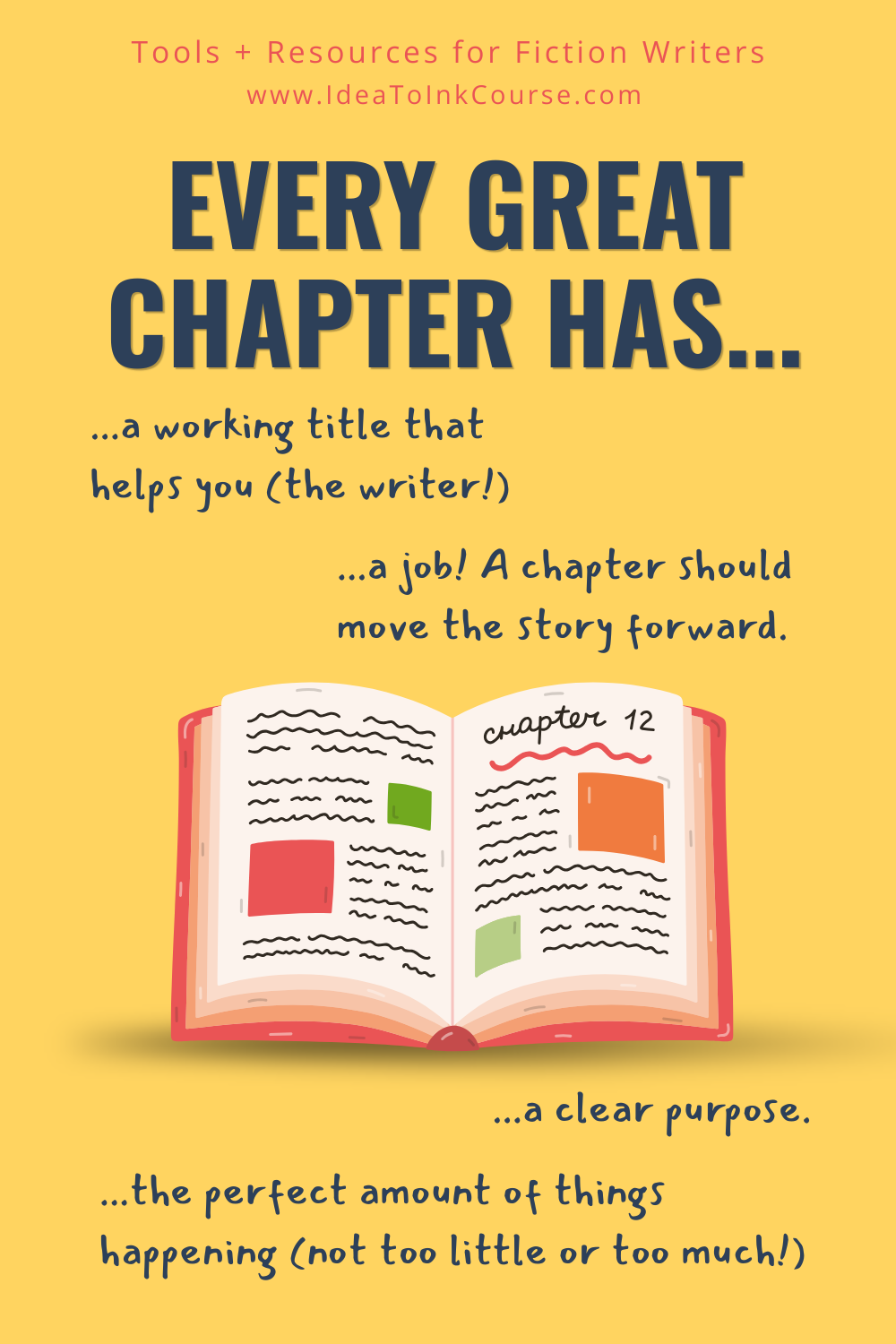
A chapter is not just a place to put information or a random event. It is a meaningful unit inside a larger journey. In fiction, a chapter usually moves the plot, deepens character, raises tension, or shifts the reader's understanding. In nonfiction, a chapter often teaches one core concept, answers one major question, or walks the reader through one stage of change.
That distinction matters because many writers try to build chapters around whatever ideas seem interesting. Interesting is not enough. A chapter needs a job.
If you start there, the process gets much easier. Instead of asking, “What should Chapter 4 be about?” ask, “What does the reader need by this point in the book?” That question creates structure.
Start with the book's big promise
Before you organize chapters, get clear on the book's central movement. What changes from beginning to end?
For a novel, that movement may be emotional, external, or both. A guarded woman learns to trust. A family uncovers a long-buried secret. A detective moves from confusion to truth. For nonfiction, the movement is often more direct. The reader goes from overwhelmed to organized, insecure to confident, uninformed to capable.
Write that movement in one sentence. Keep it plain. This is not your marketing tagline. It is your planning compass.
For example, a nonfiction book might move readers from feeling intimidated by book writing to building a workable draft plan. A novel might move a main character from avoidance to courage. Once you know the overall arc, you can start grouping ideas by where they belong in that journey.
Gather your raw material before you organize it
Writers often try to outline too early. They force order onto ideas they have not fully collected yet, then feel frustrated when the outline feels thin or fake.
Instead, pull your material into one place first. That can include scene ideas, themes, turning points, lessons, stories, examples, questions, research, or images you know belong somewhere in the book. Do not worry about sequence yet. Just gather.
This step matters because your brain writes differently when it is collecting versus arranging. Collection is expansive. Organization is selective. If you try to do both at the same time, you usually stall.
Once your ideas are visible, patterns begin to emerge. You may notice several scenes all point to the same conflict, or several teaching points belong under one core lesson. That is the beginning of chapter structure.
Group ideas by function, not just topic
This is where many chapter plans improve fast.
A weak outline groups ideas by surface similarity. A stronger outline groups them by function in the reader's experience. That means looking at what each idea does.
In fiction, one cluster of ideas may introduce a relationship, another may escalate a central problem, and another may force a key decision. In nonfiction, one cluster may build trust, another may explain a framework, and another may help the reader apply it.
If you are not sure how to sort your material, test each idea against a few simple categories: setup, development, challenge, shift, and payoff. You do not need to use those exact labels in your outline, but they help you see whether your ideas are actually creating movement.
A chapter should rarely exist just because you had a lot to say about a subject. It should exist because it helps the book advance. (I personally believe that each sentence in a book also exists to help the plot advance, but that's a diatribe for another time).

Build chapter buckets first, then name them
When writers ask how to turn ideas into chapters, they often jump straight to chapter titles. That can make the process feel more polished than it really is.
Start with rough chapter buckets instead. Think in terms of purpose before wording.
For example, if you are writing nonfiction, one bucket might be “why writers get overwhelmed before they begin.” Another might be “the simple planning method that reduces that overwhelm.” Another might be “how to create a first draft routine that actually sticks.” Those are chapter functions. The final titles can come later.
For fiction, your buckets may sound more like “the moment she realizes the lie is no longer sustainable” or “the consequences of choosing the easier path.” Again, you are defining the role of the chapter before polishing the label. Remember, these 'titles' are just for you. Here's one from the book I'm currently writing: Doctor scene. 500. (Complicated, right?) For me, that means it's the doctor scene and it should be about 500 words long. Use the system that works for you! It doesn't have to be complicated or fancy.
This keeps you flexible. Sometimes a chapter you thought was one section becomes three. Sometimes three weak ideas combine into one strong chapter. That is normal.
Give each chapter one clear outcome
If a chapter feels messy, it usually has one of two problems. It is trying to do too much, or it is not doing enough.
A strong chapter leaves the reader with something specific. In fiction, that may be a revelation, decision, complication, or emotional shift. In nonfiction, it may be a new understanding, completed exercise, practical tool, or next step.
Try finishing this sentence for every chapter: “By the end of this chapter, the reader will…”
If you cannot finish that sentence clearly, the chapter may still be too vague. If your answer includes three or four major outcomes, the chapter may need to be split.
This is one of the simplest ways to create cleaner structure. It also makes drafting easier, because you know what success looks like before you begin writing.
Watch for the gaps between chapters
A chapter outline is not only about what happens inside each chapter. It is also about what carries the reader from one chapter to the next. (Looking for a chapter outline template? We have some that you can download for FREE here!)
That transition matters more than many beginners realize. If Chapter 2 teaches a concept and Chapter 3 suddenly jumps into advanced application, the reader may feel lost. If a novel moves from one emotional beat to another without enough cause and effect, the story can feel disjointed.
Look at your outline and ask, “Why does this chapter come after that one?” If the answer is weak, the sequence probably needs work.
Good chapter order creates momentum. Each section should prepare for the next, challenge the last, or deepen what came before. The result is a book that feels intentional instead of assembled.
How to turn ideas into chapters when you have too much material
Having too many ideas can feel just as paralyzing as having too few.
When that happens, do not ask which ideas are good. Ask which ideas belong in this book (because a lot of them are probably good!) That is a different question, and it is much more useful.
Every book has edges. It cannot hold every story, every lesson, every subplot, or every personal insight. Some material may be strong but still wrong for this project. That does not mean you wasted it. It may belong in a bonus resource, a future book, or your notes for later.
If your chapter outline feels bloated, return to the book's central movement. Keep the material that supports it most directly. Trim the rest, or save it elsewhere. Clarity usually requires subtraction.
Let the outline support you, not control you
Some writers resist outlining because they fear it will flatten their creativity. Others cling to an outline so tightly that they cannot follow a better idea when it appears.
The middle ground is usually best.
A chapter plan should give you direction, not pressure. It exists to reduce decision fatigue and helps you keep writing. You are allowed to adjust it as the book becomes clearer. In fact, you probably should.
At Idea to Ink, this is the shift we see again and again: writers gain confidence when they stop treating structure like a test and start using it like support. A chapter outline is not proof that you have everything figured out. It is a practical tool that helps your book take shape.
If you have been waiting to feel more ready before organizing your book, start smaller. Write down the book's main movement. Gather your loose ideas. Group them by function. Then shape those groups into chapters with one clear outcome each.
You do not need a perfect outline to begin. You just need a structure simple enough to carry your next step.
Happy writing,

Ready to write your book?
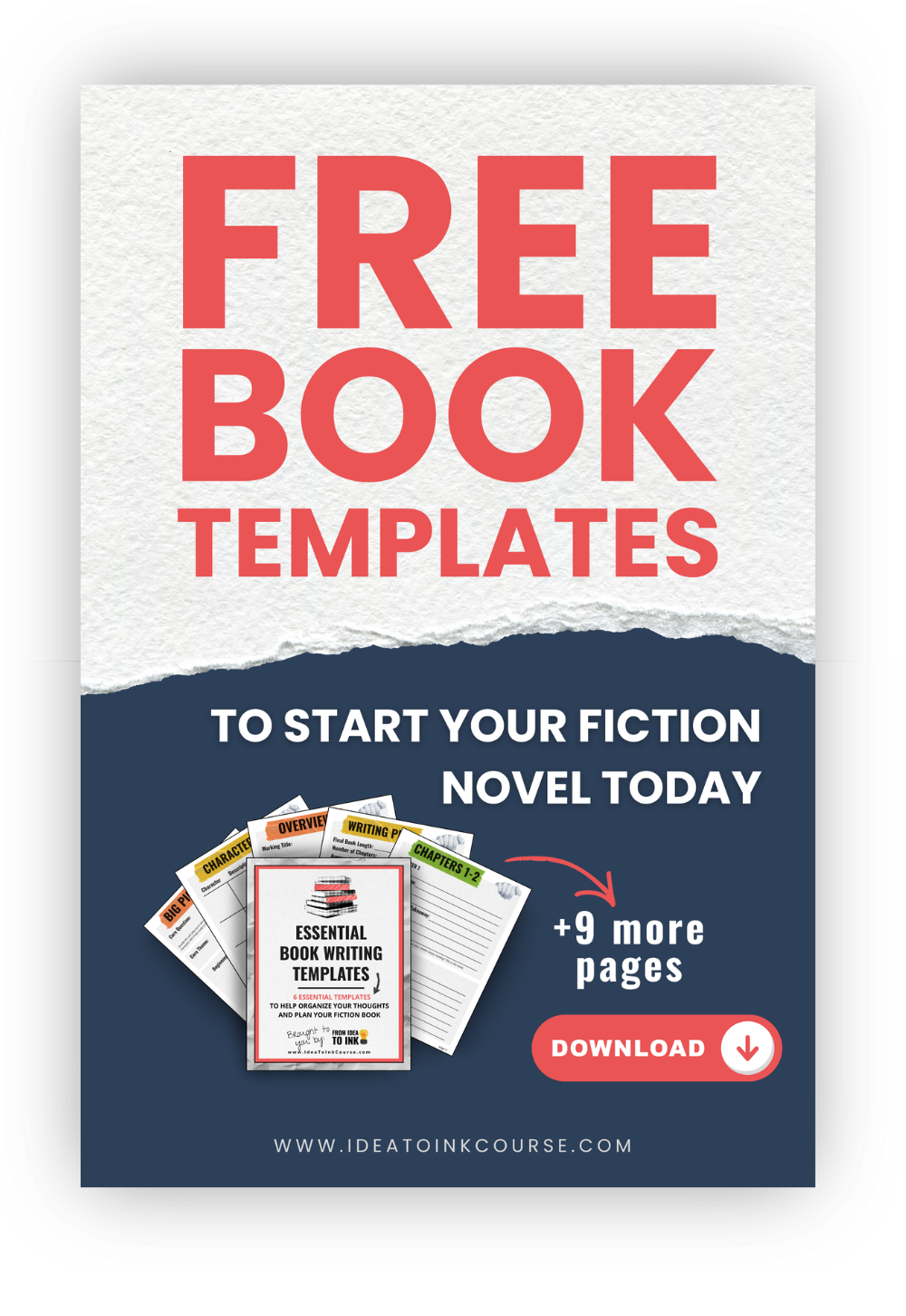
Download the Essential Book Writing Templates for FREE and start strong.
We think SPAM is icky. We will never sell your information, and you can unsubscribe at any time.